Pelvic Inflammatory Disease Presenting with Lower Abdominal Pain: A Case Report
OthersPage Navigation
Abstract
Pelvic inflammatory disease (PID) is an ascending polymicrobial infection of the female upper genital tract involving the uterus, fallopian tubes, ovaries, and surrounding pelvic structures. It is a major cause of infertility, chronic pelvic pain, ectopic pregnancy, and tubo-ovarian abscess among women of reproductive age. Early diagnosis is often challenging because symptoms are nonspecific and overlap with several gynecological and gastrointestinal conditions. Prompt initiation of broad-spectrum antimicrobial therapy is essential to prevent irreversible reproductive complications. We report the case of a 26-year-old woman who presented with acute lower abdominal pain, fever, purulent vaginal discharge, and dyspareunia. Clinical examination demonstrated cervical motion tenderness with bilateral adnexal tenderness. Laboratory investigations revealed leukocytosis and elevated inflammatory markers, while transvaginal ultrasonography showed bilateral salpingitis with minimal pelvic free fluid. The patient responded well to guideline-based antibiotic therapy and remained symptom-free during follow-up. This case highlights the importance of early clinical recognition and timely treatment in preventing long-term sequelae.
Introduction
Pelvic inflammatory disease is an inflammatory disorder resulting from the ascending spread of microorganisms from the lower genital tract into the upper reproductive tract. It commonly affects sexually active women aged 15–35 years and is most frequently caused by Chlamydia trachomatis and Neisseria gonorrhoeae, although mixed aerobic and anaerobic organisms are often involved. Risk factors include multiple sexual partners, previous sexually transmitted infections, unprotected intercourse, and prior PID. Clinical manifestations include lower abdominal pain, fever, abnormal vaginal discharge, dyspareunia, dysuria, and irregular bleeding. Because delayed treatment may result in infertility, chronic pelvic pain, or ectopic pregnancy, early diagnosis based on clinical findings supported by laboratory and imaging investigations remains essential.
Case Report
A 26-year-old married woman presented with progressively worsening lower abdominal pain for five days, fever with chills for three days, purulent vaginal discharge, and painful sexual intercourse. She also complained of mild dysuria and generalized weakness but denied vomiting or bowel symptoms. Her menstrual history was regular, and the urine pregnancy test was negative.
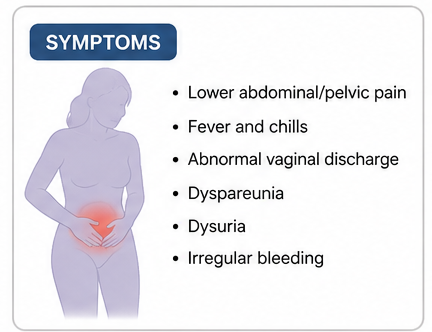
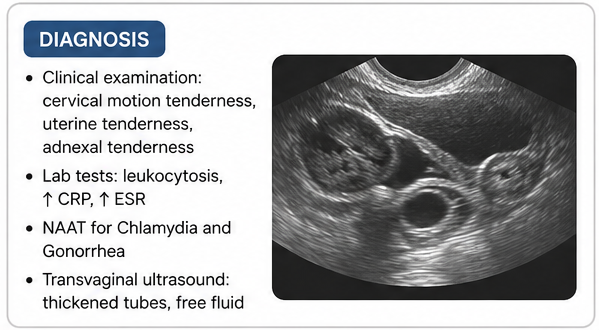
On examination, she was febrile (38.7°C) with a pulse rate of 106 beats/minute. Abdominal examination revealed suprapubic tenderness without guarding or rigidity. Speculum examination demonstrated mucopurulent cervical discharge, while bimanual pelvic examination elicited marked cervical motion tenderness, uterine tenderness, and bilateral adnexal tenderness.
Laboratory investigations showed leukocytosis (15,400/mm³), elevated C-reactive protein (68 mg/L), and an erythrocyte sedimentation rate of 46 mm/hour. Cervical nucleic acid amplification testing was positive for Chlamydia trachomatis and negative for Neisseria gonorrhoeae. Screening for HIV, hepatitis B, hepatitis C, and syphilis was negative. Transvaginal ultrasonography demonstrated thickened bilateral fallopian tubes with increased vascularity, mild pelvic free fluid, and inflammatory changes without evidence of tubo-ovarian abscess. Based on the clinical, laboratory, and imaging findings, a diagnosis of acute moderate pelvic inflammatory disease was established.
Management and Outcome
The patient was admitted and treated with intravenous ceftriaxone, doxycycline, and metronidazole according to current treatment guidelines. Adequate hydration, analgesics, and antipyretics were administered. She received counseling regarding safe sexual practices, abstinence until completion of treatment, and partner evaluation and treatment to reduce the risk of reinfection.
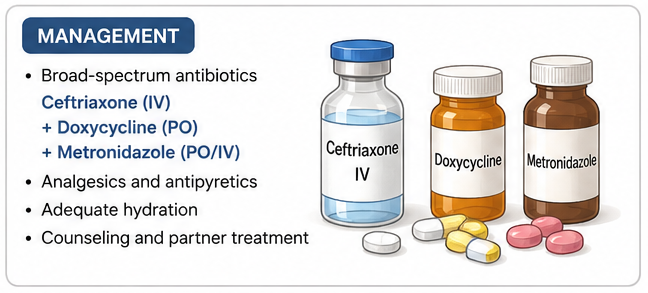
Within 72 hours, the fever subsided, pelvic pain improved significantly, and inflammatory markers began to decline. She was discharged on oral doxycycline and metronidazole to complete a 14-day antibiotic course. At the four-week follow-up, she reported complete resolution of symptoms with no residual pelvic tenderness. Repeat pelvic ultrasonography demonstrated resolution of inflammatory changes, and she remained asymptomatic during subsequent follow-up.
Discussion
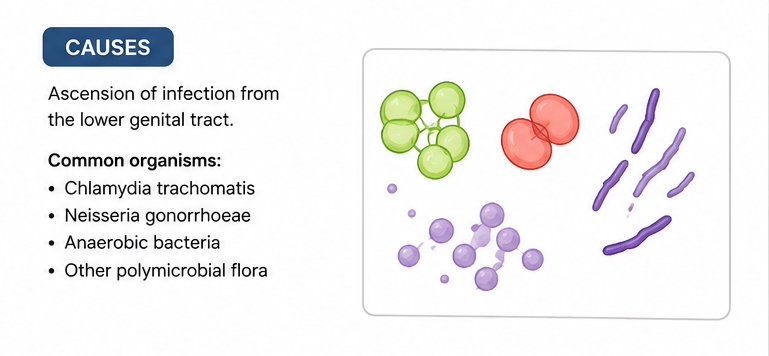
Pelvic inflammatory disease is primarily a clinical diagnosis that requires a high index of suspicion in reproductive-aged women presenting with lower abdominal or pelvic pain, cervical motion tenderness, uterine tenderness, or adnexal tenderness. Because clinical manifestations are often subtle, nonspecific, and overlap with other gynecological or gastrointestinal disorders, early recognition can be challenging. The infection usually results from the ascending spread of microorganisms from the lower genital tract, leading to endometritis, salpingitis, oophoritis, and inflammation of the surrounding pelvic tissues. Common causative organisms include Chlamydia trachomatis, Neisseria gonorrhoeae, anaerobic bacteria, and other polymicrobial flora.
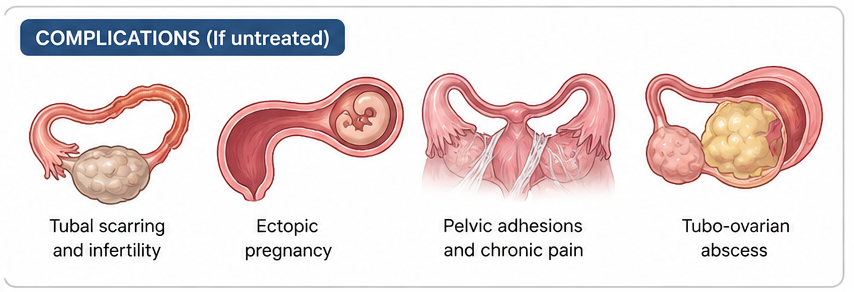
If left untreated, persistent inflammation can cause irreversible tubal scarring, pelvic adhesions, infertility, chronic pelvic pain, recurrent episodes of PID, ectopic pregnancy, and tubo-ovarian abscess formation, significantly affecting a woman's reproductive health and quality of life.
Current clinical guidelines emphasize that broad-spectrum antibiotic therapy should be initiated immediately once PID is suspected, without waiting for microbiological confirmation, as delays in treatment are associated with poorer reproductive outcomes. Laboratory investigations and nucleic acid amplification tests help identify causative pathogens, while transvaginal ultrasonography and, when necessary, magnetic resonance imaging are valuable for assessing disease severity and identifying complications such as tubo-ovarian abscess or pelvic collections. Comprehensive management extends beyond antimicrobial therapy and includes adequate pain control, counseling regarding sexually transmitted infections, screening and treatment of sexual partners, temporary abstinence from sexual activity until treatment is completed, and education on safe sexual practices to reduce reinfection. Regular clinical follow-up is essential to ensure complete symptom resolution, monitor treatment response, identify persistent infection or complications, and minimize the risk of long-term reproductive sequelae.
Prognosis
Most patients recover completely when pelvic inflammatory disease is diagnosed early and treated promptly with appropriate antibiotics. However, delayed diagnosis or recurrent infections significantly increase the risk of infertility, chronic pelvic pain, and ectopic pregnancy. Regular follow-up, treatment adherence, and partner management substantially improve long-term reproductive outcomes.
Conclusion
Pelvic inflammatory disease remains a significant cause of reproductive morbidity among women of reproductive age and continues to pose a major public health challenge worldwide. Because its clinical presentation is often subtle or nonspecific, delayed diagnosis is common and may result in irreversible complications such as infertility, chronic pelvic pain, ectopic pregnancy, recurrent pelvic infections, and tubo-ovarian abscess formation. Maintaining a high index of clinical suspicion is therefore essential, particularly in sexually active women presenting with lower abdominal pain and cervical motion tenderness. Early clinical recognition, prompt initiation of broad-spectrum antibiotic therapy, appropriate partner evaluation and treatment, patient education regarding safe sexual practices, and adherence to follow-up are fundamental to successful management. Timely intervention not only promotes complete clinical recovery but also minimizes long-term reproductive complications, preserves fertility, and improves overall quality of life.
References
-
Brunham RC, Gottlieb SL, Paavonen J. Pelvic inflammatory disease. New England Journal of Medicine. 2015;372:2039–2048. https://pubmed.ncbi.nlm.nih.gov/25992748/
-
Centers for Disease Control and Prevention. Sexually Transmitted Infections Treatment Guidelines: Pelvic Inflammatory Disease. 2021. https://www.cdc.gov/std/treatment-guidelines/pid.htm
-
Haggerty CL, Taylor BD. Mycoplasma genitalium: an emerging cause of pelvic inflammatory disease. Infectious Diseases in Obstetrics and Gynecology. 2011. https://pubmed.ncbi.nlm.nih.gov/21437230/
-
Wiesenfeld HC, Sweet RL. Progress in the management of pelvic inflammatory disease. Clinical Infectious Diseases. 2015. https://academic.oup.com/cid/article/61/Supplement_8/S509/451613
Read more such content on @ Hidoc Dr | Medical Learning App for Doctors
Recommended News For You
Recommended Articles For You
Featured News
Featured Articles
Featured Events
Featured KOL Videos
1.
Poor agreement between diagnostic tests for breast cancer-related lymphedema
2.
A study outlines the need for policies that enhance cancer patients' autonomy and information.
3.
The response of bipolar patients to lithium may be predicted by ancestry.
4.
Exercise may help breast cancer survivors manage weight
5.
Stem Cell Transplant Linked to Longer Survival in CMML
1.
HPV and Immunotherapy in Cancer Survivorship: National Cancer Survivors Day Review
2.
Red Cell Deformability as a Target in Critical Illness
3.
Organoid Models for Tumor Tissue Repair: Advances, Mechanisms, and Clinical Implications
4.
A Visual Guide to Understanding Breast Cancer Staging
5.
The Benefits and Risks of Transurethral Resection of Bladder Tumor

Address :
Hidoc Dr. Inc. | Delaware C Corp | 1309 Coffeen Ave. Suite 1200, Sheridan WY, 82801
Phone :
+1-415-463-3094
Email :
anishagadia@hidoc.co
© Copyright 2026 Hidoc Dr. Inc.
Terms & Conditions - LLP | Inc. | Privacy Policy - LLP | Inc. | Account Deactivation

To get started please enter your email ID
Welcome to Hidoc Dr.
Join to enhance your clinical skills and gain specialized in-depth medical knowledge