Case Report: Pheochromocytoma Presenting With Paroxysmal Hypertension, Palpitations, and Excessive Sweating
OthersPage Navigation
Introduction
Pheochromocytoma is a rare neuroendocrine tumor originating from chromaffin cells of the adrenal medulla. It produces excessive catecholamines, primarily norepinephrine and epinephrine, causing episodic or sustained hypertension and sympathetic nervous system activation.
The classical presentation includes headaches, palpitations, and excessive sweating. Other manifestations include tremors, anxiety, pallor, and weight loss. Delayed diagnosis may result in hypertensive emergencies, cardiac arrhythmias, and catecholamine-induced cardiomyopathy.
Diagnosis involves biochemical testing for plasma free metanephrines or urinary fractionated metanephrines, followed by adrenal imaging. Surgical adrenalectomy remains the principal treatment for localized disease after adequate preoperative alpha-adrenergic blockade.
Early recognition is essential to prevent cardiovascular complications and achieve favorable clinical outcomes.
Case Presentation
A 42-year-old woman presented to the endocrinology outpatient department with recurrent headaches, palpitations, and excessive sweating for nine months.
The episodes occurred three to four times weekly, lasted approximately 15–30 minutes, and were accompanied by tremors, facial pallor, and anxiety.
She reported intermittent blood pressure elevations exceeding 190 mmHg systolic during symptomatic episodes.
The patient had been diagnosed with hypertension two years earlier and was receiving amlodipine 5 mg daily. Despite treatment, blood pressure remained poorly controlled.
During the preceding three months, she experienced increased symptom frequency, reduced exercise tolerance, and approximately 4 kg unintentional weight loss.
There was no history of diabetes mellitus, chronic kidney disease, cardiovascular events, or hereditary endocrine disorders.
On examination, the patient was conscious, oriented, and hemodynamically stable.
Vital parameters were:
-
Blood pressure: 156/96 mmHg
-
Heart rate: 104 beats/minute
-
Respiratory rate: 18 breaths/minute
-
Temperature: 36.8°C
-
Oxygen saturation: 99%
-
Body mass index: 23.8 kg/m²
Cardiovascular examination revealed regular tachycardia without murmurs. Respiratory, abdominal, and neurological examinations were unremarkable.
During observation, she developed sudden headache, palpitations, and profuse sweating. Blood pressure increased to 202/112 mmHg, with a heart rate of 126 beats/minute.
The characteristic episodic symptoms raised suspicion of catecholamine excess due to pheochromocytoma.
Investigations
Initial laboratory investigations assessed hematological parameters, electrolyte balance, renal function, and secondary causes of hypertension.
Complete blood count revealed:
-
Hemoglobin: 13.6 g/dL
-
Total leukocyte count: 7,800 cells/µL
-
Platelet count: 265,000 cells/µL
Biochemical investigations demonstrated:
-
Serum sodium: 139 mmol/L
-
Serum potassium: 4.1 mmol/L
-
Serum creatinine: 0.8 mg/dL
-
Fasting blood glucose: 116 mg/dL
-
HbA1c: 5.9%
Thyroid function tests were normal.
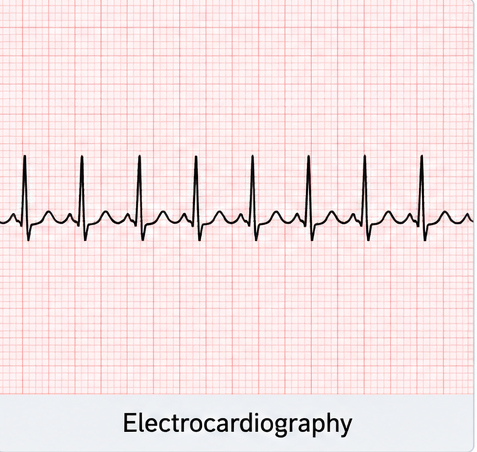
Electrocardiography demonstrated sinus tachycardia without ischemic changes. Echocardiography revealed preserved left ventricular systolic function, with an ejection fraction of 60%.
Plasma free metanephrine testing was performed under standardized sampling conditions.
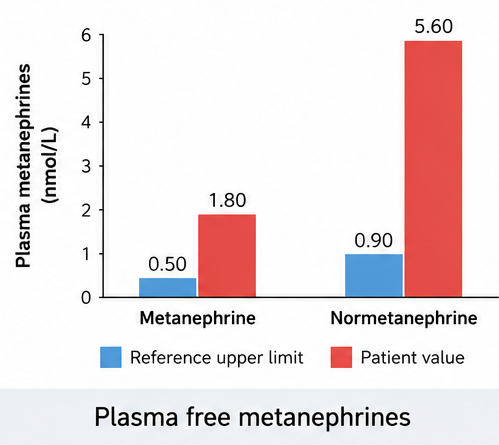
Hormonal investigations revealed:
-
Plasma free metanephrine: 1.8 nmol/L
-
Plasma free normetanephrine: 5.6 nmol/L
Both values were substantially elevated.
Subsequent 24-hour urinary testing demonstrated:
-
Urinary metanephrine: 780 µg/24 hours
-
Urinary normetanephrine: 1,950 µg/24 hours
These findings strongly supported excessive catecholamine production.
Radiological Investigations
Contrast-enhanced computed tomography of the abdomen demonstrated a well-defined right adrenal mass measuring approximately 4.5 × 3.8 × 3.6 cm.
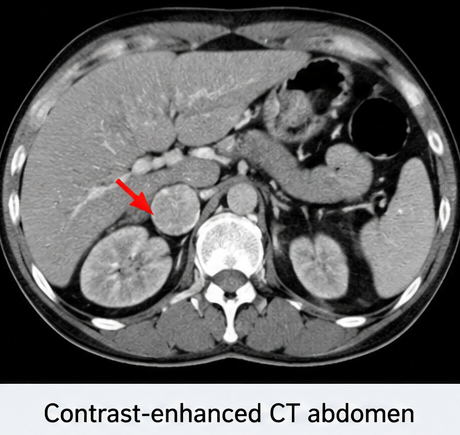
The lesion showed heterogeneous enhancement without evidence of adjacent tissue invasion.
The left adrenal gland appeared normal. No significant lymphadenopathy or distant metastatic lesions were identified during initial staging.
Magnetic resonance imaging demonstrated a predominantly hyperintense adrenal lesion on T2-weighted sequences.
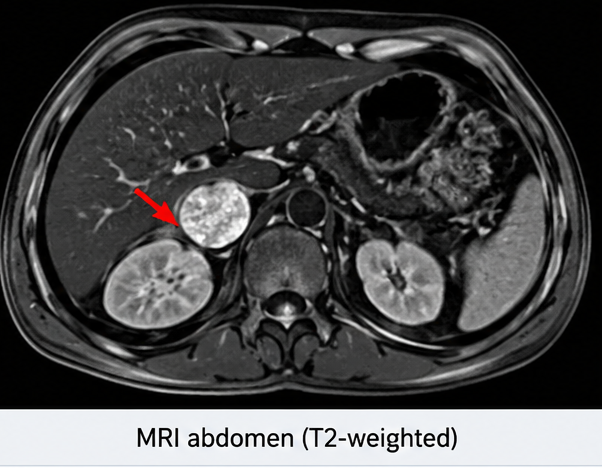
The biochemical and radiological findings were consistent with right adrenal pheochromocytoma.
Diagnosis
The final clinical diagnosis was:
Right Adrenal Pheochromocytoma Causing Catecholamine Excess, Presenting With Paroxysmal Hypertension, Palpitations, Headaches, and Excessive Sweating.
The diagnosis was supported by characteristic symptoms, elevated plasma and urinary metanephrines, and identification of a right adrenal mass.
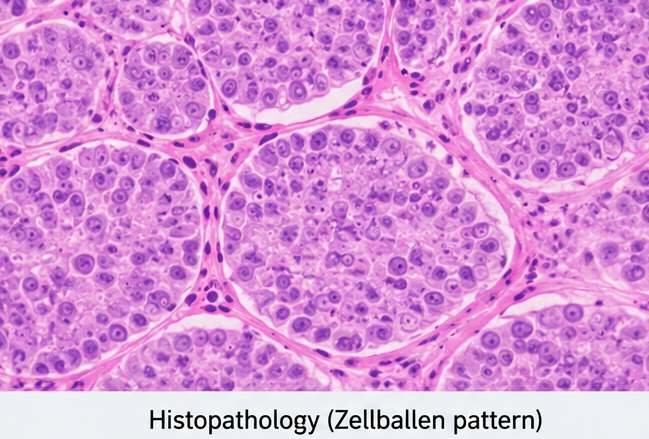
Histopathological examination subsequently confirmed pheochromocytoma.
Treatment and Management
The patient was referred for multidisciplinary endocrine surgical management.
Preoperative preparation focused on controlling blood pressure, reducing catecholamine-related cardiovascular effects, and restoring intravascular volume.
Phenoxybenzamine was initiated at 10 mg twice daily and gradually titrated according to blood pressure response and tolerability.
Following adequate alpha-adrenergic blockade, metoprolol was introduced to control persistent tachycardia.
Dietary sodium and fluid intake were increased under specialist supervision.
After approximately two weeks, blood pressure improved to 124–136/76–86 mmHg, with reduced frequency of symptomatic episodes.
The patient subsequently underwent laparoscopic right adrenalectomy under general anesthesia.
Continuous invasive arterial blood pressure monitoring was maintained throughout surgery.
Transient hypertension during tumor manipulation was controlled using short-acting intravenous antihypertensive medication.
Following tumor removal, temporary hypotension required intravenous fluids and brief vasopressor support.
The tumor was successfully excised without major complications.
Histopathological examination revealed nests of polygonal chromaffin cells arranged in a characteristic Zellballen pattern.
Immunohistochemistry demonstrated positivity for chromogranin A and synaptophysin, confirming pheochromocytoma.
Genetic counseling was recommended to assess possible hereditary susceptibility.
Outcome and Follow-Up
Postoperative monitoring included blood pressure, blood glucose, electrolyte balance, and renal function.
The patient remained clinically stable following initial recovery.
At two weeks, headaches, palpitations, and excessive sweating had completely resolved.
Blood pressure improved to 126/82 mmHg without the previous antihypertensive regimen.
At four weeks, plasma free metanephrine decreased to 0.22 nmol/L, while normetanephrine decreased to 0.48 nmol/L.
Both concentrations were within laboratory reference ranges.
At three months, average home blood pressure remained approximately 118–128/74–82 mmHg.
The patient reported improved exercise tolerance and no recurrence of symptoms.
Annual biochemical surveillance and genetic evaluation were recommended.
Discussion
Pheochromocytoma is an important cause of secondary hypertension associated with excessive catecholamine secretion.
The present case demonstrates the characteristic symptom triad of headaches, palpitations, and sweating accompanied by episodic severe hypertension.
Catecholamine excess stimulates adrenergic receptors, producing vasoconstriction, tachycardia, and blood pressure fluctuations.
Because symptoms may resemble anxiety disorders or essential hypertension, diagnosis can be delayed.
Plasma free metanephrines and urinary fractionated metanephrines are recommended biochemical investigations. Markedly elevated concentrations support the diagnosis when sampling conditions and potential interfering factors are appropriately considered.
Cross-sectional imaging helps localize the tumor and assess its anatomical characteristics.
Important differential diagnoses include adrenal cortical adenoma, primary aldosteronism, cortisol-producing adrenal tumors, and other causes of secondary hypertension.
Surgical adrenalectomy provides definitive treatment for localized pheochromocytoma.
Preoperative alpha-adrenergic blockade reduces the risk of severe hypertension during surgical manipulation. Beta blockers should only be introduced after adequate alpha blockade to prevent unopposed vasoconstriction.
Postoperative surveillance is essential because recurrent or metastatic disease may develop despite successful initial treatment.
Genetic testing is important because pheochromocytoma may be associated with hereditary susceptibility syndromes involving RET, VHL, NF1, and SDHx genes.
The favorable outcome in this case emphasizes the importance of timely diagnosis, appropriate surgical preparation, and long-term monitoring.
Conclusion
Pheochromocytoma is a potentially curable cause of secondary hypertension.
Patients presenting with episodic headaches, palpitations, sweating, and unexplained blood pressure fluctuations require appropriate endocrine evaluation.
Biochemical metanephrine testing and adrenal imaging are central to diagnosis.
Adequate preoperative alpha blockade followed by adrenalectomy can achieve favorable outcomes in localized disease.
Long-term biochemical surveillance and genetic assessment remain essential for identifying recurrence and hereditary susceptibility.
References
1. Lenders JWM, Duh QY, Eisenhofer G, et al. Pheochromocytoma and paraganglioma: An Endocrine Society clinical practice guideline. J Clin Endocrinol Metab. 2014;99(6):1915–1942. https://doi.org/10.1210/jc.2014-1498
2. Neumann HPH, Young WF Jr, Eng C. Pheochromocytoma and paraganglioma. N Engl J Med. 2019;381(6):552–565. https://doi.org/10.1056/NEJMra1806651
3. Lenders JWM, Kerstens MN, Amar L, et al. Genetics, diagnosis, management and future directions of research of phaeochromocytoma and paraganglioma. J Hypertens. 2020;38(8):1443–1456. https://doi.org/10.1097/HJH.0000000000002438
4. Nölting S, Bechmann N, Taieb D, et al. Personalized management of pheochromocytoma and paraganglioma. Endocr Rev. 2022;43(2):199–239. https://doi.org/10.1210/endrev/bnab019
5. Fishbein L, Orlowski R, Cohen D. Pheochromocytoma/paraganglioma: Review of perioperative management of blood pressure and update on genetic mutations associated with pheochromocytoma. J Clin Hypertens (Greenwich). 2013;15(6):428–434. https://doi.org/10.1111/jch.12084
Read more such content on @ Hidoc Dr | Medical Learning App for Doctors
Recommended News For You
Recommended Articles For You
Featured News
Featured Articles
Featured Events
Featured KOL Videos
1.
WHO Warns Loosely Regulated Nicotine Pouches Risk Youth Addiction
2.
Breast cancer patients' arms swell less after an effective lymph node transfer.
3.
Pain’s Toll: Frailty Risk for Childhood Cancer Survivors
4.
Children living near oil and gas wells face higher risk of rare leukemia, studies show
5.
PPI, Antibiotics May Curb Durvalumab Efficacy in NSCLC
1.
Emerging Therapies Through Artificial Bone Marrow Niche Engineering
2.
Iron Homeostasis Throughout the Female Lifespan
3.
The Lowdown on Darbepoetin: Understanding Its Uses and Side Effects
4.
Clinical Pharmacology of Iron Homeostasis Regulatory Therapeutics
5.
Unlocking the Secrets of Squamous Cell Carcinoma: New Hope for Patients
1.
International Conference on Innovations in Critical Care for Oncology and Cardiology
2.
International Conference on Oncology, Cardiology and Critical Care Policy
3.
International Conference on Oncology, Cancer Prevention and Public Health
4.
International Conference on Cancer Nursing and Rehabilitation Strategies
5.
International Conference on Best Practices in Oncology, Cardiology and Critical Care
1.
The Reign of the CROWN Trial and the Dawn of a New Era in Frontline Management- Further Discussion
2.
Iron Deficiency Anemia: Ferric Maltol As a New Treatment Option- A New Perspective
3.
Predicting Durable Response to Tumor-Directed Radiotherapy Through Clonal Repopulation Dynamics
4.
Dacomitinib Case Presentation: Baseline Treatment and Current Status
5.
Revolutionizing Treatment of ALK Rearranged NSCLC with Lorlatinib - Part III

Address :
Hidoc Dr. Inc. | Delaware C Corp | 1309 Coffeen Ave. Suite 1200, Sheridan WY, 82801
Phone :
+1-415-463-3094
Email :
anishagadia@hidoc.co
© Copyright 2026 Hidoc Dr. Inc.
Terms & Conditions - LLP | Inc. | Privacy Policy - LLP | Inc. | Account Deactivation

To get started please enter your email ID
Welcome to Hidoc Dr.
Join to enhance your clinical skills and gain specialized in-depth medical knowledge