Dermatographic Urticaria: A Case Report of an Uncommon Physical Urticaria
OthersPage Navigation
Abstract
Dermatographic urticaria, also known as dermatographism, is a form of chronic inducible urticaria characterized by transient, raised, erythematous wheals following mechanical stimulation of the skin. Scratching, rubbing, or pressure may trigger lesions that are often associated with itching or discomfort. Diagnosis is primarily clinical and can be supported by reproducing the characteristic wheal-and-flare response following controlled skin stimulation.
We report the case of a young adult female who presented with recurrent itching and transient linear raised lesions following scratching or minor friction. Clinical examination demonstrated linear wheals corresponding to sites of mechanical stimulation. A dermatographism provocation test reproduced the characteristic response, supporting the diagnosis. The patient was managed with avoidance of excessive mechanical stimulation and symptomatic antihistamine therapy, with progressive improvement in itching and frequency of skin lesions during follow-up.
This case highlights the importance of recognizing the characteristic clinical presentation of dermatographic urticaria and using appropriate provocation testing to establish the diagnosis and guide symptomatic management.
Introduction
Dermatographic urticaria is a form of chronic inducible urticaria in which mechanical stimulation of the skin produces a localized wheal-and-flare response. Lesions typically develop within minutes after scratching, rubbing, or applying pressure and generally resolve without leaving persistent skin changes.
Patients may experience itching, burning, or discomfort associated with the development of the wheals. Symptoms may occur during routine activities involving friction or pressure, making the condition clinically troublesome despite its generally benign nature.
The diagnosis is primarily based on the characteristic history and physical examination. Controlled mechanical stimulation of the skin can reproduce the typical response and support the diagnosis. Recognition of this pattern is important because the condition can often be managed with trigger avoidance and symptomatic therapy.
We report a case of dermatographic urticaria presenting with recurrent pruritus and transient linear wheals following minor mechanical stimulation.
Case Report
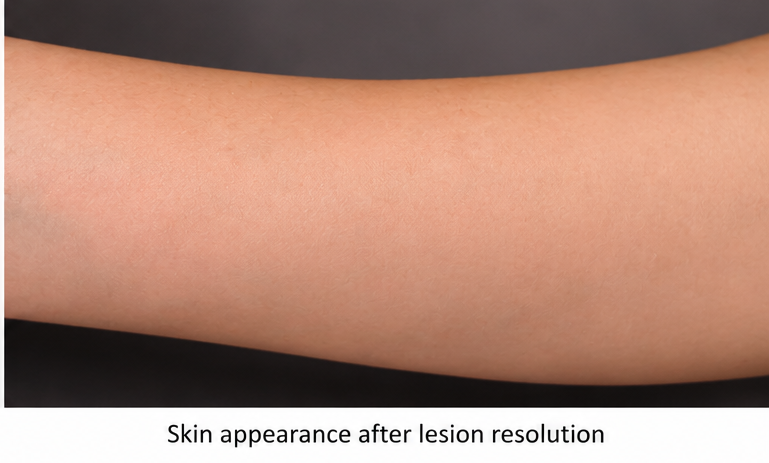
A young adult female presented with recurrent episodes of itching associated with transient raised lesions over the skin following scratching and minor friction. She reported that the lesions developed shortly after mechanical stimulation and subsequently resolved spontaneously without leaving persistent marks.
The patient described increased itching after scratching the affected areas, followed by the appearance of linear, raised erythematous lesions corresponding closely to the sites of scratching. There was no history of persistent skin lesions or residual pigmentation after resolution.
On clinical examination, the skin appeared normal in areas that had not been mechanically stimulated. Following gentle stroking of the skin, a linear erythematous wheal with surrounding flare developed at the site of stimulation. The lesion was associated with localized itching and gradually subsided.
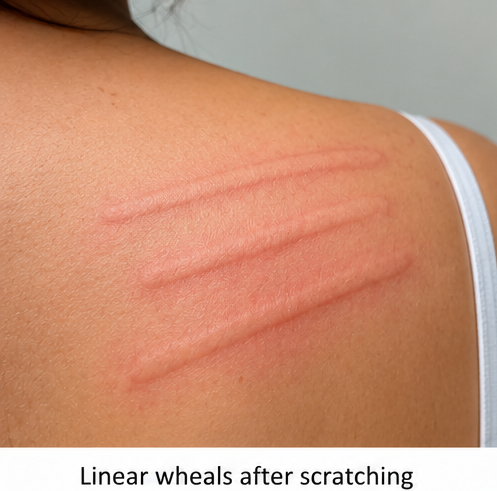
A dermatographism provocation test was performed using controlled mechanical stimulation.

The test reproduced the characteristic linear wheal-and-flare response at the stimulated site, supporting the diagnosis of dermatographic urticaria.
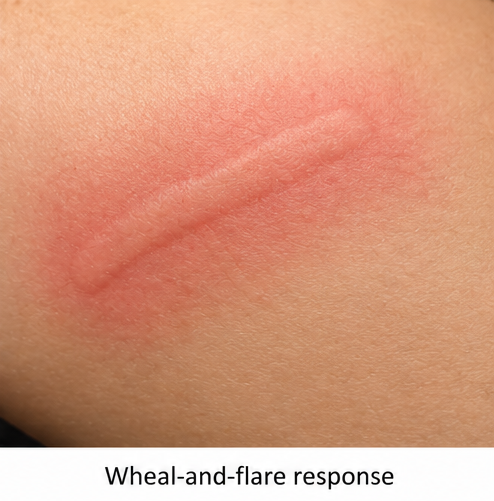
Based on the characteristic history, clinical examination, and positive provocation response, a diagnosis of dermatographic urticaria was established.
Management and Outcome
The patient was advised to minimize excessive scratching and avoid unnecessary mechanical irritation of the skin. Measures to reduce friction and mechanical stimulation were discussed as part of symptomatic management.
Because of recurrent pruritus and symptomatic whealing, antihistamine therapy was initiated for symptom control. The patient was advised to monitor the frequency and severity of episodes and to return for reassessment if symptoms persisted or worsened.
During follow-up, progressive improvement in itching was observed, with fewer symptomatic episodes and reduced frequency of mechanically induced whealing. No persistent skin changes or complications were noted.
Follow-up
Two Weeks
- Reduction in the frequency of itching
- Fewer episodes of mechanically induced whealing
- Reduced intensity of linear skin lesions
- Improved day-to-day comfort
Six Weeks
- Further improvement in pruritus
- Less prominent wheal-and-flare response following minor mechanical stimulation
- No persistent skin lesions
- Continued symptomatic management as required
Three Months
- Sustained improvement in symptoms
- Marked reduction in clinically troublesome episodes
- No significant residual skin changes
- Improved quality of life and tolerance of routine daily activities
Discussion
Dermatographic urticaria is characterized by transient wheals that develop following mechanical stimulation of the skin. The response may occur after scratching, rubbing, or other forms of friction and typically follows the pattern of the applied stimulus.
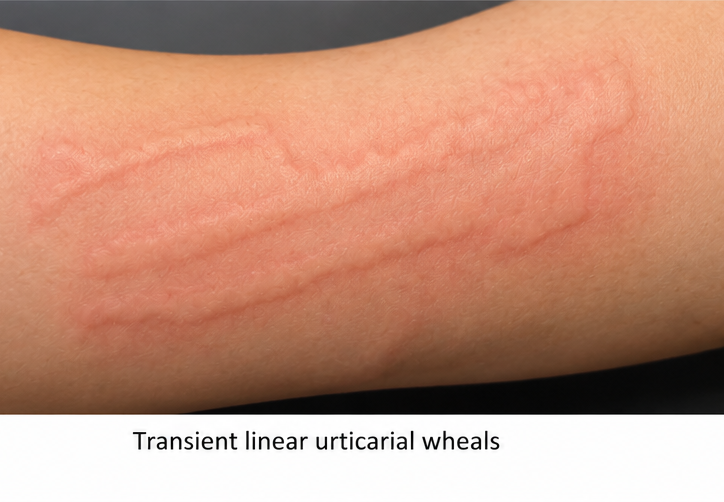
The characteristic clinical presentation is an important diagnostic feature. Patients may notice that scratching an area of skin results in the rapid appearance of a raised linear lesion accompanied by itching or discomfort.
Clinical examination can demonstrate the condition directly through controlled mechanical stimulation. Development of a characteristic linear wheal-and-flare response supports the diagnosis and can help distinguish dermatographic urticaria from other causes of pruritus and transient skin lesions.
The differential diagnosis includes other forms of urticaria and dermatological conditions that may present with itching or erythematous lesions. The reproducible relationship between mechanical stimulation and lesion development is particularly useful in establishing the diagnosis.
Management is primarily directed toward symptom control and reduction of provoking factors. Patients may benefit from avoiding unnecessary scratching and minimizing excessive friction or pressure on the skin. Antihistamines can be used for troublesome pruritus and whealing.
The clinical course may vary between individuals. Some patients experience intermittent symptoms, whereas others may have more persistent episodes. Patient education regarding the inducible nature of the condition may help patients recognize and minimize triggers.
This case demonstrates the importance of recognizing the characteristic relationship between mechanical stimulation and the rapid development of linear wheals. A focused clinical assessment and provocation test can establish the diagnosis and allow appropriate symptomatic management.
Prognosis
The prognosis of dermatographic urticaria is generally favorable. Symptoms may fluctuate over time and can often be controlled through avoidance of mechanical triggers and appropriate symptomatic therapy.
Continued clinical assessment may be appropriate for patients with persistent or troublesome symptoms to evaluate treatment response and functional impact. Education regarding the benign and inducible nature of the condition can also help patients manage recurrent episodes.
Conclusion
Dermatographic urticaria is a form of chronic inducible urticaria characterized by transient wheal-and-flare lesions following mechanical stimulation of the skin. The diagnosis is primarily clinical and can be supported by reproduction of the characteristic response through controlled skin stimulation.
This case highlights the importance of recognizing the typical relationship between scratching or friction and the development of linear wheals. Appropriate patient education, reduction of mechanical triggers, and symptomatic antihistamine therapy can help control symptoms and improve quality of life.
References
- Zuberbier T, Abdul Latiff AH, Abuzakouk M, et al. The international EAACI/GA²LEN/EuroGuiDerm/APAAACI guideline for the definition, classification, diagnosis, and management of urticaria. Allergy. 2022;77(3):734-766. https://pubmed.ncbi.nlm.nih.gov/34536239/
- Kolkhir P, Giménez-Arnau AM, Kulthanan K, Peter J, Metz M, Maurer M. Urticaria. Nature Reviews Disease Primers. 2022;8:61. https://pubmed.ncbi.nlm.nih.gov/36104114/
- Saini SS, Kaplan AP. Chronic spontaneous urticaria: the devil's itch. Journal of Allergy and Clinical Immunology: In Practice. 2018;6(4):1097-1106. https://pubmed.ncbi.nlm.nih.gov/29914746/
- Bernstein JA, Lang DM, Khan DA, et al. The diagnosis and management of acute and chronic urticaria: 2014 update. Journal of Allergy and Clinical Immunology. 2014;133(5):1270-1277. https://pubmed.ncbi.nlm.nih.gov/24606931/
- Schocket AL. Chronic urticaria: pathophysiology and etiology, or the what and why. Allergy and Asthma Proceedings. 2006;27(2):90-95. https://pubmed.ncbi.nlm.nih.gov/16724625/
Read more such content on @ Hidoc Dr | Medical Learning App for Doctors
Recommended News For You
Recommended Articles For You
Featured News
Featured Articles
Featured Events
Featured KOL Videos
1.
Benefits of perioperative radiotherapy for liver cancer with a high risk of recurrence are investigated in research.
2.
Childhood cancer survivors face new health problems later in life, study shows
3.
Genomic Newborn Screening Could Identify Childhood Cancer Predisposition
4.
Coffee, Tea Tied to Lower Risk of Head and Neck Cancer
5.
Adding Lenvatinib to Pembro Ups PFS in Head and Neck Cancer
1.
Obesity is a major risk factor for cancer
2.
Prevention of Thrombotic Complications in High-Risk Patients
3.
Tailoring the Immune Response: The Dawn of Personalized Vaccines in Cancer Immunotherapy
4.
Megakaryocyte Immune Cell Crosstalk: Mechanisms, Clinical Insights, and Therapeutic Implications
5.
The Truth About TAR Syndrome: Understanding the Rare Genetic Disorder
1.
Asian Symposium on Advancement in Hematology and Oncology (ASAHO)
2.
International Cancer Conference
3.
Asian Symposium on Advancement in Hematology and Oncology (ASAHO)
4.
Asian Symposium on Advancement in Hematology and Oncology
5.
Asian Symposium on Advancement in Hematology and Oncology
1.
Navigating the Complexities of Ph Negative ALL - Part X
2.
Hands-on Workshop: Hematology
3.
Current Scenario of Blood Cancer- A Conclusion on Genomic Testing & Advancement in Diagnosis and Treatment
4.
A Comprehensive Guide to First Line Management of ALK Positive Lung Cancer - Part III
5.
Immunotherapy: A New Era in Cancer Treatment

Address :
Hidoc Dr. Inc. | Delaware C Corp | 1309 Coffeen Ave. Suite 1200, Sheridan WY, 82801
Phone :
+1-415-463-3094
Email :
anishagadia@hidoc.co
© Copyright 2026 Hidoc Dr. Inc.
Terms & Conditions - LLP | Inc. | Privacy Policy - LLP | Inc. | Account Deactivation

To get started please enter your email ID
Welcome to Hidoc Dr.
Join to enhance your clinical skills and gain specialized in-depth medical knowledge