Severe Accidental Hypothermia Presenting With Altered Sensorium, Bradycardia and Hemodynamic Instability: A Case Report
OthersPage Navigation
Introduction
Hypothermia is a potentially life-threatening medical emergency characterized by a reduction in core body temperature below 35°C. It occurs when heat loss exceeds the body's ability to generate and conserve heat.
Accidental hypothermia may result from prolonged cold exposure, cold-water immersion, inadequate clothing, or impaired thermoregulation. Older adults and individuals with chronic illnesses are particularly vulnerable.
Hypothermia is classified as mild (32–35°C), moderate (28–32°C), and severe (below 28°C). Severe hypothermia can cause altered consciousness, bradycardia, hypotension, respiratory depression, metabolic disturbances, and potentially fatal cardiac arrhythmias.
Early diagnosis, accurate core temperature measurement, cardiovascular stabilization, and appropriate rewarming are essential for preventing complications.
This report describes a patient presenting with severe accidental hypothermia following prolonged environmental cold exposure.
Case Report
A 67-year-old man was brought to the emergency department with altered sensorium, generalized weakness, and reduced responsiveness after prolonged exposure to cold environmental conditions.
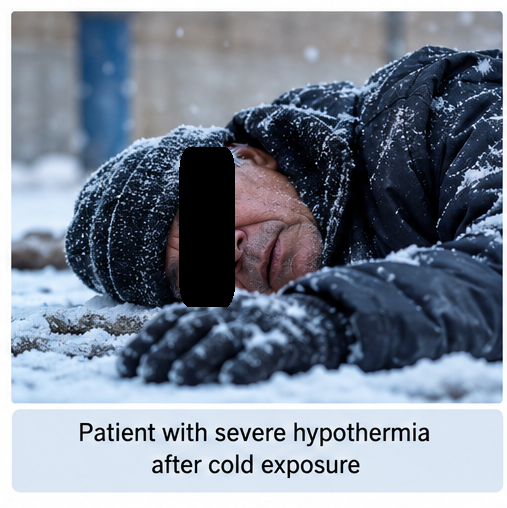
According to his family, he had been found lying in an unheated outdoor storage area after remaining there overnight. Before becoming unresponsive, he had experienced fatigue, slurred speech, and progressive drowsiness.
The patient had a history of hypertension and type 2 diabetes mellitus. There was no known history of thyroid dysfunction, stroke, seizures, or recent trauma.
On examination, he appeared critically ill, with cold extremities, shallow breathing, and markedly reduced consciousness.
His vital parameters were:
- Core body temperature: 26.4°C
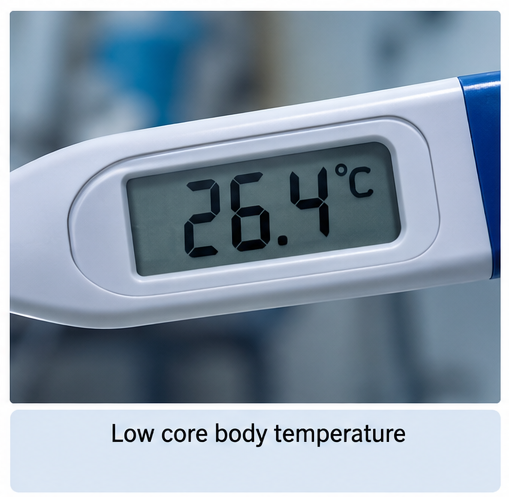
- Heart rate: 38 beats/min
- Blood pressure: 78/46 mmHg
- Respiratory rate: 9 breaths/min
- Oxygen saturation: 89% on room air
- Glasgow Coma Scale: 8/15
Neurological examination revealed reduced responsiveness with sluggish but reactive pupils. Peripheral pulses were weak, and capillary refill was delayed.
The combination of profound hypothermia, bradycardia, hypotension, and respiratory depression suggested severe accidental hypothermia with cardiovascular instability.
Investigations
Laboratory investigations included complete blood count, serum electrolytes, renal function tests, blood glucose, arterial blood gas analysis, and coagulation studies.
Arterial blood gas analysis demonstrated metabolic acidosis with a respiratory component, while elevated serum lactate suggested impaired tissue perfusion.
Serum potassium was mildly elevated, and serum creatinine showed a modest increase, suggesting reduced renal perfusion.
Electrocardiography revealed marked sinus bradycardia, prolonged conduction intervals, and characteristic Osborn waves, supporting the diagnosis of significant hypothermia.
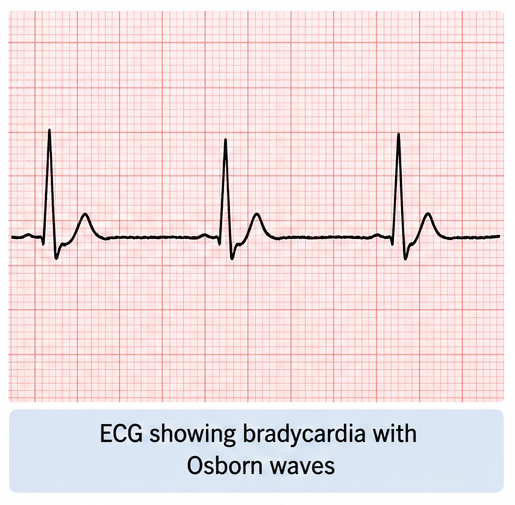
Chest radiography showed no acute pulmonary abnormality, while computed tomography of the brain revealed no acute intracranial pathology.
Thyroid function and cortisol assessment were considered to exclude endocrine causes.
A diagnosis of severe accidental hypothermia was established based on the core temperature of 26.4°C, cardiovascular instability, neurological depression, and prolonged cold exposure.
Differential Diagnosis
Myxedema Coma
Myxedema coma can present with hypothermia, bradycardia, hypotension, and altered consciousness. However, prolonged environmental cold exposure and the absence of known hypothyroidism favored accidental hypothermia.
Severe Sepsis
Sepsis may cause hypothermia, hypotension, and altered sensorium, particularly in older adults. However, the absence of an identifiable infectious focus and the history of cold exposure supported accidental hypothermia.
Hypoglycemic Encephalopathy
Hypoglycemia may produce altered consciousness, seizures, and reduced body temperature. Immediate blood glucose assessment was essential because of the patient's history of diabetes.
Drug- or Alcohol-Induced CNS Depression
Alcohol or sedative intoxication may impair thermoregulation and cause respiratory depression. However, there was no reported history of recent alcohol or sedative exposure.
Acute Cerebrovascular Event
Stroke may cause altered consciousness and autonomic dysfunction. However, brain imaging revealed no acute intracranial abnormality.
Management and Outcome
The patient was admitted to the intensive care unit for immediate stabilization and controlled rewarming.
Cold clothing was removed, and warm blankets were applied to prevent further heat loss. The patient was handled gently to minimize the risk of hypothermia-associated arrhythmias.
Due to reduced consciousness and respiratory depression, endotracheal intubation and mechanical ventilation were initiated using warmed, humidified gases.
Active external rewarming was commenced using a forced-air warming system, along with cautiously administered warmed intravenous isotonic fluids.
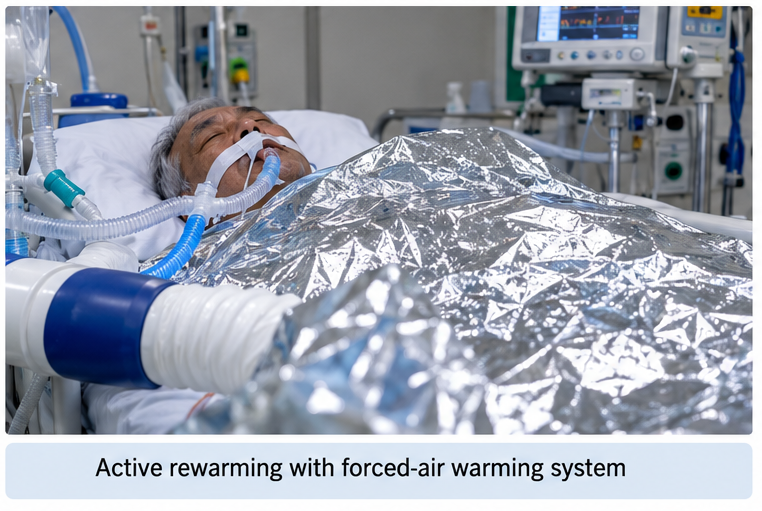
Continuous monitoring of core temperature, electrocardiographic activity, blood pressure, oxygenation, urine output, and electrolyte levels was maintained.
Bradycardia was initially managed through correction of hypothermia rather than immediate chronotropic therapy.
Although extracorporeal rewarming was considered because of cardiovascular instability, the patient demonstrated progressive improvement with conventional active rewarming.
As core temperature approached 32°C, heart rate increased to approximately 60 beats/min, blood pressure improved, and peripheral perfusion recovered.
Serial electrocardiograms demonstrated resolution of Osborn waves and improvement in conduction abnormalities.
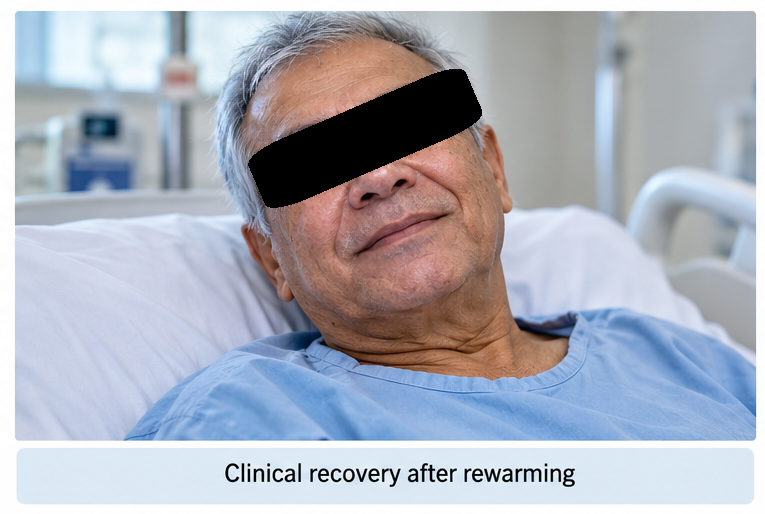
Following restoration of normothermia, the patient regained consciousness and demonstrated adequate spontaneous respiratory effort.
He was subsequently extubated after clinical stabilization. Repeat laboratory investigations showed improvement in metabolic acidosis, serum lactate, and renal function.
No sustained ventricular arrhythmias or cardiac arrest occurred during hospitalization.
The patient was discharged in stable condition with advice regarding protection from cold exposure and follow-up care.
Discussion
Severe accidental hypothermia is associated with progressive impairment of neurological, cardiovascular, respiratory, and metabolic functions.
Normally, body temperature is maintained through thermoregulatory mechanisms such as peripheral vasoconstriction, shivering, and increased metabolic heat production. Prolonged cold exposure overwhelms these mechanisms, resulting in progressive cooling.
As core temperature decreases, patients may develop confusion, lethargy, bradycardia, hypoventilation, and reduced consciousness. Temperatures below 28°C are associated with an increased risk of ventricular arrhythmias and cardiac arrest.
Cardiovascular manifestations include reduced myocardial contractility, sinus bradycardia, prolonged conduction intervals, and Osborn waves on electrocardiography.
Neurological impairment results from reduced cerebral metabolism, while respiratory depression may cause hypoventilation and respiratory failure.
Diagnosis requires accurate core temperature measurement, preferably using an appropriate low-reading thermometer. Peripheral temperature measurements may be unreliable in severe hypothermia.
Management focuses on preventing further heat loss, maintaining airway and circulation, and initiating appropriate rewarming.
Passive external rewarming is generally suitable for stable patients with mild hypothermia, while moderate-to-severe hypothermia often requires active external or internal rewarming.
Forced-air warming systems, warmed intravenous fluids, and warmed humidified respiratory gases may be used according to clinical requirements.
Patients with persistent cardiovascular instability, refractory ventricular arrhythmias, or cardiac arrest should be evaluated for extracorporeal life support, particularly extracorporeal membrane oxygenation where available.
During rewarming, careful monitoring is essential because hypotension, electrolyte disturbances, and arrhythmias may occur.
In the present case, profound bradycardia, hypotension, respiratory depression, altered consciousness, and Osborn waves were characteristic of severe accidental hypothermia.
Early airway protection, active rewarming, cardiovascular support, and continuous monitoring resulted in progressive clinical improvement.
This case highlights the importance of recognizing hypothermia as a reversible cause of severe neurological and cardiovascular dysfunction.
Conclusion
Severe accidental hypothermia is a potentially fatal emergency that may present with altered consciousness, profound bradycardia, hypotension, respiratory depression, and characteristic electrocardiographic abnormalities.
Accurate core temperature measurement and early clinical recognition are essential for diagnosis.
Management requires prevention of further heat loss, airway and circulatory stabilization, controlled active rewarming, and continuous cardiovascular monitoring.
Patients with refractory cardiovascular instability or cardiac arrest may require extracorporeal life support.
In this case, timely rewarming and supportive management resulted in recovery of neurological and cardiovascular function without major complications.
References
1. Brown DJA, Brugger H, Boyd J, Paal P. Accidental hypothermia. N Engl J Med. 2012;367(20):1930–1938. https://pubmed.ncbi.nlm.nih.gov/23150960/
2. Paal P, Gordon L, Strapazzon G, et al. Accidental hypothermia—an update. Scand J Trauma Resusc Emerg Med. 2016;24:111. https://doi.org/10.1186/s13049-016-0303-7
3. Lott C, Truhlář A, Alfonzo A, et al. European Resuscitation Council Guidelines 2021: cardiac arrest in special circumstances. Resuscitation. 2021;161:152–219. https://doi.org/10.1016/j.resuscitation.2021.02.011
4. Zafren K, Giesbrecht GG, Danzl DF, et al. Wilderness Medical Society practice guidelines for the out-of-hospital evaluation and treatment of accidental hypothermia: 2014 update. Wilderness Environ Med. 2014;25(4 Suppl):S66–S85. https://doi.org/10.1016/j.wem.2014.09.010
5. Podsiadło P, Darocha T, Svendsen ØS, et al. Outcomes of patients suffering unwitnessed hypothermic cardiac arrest rewarmed with extracorporeal life support: a systematic review. Artif Organs. 2021;45(3):222–229. https://pubmed.ncbi.nlm.nih.gov/ term=Podsiadlo+unwitnessed+hypothermic+cardiac+arrest+extracorporeal
6. Paal P, Pasquier M, Darocha T, et al. Accidental hypothermia: 2021 update. Int J Environ Res Public Health. 2022;19(1):501. https://doi.org/10.3390/ijerph1901050
Read more such content on @ Hidoc Dr | Medical Learning App for Doctors
Recommended News For You
Recommended Articles For You
Featured News
Featured Articles
Featured Events
Featured KOL Videos
1.
Australian researchers attribute drop in melanoma rates to increasingly diverse population
2.
Scientists discover the 'roadmap' that aggressive cancer uses to spread
3.
Multidrug Regimen Could Change Treatment Landscape for Relapsed/Refractory DLBCL
4.
Unprecedented PFS in HER2-Mutant Lung Cancer, but With a Touch of Controversy
5.
Scientists pioneer noninvasive 3D imaging to enhance skin cancer management
1.
CAR T + Ibrutinib in R/R Mantle Cell Lymphoma: Phase 2 TARMAC Study Insights
2.
Geriatric Assessment Before Systemic Cancer Therapy: Clinical Relevance and Evidence-Based Approaches
3.
The Revolutionary Treatment of Hodgkin's Lymphoma: A New Hope for the Future
4.
Fibroma: Understanding the Causes, Symptoms, and Treatment Options
5.
Chronic Disease Clustering in Communities: Epidemiology, Mechanisms, and Clinical Implications
1.
International Conference on Cancer Nursing and Rehabilitation Strategies
2.
International Conference on Best Practices in Oncology, Cardiology and Critical Care
3.
International Conference on Innovations in Critical Care for Oncology and Cardiology
4.
International Symposium on Oncology, Cardiology and Critical Care Innovations
5.
International Conference on Cancer Nursing and Hematology Support

Address :
Hidoc Dr. Inc. | Delaware C Corp | 1309 Coffeen Ave. Suite 1200, Sheridan WY, 82801
Phone :
+1-415-463-3094
Email :
anishagadia@hidoc.co
© Copyright 2026 Hidoc Dr. Inc.
Terms & Conditions - LLP | Inc. | Privacy Policy - LLP | Inc. | Account Deactivation

To get started please enter your email ID
Welcome to Hidoc Dr.
Join to enhance your clinical skills and gain specialized in-depth medical knowledge