Septic Shock Secondary to Severe Community-Acquired Pneumonia
OthersPage Navigation
Introduction
Septic shock is a life-threatening form of sepsis characterized by profound circulatory, cellular, and metabolic abnormalities. Sepsis itself is defined as life-threatening organ dysfunction resulting from a dysregulated host response to infection. According to the Sepsis-3 criteria, septic shock can be clinically identified in a patient with sepsis who requires vasopressor therapy to maintain a mean arterial pressure (MAP) of at least 65 mmHg and has a serum lactate level greater than 2 mmol/L despite adequate volume resuscitation.
Common sources of septic shock include pneumonia, intra-abdominal infection, urinary tract infection, bloodstream infection, and skin or soft-tissue infection. The clinical presentation may include fever or hypothermia, hypotension, tachycardia, tachypnea, altered mental status, oliguria, and evidence of impaired peripheral perfusion.
Early recognition is essential because septic shock can rapidly progress to multiorgan dysfunction and death. Initial management involves prompt assessment of the infectious source, microbiological cultures, early antimicrobial therapy, intravenous crystalloid resuscitation, vasopressor support when hypotension persists, and appropriate source control.
Norepinephrine is recommended as the first-line vasopressor in septic shock. Hemodynamic response, serum lactate, urine output, mental status, and peripheral perfusion can be used together to assess the response to resuscitation.
Case Report
A 64-year-old man presented to the emergency department with a three-day history of high-grade fever, productive cough, progressive breathlessness, and generalized weakness.
The cough was associated with yellowish sputum and right-sided pleuritic chest discomfort. During the preceding 12 hours, his family noticed increasing drowsiness and reduced oral intake. His urine output had also decreased substantially.
The patient had a history of type 2 diabetes mellitus for approximately 10 years and hypertension for eight years. He was receiving oral antidiabetic and antihypertensive medications, although adherence was inconsistent. He had no known history of chronic kidney disease, chronic liver disease, heart failure, or malignancy.
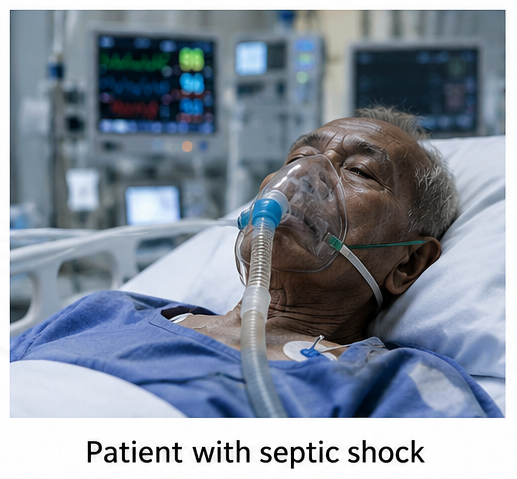
On arrival, the patient appeared acutely ill and was drowsy but arousable. His temperature was 39.1°C, blood pressure was 78/46 mmHg, pulse rate was 126 beats/minute, respiratory rate was 30 breaths/minute, and oxygen saturation was 88% on room air.
Peripheral extremities were cool, and capillary refill time was prolonged. The mucous membranes appeared dry. Chest examination demonstrated reduced air entry with bronchial breath sounds and coarse inspiratory crackles over the right lower lung field.
Cardiovascular examination revealed tachycardia without an audible murmur. Abdominal examination was unremarkable, with no guarding, rigidity, or focal tenderness.
The combination of suspected severe infection, hypotension, respiratory compromise, altered mental status, and impaired peripheral perfusion raised immediate concern for sepsis with circulatory shock.
Investigations
Initial laboratory investigations showed a hemoglobin level of 12.8 g/dL, leukocyte count of 19,600 cells/mm³ with neutrophilic predominance, and platelet count of 138,000 cells/mm³.
Serum creatinine was elevated at 2.1 mg/dL compared with a previously documented baseline of 0.9 mg/dL. Blood urea nitrogen was 46 mg/dL. Serum sodium was 133 mmol/L and potassium was 4.5 mmol/L.
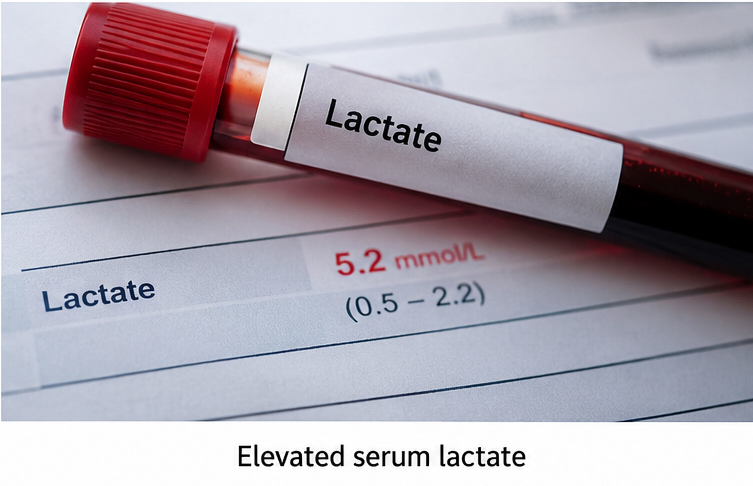
Serum lactate was markedly elevated at 5.2 mmol/L, indicating significant physiological stress and impaired tissue perfusion in the clinical context. Arterial blood gas analysis demonstrated metabolic acidosis with a pH of 7.29 and bicarbonate of 18 mmol/L.
C-reactive protein and procalcitonin were elevated.
Two sets of blood cultures were obtained before antimicrobial administration without substantially delaying treatment. A sputum sample was also sent for Gram staining and bacterial culture.
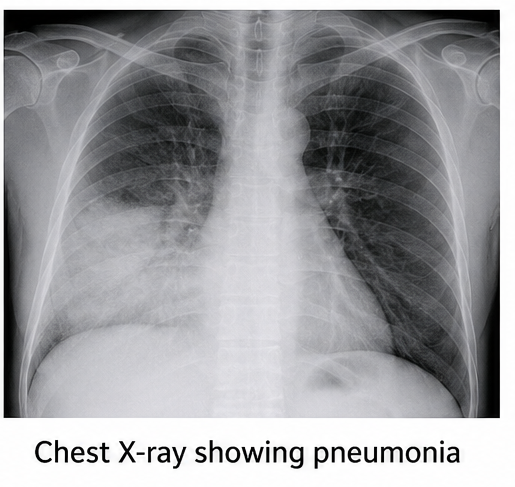
Chest radiography demonstrated right lower-zone air-space consolidation consistent with pneumonia. Bedside lung ultrasonography showed right basal consolidation with air bronchograms.
Electrocardiography demonstrated sinus tachycardia without acute ischemic changes. Bedside echocardiography showed preserved global left ventricular systolic function and no major structural abnormality to suggest a primary cardiogenic cause for the shock.
Despite initial intravenous crystalloid resuscitation, the patient remained hypotensive, with MAP below 65 mmHg. Repeat serum lactate remained elevated above 2 mmol/L.
The presence of suspected infection with organ dysfunction, persistent hypotension requiring vasopressor support, and elevated lactate despite fluid resuscitation supported a diagnosis of septic shock secondary to severe community-acquired pneumonia.
Differential Diagnosis
Hypovolemic Shock
Reduced oral intake and clinical evidence of dehydration raised the possibility of a hypovolemic component. However, persistent hypotension despite initial fluid resuscitation, marked inflammatory abnormalities, pneumonia, and ongoing hyperlactatemia favored septic shock as the predominant mechanism.
Cardiogenic Shock
Cardiogenic shock may present with hypotension, impaired tissue perfusion, oliguria, and elevated lactate. However, there was no history of acute chest pain, electrocardiography showed no acute ischemic changes, and bedside echocardiography demonstrated preserved global systolic function.
Obstructive Shock
Pulmonary embolism was considered because of acute hypoxemia and hypotension. However, the clinical history of fever and productive cough, focal pulmonary findings, inflammatory markers, and radiographic consolidation strongly supported pneumonia with sepsis.
Severe Pneumonia Without Septic Shock
Severe pneumonia can cause respiratory failure and systemic inflammation without shock. In this patient, persistent hypotension requiring vasopressors together with lactate greater than 2 mmol/L despite fluid resuscitation fulfilled the clinical criteria for septic shock.
Management and Outcome
The patient was immediately transferred to the intensive care unit for hemodynamic and respiratory monitoring.
Supplemental oxygen was administered, and intravenous balanced crystalloid was initiated. Fluid administration was reassessed according to blood pressure, peripheral perfusion, urine output, respiratory status, and dynamic assessment of fluid responsiveness to avoid unnecessary fluid accumulation.
Empirical broad-spectrum intravenous antimicrobial therapy appropriate for severe community-acquired pneumonia was initiated promptly after microbiological samples had been obtained.
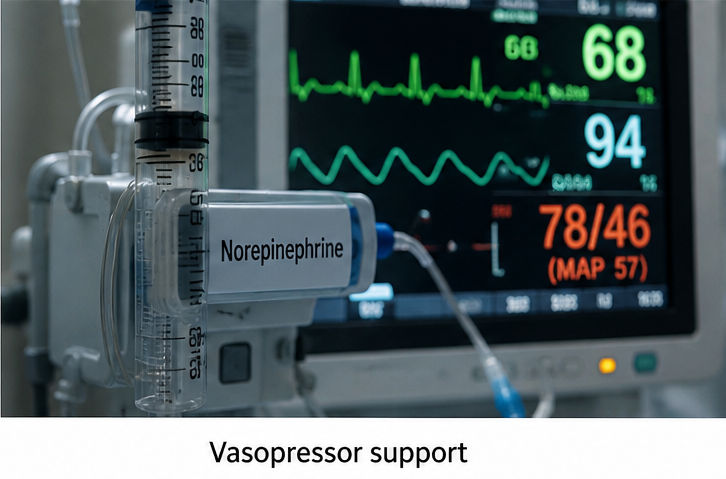
Despite initial fluid resuscitation, the MAP remained below 65 mmHg. Norepinephrine infusion was therefore initiated and titrated to maintain adequate arterial pressure.
A urinary catheter was inserted for close monitoring of hourly urine output. Serial serum lactate measurements were performed to assess the trajectory of hyperlactatemia alongside clinical measures of tissue perfusion.
During the first 12 hours, the patient's blood pressure progressively improved with norepinephrine support. Serum lactate decreased from 5.2 mmol/L to 3.1 mmol/L and subsequently to 1.9 mmol/L. Urine output gradually improved.
Blood cultures subsequently grew Streptococcus pneumoniae, and antimicrobial therapy was adjusted according to culture and susceptibility findings.

Over the following 48 hours, the patient's hemodynamic status stabilized. Vasopressor requirements progressively decreased, and norepinephrine was successfully discontinued.
Renal function also improved, with serum creatinine decreasing to 1.3 mg/dL by the fourth hospital day. Mental status returned to baseline, fever resolved, and oxygen requirements decreased as the pneumonia improved.
The patient was transferred from the intensive care unit to the general medical ward and subsequently discharged in stable condition with advice regarding completion of antimicrobial therapy, diabetes control, vaccination assessment, and clinical follow-up.
Discussion
Septic shock represents the most severe circulatory manifestation of sepsis and is associated with substantial mortality. The Sepsis-3 framework emphasizes that sepsis involves organ dysfunction caused by a dysregulated response to infection rather than infection accompanied simply by systemic inflammation.
Clinically, septic shock is identified when a patient with sepsis requires vasopressor therapy to maintain MAP at or above 65 mmHg and has serum lactate above 2 mmol/L despite adequate volume resuscitation. These criteria identify a population with substantially greater mortality than sepsis alone.
Pneumonia is an important infectious source leading to sepsis and septic shock. In the present case, fever, productive cough, focal chest findings, hypoxemia, and radiographic consolidation established a pulmonary source. Hypotension, acute kidney injury, altered mental status, hyperlactatemia, and metabolic acidosis indicated systemic organ dysfunction and impaired perfusion.
Management of septic shock is time-sensitive. The Surviving Sepsis Campaign recommends that treatment and resuscitation begin immediately. Crystalloids are recommended as first-line resuscitation fluid, with balanced crystalloids suggested rather than normal saline.
Fluid administration must nevertheless be individualized. After initial resuscitation, repeated assessment is important because excessive fluid administration can contribute to tissue edema and organ dysfunction. Dynamic parameters such as response to passive leg raising or a fluid bolus, stroke-volume changes, pulse-pressure variation, or echocardiographic assessment can help guide further fluid administration.
Antimicrobial treatment is another critical component. Appropriate microbiological cultures should be obtained before antimicrobial administration when this does not substantially delay treatment. Empirical therapy should provide appropriate coverage for the suspected source and patient-specific risk factors, followed by narrowing or adjustment once the pathogen and susceptibility profile become available.
For persistent hypotension following fluid resuscitation, norepinephrine is recommended as the first-line vasopressor. The initial MAP target is generally 65 mmHg. Vasopressin may be added when MAP remains inadequate during norepinephrine therapy rather than continuing to escalate norepinephrine alone in selected patients.
Serum lactate is useful as part of the assessment of septic shock and response to treatment, but it must be interpreted within the overall clinical context because elevated lactate is not exclusively caused by tissue hypoxia. Capillary refill time can additionally be used alongside other measures to assess peripheral perfusion.
Identification and control of the infectious source are equally important. Source-control procedures may include drainage of an abscess, removal of an infected device, debridement of infected tissue, or surgical management of an intra-abdominal source. In pneumonia without empyema, abscess, or another drainable complication, appropriate antimicrobial treatment and supportive care constitute the primary management.
In this patient, early recognition of septic shock, prompt antimicrobial administration, crystalloid resuscitation, norepinephrine support, microbiological diagnosis, and continued assessment of organ perfusion were followed by progressive hemodynamic recovery. Declining lactate, restoration of urine output, improvement in renal function, and successful discontinuation of vasopressor support indicated resolution of shock.
Conclusion
Septic shock is a medical emergency characterized by severe infection-associated circulatory and metabolic abnormalities with a high risk of mortality.
In this patient, severe community-acquired pneumonia progressed to sepsis with persistent hypotension, hyperlactatemia, acute kidney injury, altered mental status, and impaired tissue perfusion.
Persistent hypotension requiring norepinephrine together with lactate above 2 mmol/L despite fluid resuscitation supported the diagnosis of septic shock.
Prompt antimicrobial therapy, appropriate fluid resuscitation, vasopressor support, microbiological assessment, and repeated evaluation of tissue perfusion were central to management.
The patient's progressive reduction in serum lactate, improvement in renal function, restoration of urine output, and discontinuation of vasopressor therapy demonstrated successful resolution of shock.
Early recognition and coordinated management remain essential for limiting multiorgan dysfunction and improving outcomes in patients with septic shock.
References
- Singer M, Deutschman CS, Seymour CW, et al. The Third International Consensus Definitions for Sepsis and Septic Shock (Sepsis-3). JAMA. 2016;315(8):801–810. https://pmc.ncbi.nlm.nih.gov/articles/PMC4968574/
- Shankar-Hari M, Phillips GS, Levy ML, et al. Developing a New Definition and Assessing New Clinical Criteria for Septic Shock: For the Third International Consensus Definitions for Sepsis and Septic Shock (Sepsis-3). JAMA. 2016;315(8):775–787. https://pmc.ncbi.nlm.nih.gov/articles/PMC4910392/
- Evans L, Rhodes A, Alhazzani W, et al. Surviving Sepsis Campaign: International Guidelines for Management of Sepsis and Septic Shock 2021. Intensive Care Med. 2021;47(11):1181–1247. https://pmc.ncbi.nlm.nih.gov/articles/PMC8486643/
- Seymour CW, Liu VX, Iwashyna TJ, et al. Assessment of Clinical Criteria for Sepsis: For the Third International Consensus Definitions for Sepsis and Septic Shock (Sepsis-3). JAMA. 2016;315(8):762–774. https://pmc.ncbi.nlm.nih.gov/articles/PMC5433435/
- Font MD, Thyagarajan B, Khanna AK. Sepsis and Septic Shock – Basics of Diagnosis, Pathophysiology and Clinical Decision Making. Med Clin North Am. 2020;104(4):573–585. https://pmc.ncbi.nlm.nih.gov/articles/PMC7121676/
- Gavelli F, Castello LM, Avanzi GC. Management of Sepsis and Septic Shock in the Emergency Department. Intern Emerg Med. 2021;16:1649–1661. https://pmc.ncbi.nlm.nih.gov/articles/PMC8354945/
Read more such content on @ Hidoc Dr | Medical Learning App for Doctors
Recommended News For You
Recommended Articles For You
Featured News
Featured Articles
Featured Events
Featured KOL Videos
1.
Tumor characteristics found to differ for melanomas in children, teens and young adults
2.
Unexplained CAR-T Death; Americans Spurn Sunscreen; Improving Diversity in Trials
3.
"A lot" of aspirin reduces the risk of ovarian cancer, regardless of genetic factors, according to the JAMA study.
4.
Approval in Endometrial Cancer Expanded; Masks at Cancer Centers; NPR Reporter Dies
5.
Is Lenalidomide Resistance in Myeloma Reversible with JAK Inhibition?
1.
Modern Oncology Unveiled with Treatment Innovations and Personalized Cancer Care
2.
Screening for Early Therapy-Related Cancer Susceptibility
3.
Unlocking the Potential of Bicalutamide 50 mg: A Revolutionary New Treatment for Prostate Cancer
4.
Skin-Sparing Mastectomy: Balancing Cancer Control with Cosmetic Results
5.
Reducing Modifiable Childhood Cancer Exposure Risks
1.
International Conference on Innovations in Critical Care for Oncology and Cardiology
2.
International Conference on Oncology, Cardiology and Critical Care Policy
3.
International Conference on Oncology, Cancer Prevention and Public Health
4.
International Conference on Cancer Nursing and Rehabilitation Strategies
5.
International Conference on Best Practices in Oncology, Cardiology and Critical Care
1.
Dacomitinib Case Presentation: Baseline Treatment and Current Status
2.
Targeting Oncologic Drivers with Dacomitinib: Further Discussion on Lung Cancer Treatment
3.
Should We Use DARA Up Front As First-Line Therapy in MM?
4.
Iron Deficiency Anemia: Ferric Maltol As a New Treatment Option- A New Perspective
5.
Importance of Cancer Screening and Early Detection

Address :
Hidoc Dr. Inc. | Delaware C Corp | 1309 Coffeen Ave. Suite 1200, Sheridan WY, 82801
Phone :
+1-415-463-3094
Email :
anishagadia@hidoc.co
© Copyright 2026 Hidoc Dr. Inc.
Terms & Conditions - LLP | Inc. | Privacy Policy - LLP | Inc. | Account Deactivation

To get started please enter your email ID
Welcome to Hidoc Dr.
Join to enhance your clinical skills and gain specialized in-depth medical knowledge