Hailey–Hailey Disease Presenting with Recurrent Painful Intertriginous Erosions: A Case Report
OthersPage Navigation
Abstract
Hailey–Hailey disease, also known as familial benign chronic pemphigus, is a rare autosomal dominant blistering disorder caused by mutations in the ATP2C1 gene. The disease is characterized by recurrent painful erosions, fissures, vesicles, and crusted plaques involving flexural areas such as the axillae, groin, neck, and inframammary folds. Symptoms are frequently exacerbated by heat, sweating, friction, and secondary bacterial or fungal infections, resulting in significant impairment of quality of life. Diagnosis is primarily clinical and histopathological, with biopsy demonstrating suprabasal acantholysis producing the characteristic "dilapidated brick wall" appearance. Treatment focuses on symptom control through topical corticosteroids, antimicrobial therapy, avoidance of triggers, and selected systemic or procedural interventions in refractory disease. We report the case of a 42-year-old woman presenting with recurrent painful erosive plaques involving both axillae and groin. Clinical examination and skin biopsy confirmed Hailey–Hailey disease. The patient responded well to topical corticosteroids, antimicrobial therapy, and lifestyle modifications, with marked improvement during follow-up.
Introduction
Hailey–Hailey disease is an uncommon inherited acantholytic dermatosis caused by pathogenic variants in the ATP2C1 gene, which encodes a calcium ATPase responsible for maintaining keratinocyte adhesion. Defective calcium regulation leads to impaired desmosomal integrity and recurrent epidermal separation. The disease usually manifests during the third or fourth decade of life and follows a chronic relapsing course.
The condition predominantly affects areas exposed to friction and moisture, including the axillae, groin, neck, and inframammary folds. Patients typically experience painful erosions, fissures, malodorous plaques, and recurrent secondary infections. Clinical exacerbations are commonly precipitated by heat, sweating, obesity, mechanical friction, and emotional stress. Histopathological examination remains the gold standard for confirmation. Although there is no definitive cure, early diagnosis and individualized management significantly reduce symptom severity and recurrence.
Case Report
A 42-year-old woman presented to the dermatology outpatient department with painful recurrent skin lesions involving both axillae and the groin for approximately eight months.
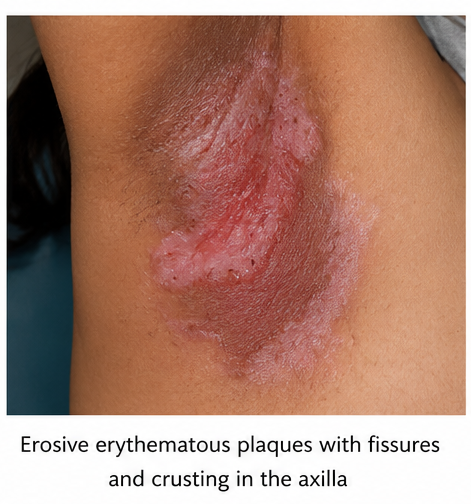
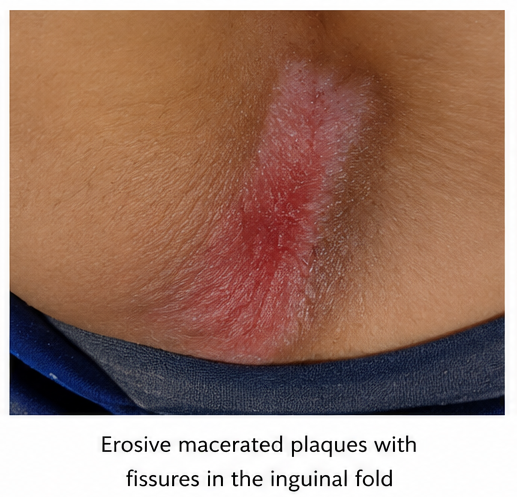
She reported repeated episodes of painful blisters that ruptured easily, leaving raw erosions associated with burning sensation, itching, foul odor, and difficulty performing routine physical activities.
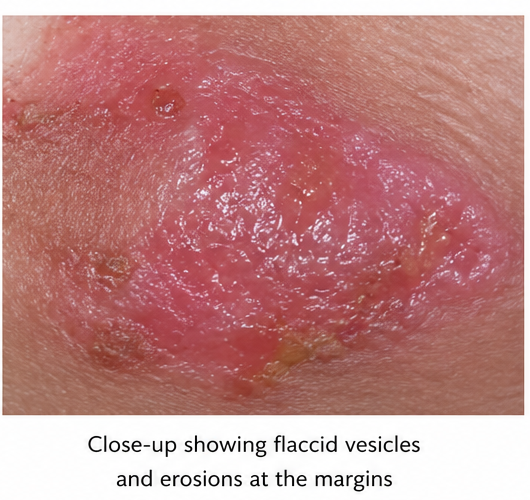
Symptoms worsened during the summer months and after excessive sweating.
The patient reported intermittent improvement with over-the-counter topical creams; however, lesions recurred within a few weeks. Her mother had experienced similar recurrent skin lesions during adulthood. She denied diabetes mellitus, autoimmune disorders, or recent medication use.
General physical examination was unremarkable with stable vital signs. Dermatological examination revealed well-defined erythematous erosive plaques with superficial fissures, crusting, and maceration involving both axillae and bilateral inguinal folds. Multiple flaccid vesicles were noted at the margins of active lesions. Mild tenderness and malodor were present without significant lymphadenopathy. Mucosal surfaces, scalp, nails, and palms were unaffected.
Routine laboratory investigations, including complete blood count, fasting blood glucose, liver function tests, renal function tests, and inflammatory markers, were within normal limits. Bacterial swab culture demonstrated mild secondary Staphylococcus aureus colonization. Potassium hydroxide examination excluded superficial fungal infection.
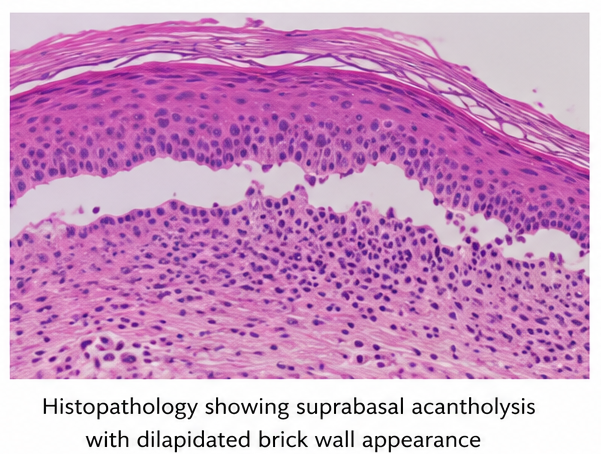
A punch biopsy from an active lesion demonstrated extensive suprabasal acantholysis with incomplete epidermal separation, producing the characteristic "dilapidated brick wall" appearance without significant dyskeratosis. These findings confirmed the diagnosis of Hailey–Hailey disease.
Management and Outcome
The patient was treated with a medium-potency topical corticosteroid applied twice daily for two weeks along with topical mupirocin for secondary bacterial colonization. Daily cleansing with an antiseptic wash was advised, and zinc oxide barrier cream was recommended to reduce friction and moisture accumulation.
She was counseled regarding lifestyle modifications, including wearing loose cotton clothing, maintaining ideal body weight, minimizing sweating, avoiding prolonged heat exposure, and promptly treating secondary skin infections. Oral antihistamines were prescribed for symptomatic relief of itching.
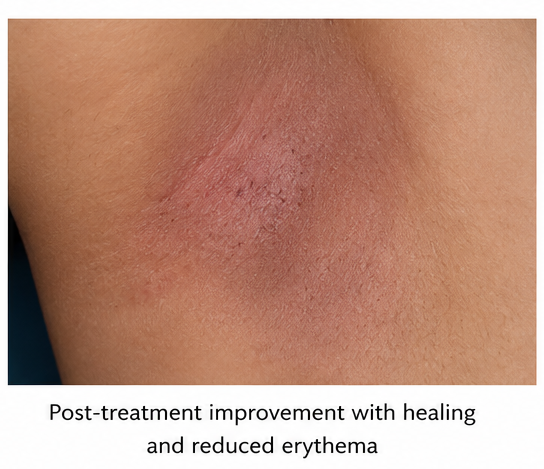
At the four-week follow-up visit, pain, burning sensation, and erythema had improved substantially. Most erosions had healed, leaving mild post-inflammatory hyperpigmentation. The patient reported significantly improved daily functioning and reduced discomfort. She was advised to continue preventive skin care and remain under regular dermatological follow-up because of the chronic relapsing nature of the disease.
Follow-up
Four Weeks
- Significant healing of erosive plaques.
- Marked reduction in pain, burning sensation, and itching.
- Resolution of secondary bacterial infection.
Three Months
- Only occasional mild erythematous patches during excessive sweating.
- No new blister formation.
- Improved quality of life with adherence to preventive measures.
Six Months
The patient experienced only one mild flare during hot weather, which responded promptly to short-term topical corticosteroid therapy. No hospitalization or systemic treatment was required.
Discussion
Hailey–Hailey disease is a rare inherited blistering disorder resulting from ATP2C1 mutations that impair intracellular calcium homeostasis and disrupt keratinocyte adhesion. Although inherited in an autosomal dominant pattern, disease severity varies considerably even among affected family members.
The disease primarily affects flexural skin because repeated friction and moisture increase mechanical stress on already fragile epidermal cells. Secondary bacterial and fungal infections frequently complicate disease activity and contribute to pain, malodor, delayed healing, and recurrent exacerbations.
Histopathology remains the cornerstone of diagnosis, demonstrating widespread suprabasal acantholysis with the classic "dilapidated brick wall" appearance.
Differential diagnoses include pemphigus vulgaris, inverse psoriasis, candidal intertrigo, Darier disease, and chronic eczema.
Management aims to control inflammation, prevent secondary infection, reduce friction, and minimize disease triggers. Topical corticosteroids remain first-line therapy during acute flares. Topical calcineurin inhibitors may be used for long-term maintenance to reduce corticosteroid exposure. Antibiotics or antifungal agents should be administered when secondary infection is present. Refractory disease may benefit from systemic agents including doxycycline, retinoids, immunosuppressants, botulinum toxin injections, laser therapy, dermabrasion, or surgical excision in selected patients. Patient education regarding avoidance of heat, sweating, obesity, and mechanical trauma is essential for long-term disease control.
Prognosis
Hailey–Hailey disease follows a chronic relapsing course with periods of remission and exacerbation. Although the condition is not life-threatening, recurrent painful erosions and secondary infections may substantially impair quality of life. Early diagnosis, trigger avoidance, prompt treatment of disease flares, and regular dermatological follow-up enable effective long-term symptom control and reduce disease recurrence.
Conclusion
Hailey–Hailey disease should be considered in patients presenting with recurrent painful erosions affecting flexural skin, particularly when there is a positive family history. Histopathological confirmation facilitates accurate diagnosis and exclusion of other blistering disorders. Comprehensive management combining topical anti-inflammatory therapy, treatment of secondary infections, lifestyle modifications, and preventive skin care provides substantial symptomatic relief and improves long-term quality of life.
References
- Burge SM. Hailey–Hailey disease: the clinical features, response to treatment and prognosis. British Journal of Dermatology. 1992;126(3):275–282. https://pubmed.ncbi.nlm.nih.gov/1534094/
- StatPearls. Hailey-Hailey Disease. StatPearls Publishing. https://www.ncbi.nlm.nih.gov/books/NBK585136/
- GeneReviews. ATP2C1-Related Hailey–Hailey Disease. https://www.ncbi.nlm.nih.gov/books/
- Řeháková Z, et al. Current therapeutic options for Hailey–Hailey disease: A comprehensive review. Dermatologic Therapy. 2021. https://pubmed.ncbi.nlm.nih.gov/
- Fistarol SK, Itin PH. Diagnosis and treatment of Hailey–Hailey disease. American Journal of Clinical Dermatology. 2009;10(2):99–110. https://pubmed.ncbi.nlm.nih.gov/19222249/
Read more such content on @ Hidoc Dr | Medical Learning App for Doctors
Recommended News For You
Recommended Articles For You
Featured News
Featured Articles
Featured Events
Featured KOL Videos
1.
NPM1-Mutated AML: Not All Treatments Are Equal
2.
Paging Dr. AI; Myth Busting in Cancer; Oncologists Shine in Malpractice Survey
3.
MRI can save rectal cancer patients from surgery, study suggests
4.
Rectal Cancer 'Crisis'; Smells Like Cancer; Flushing Away Clues to Colon Cancer
5.
Rising rates of head and neck cancers in England
1.
A Closer Look at Breast Cancer: Examining the Ultrasound Images
2.
Exploring the Latest Advances in Hodgkin's Lymphoma Treatment
3.
Molecular Classification of Refractory Anemia: A Comprehensive Review
4.
Ferroptosis-Modulating Therapeutics in Precision Oncology
5.
Blood-Cell Morphology Foundation Models: Transforming Hematological Diagnostics and Clinical Practice
1.
International Cancer Conference
2.
Asian Symposium on Advancement in Hematology and Oncology (ASAHO)
3.
International Cancer Conference
4.
Asian Symposium on Advancement in Hematology and Oncology (ASAHO)
5.
Asian Symposium on Advancement in Hematology and Oncology
1.
CDK4/6 Inhibitors in Extending Overall Survival in HR+/HER2- aBC Patients in Clinical Trial and Real World
2.
Thromboprophylaxis In Medical Settings- An Update
3.
Nimotozumab Plus Chemo-radiotherapy v/s Placebo Plus Chemo-radiotherapy in Locally Advanced Nasopharyngeal Carcinoma
4.
How Platelet Disorders Can Affect the Body
5.
Treatment Sequencing Strategies in ALK + NSCLC Patients with CNS Diseases

Address :
Hidoc Dr. Inc. | Delaware C Corp | 1309 Coffeen Ave. Suite 1200, Sheridan WY, 82801
Phone :
+1-415-463-3094
Email :
anishagadia@hidoc.co
© Copyright 2026 Hidoc Dr. Inc.
Terms & Conditions - LLP | Inc. | Privacy Policy - LLP | Inc. | Account Deactivation

To get started please enter your email ID
Welcome to Hidoc Dr.
Join to enhance your clinical skills and gain specialized in-depth medical knowledge