Case Report: Liver Cirrhosis Presenting With Ascites, Portal Hypertension, and Hepatic Decompensation
OthersPage Navigation
Introduction
Liver cirrhosis is a chronic, progressive hepatic disorder characterized by diffuse fibrosis, regenerative nodule formation, and distortion of normal liver architecture. It represents the advanced stage of several chronic liver diseases and may lead to significant complications associated with portal hypertension and impaired hepatic function.
Common etiologies include chronic alcohol consumption, chronic hepatitis B and C infections, metabolic dysfunction-associated steatotic liver disease, and autoimmune liver disorders.
Patients with compensated cirrhosis may remain asymptomatic for several years. However, disease progression can result in ascites, jaundice, variceal bleeding, hepatic encephalopathy, and renal dysfunction.
Diagnosis involves clinical evaluation, laboratory investigations, abdominal ultrasonography, and assessment of hepatic fibrosis and portal hypertension.
Early recognition, appropriate management, and regular surveillance are essential to reduce complications and improve long-term outcomes.
Case Presentation
A 54-year-old man presented to the gastroenterology department with progressive abdominal distension, bilateral lower-limb swelling, generalized weakness, and reduced appetite for approximately three months.
The abdominal distension initially developed gradually but became increasingly noticeable during the preceding four weeks.
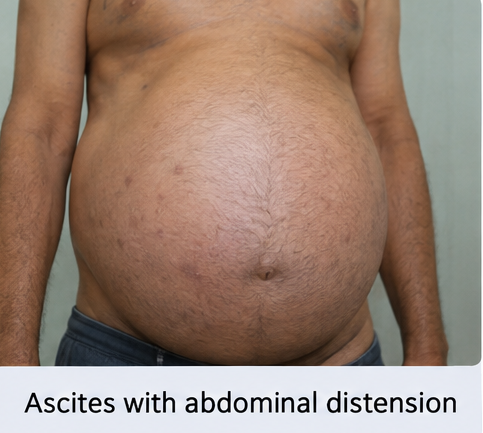
He also reported early satiety, intermittent nausea, and reduced exercise tolerance.
During the previous two weeks, the patient developed yellowish discoloration of the eyes and dark-colored urine.
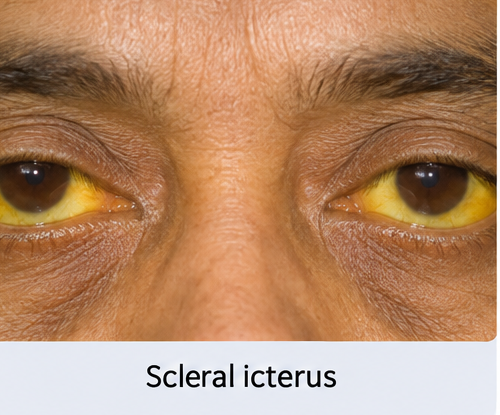
He denied hematemesis, melena, fever, or recent abdominal trauma.
The patient had a history of chronic alcohol consumption for approximately 20 years, averaging 60–80 g of alcohol daily. He reported reducing alcohol intake during the preceding month.
There was no known history of viral hepatitis, diabetes mellitus, or previous gastrointestinal bleeding.
On examination, the patient was conscious, oriented, and hemodynamically stable.
Vital parameters were:
- Blood pressure: 108/68 mmHg
- Heart rate: 92 beats/minute
- Respiratory rate: 20 breaths/minute
- Temperature: 36.8°C
- Oxygen saturation: 97%
- Body mass index: 25.4 kg/m²
Physical examination revealed scleral icterus, bilateral pitting pedal edema, and mild temporal muscle wasting.
Abdominal examination demonstrated marked distension, shifting dullness, and a positive fluid thrill, suggesting significant ascites.
The liver edge was firm and irregular, while the spleen was palpable approximately 3 cm below the left costal margin.
No asterixis or altered mental status was observed.
The clinical findings raised suspicion of decompensated chronic liver disease with portal hypertension.
Investigations
Initial laboratory investigations assessed hepatic function, coagulation parameters, renal function, and potential underlying etiologies.
Complete blood count revealed:
- Hemoglobin: 10.8 g/dL
- Total leukocyte count: 6,800 cells/µL
- Platelet count: 92,000 cells/µL
Liver function tests demonstrated:
- Total bilirubin: 4.2 mg/dL
- Direct bilirubin: 2.6 mg/dL
- Aspartate aminotransferase: 86 U/L
- Alanine aminotransferase: 42 U/L
- Alkaline phosphatase: 168 U/L
- Serum albumin: 2.4 g/dL
- Total serum protein: 5.8 g/dL
Coagulation investigations revealed:
- Prothrombin time: 19.2 seconds
- International normalized ratio: 1.7
Renal function and electrolytes demonstrated:
- Serum creatinine: 1.1 mg/dL
- Blood urea nitrogen: 22 mg/dL
- Serum sodium: 131 mmol/L
- Serum potassium: 4.1 mmol/L
Serological screening for hepatitis B surface antigen and anti-hepatitis C antibodies was negative.
Autoimmune liver disease screening did not reveal significant abnormalities.
Diagnostic paracentesis demonstrated clear, straw-colored ascitic fluid.
Ascitic fluid analysis revealed:
- Ascitic fluid albumin: 0.6 g/dL
- Serum–ascites albumin gradient: 1.8 g/dL
- Total protein: 1.2 g/dL
- Polymorphonuclear leukocytes: 85 cells/mm³
Ascitic fluid bacterial culture was negative.
The elevated serum–ascites albumin gradient supported portal hypertension-associated ascites, without evidence of spontaneous bacterial peritonitis.
Radiological Investigations
Abdominal ultrasonography demonstrated a shrunken liver with irregular nodular margins and heterogeneous coarse echotexture.

The liver measured approximately 11.4 cm in craniocaudal length.
Moderate-to-large-volume free fluid was identified throughout the peritoneal cavity.
The spleen was enlarged, measuring approximately 15.2 cm.
Color Doppler ultrasonography demonstrated a patent portal vein with reduced hepatopetal flow velocity.
No portal vein thrombosis was identified.
Contrast-enhanced abdominal computed tomography demonstrated nodular hepatic contours, heterogeneous parenchymal enhancement, splenomegaly, and prominent portosystemic collateral vessels.
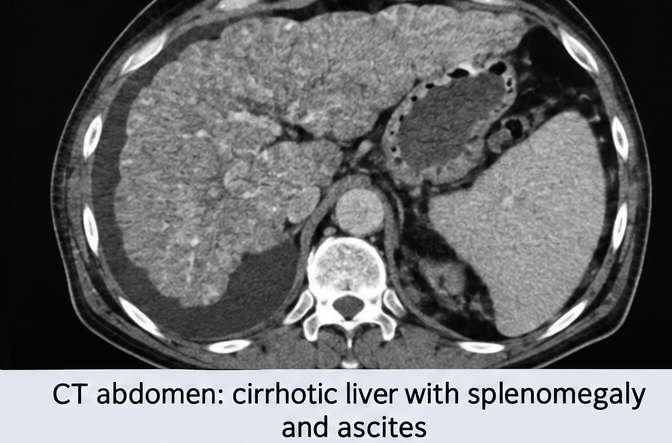
No suspicious focal hepatic lesion was identified.
Upper gastrointestinal endoscopy revealed grade II esophageal varices without active bleeding.
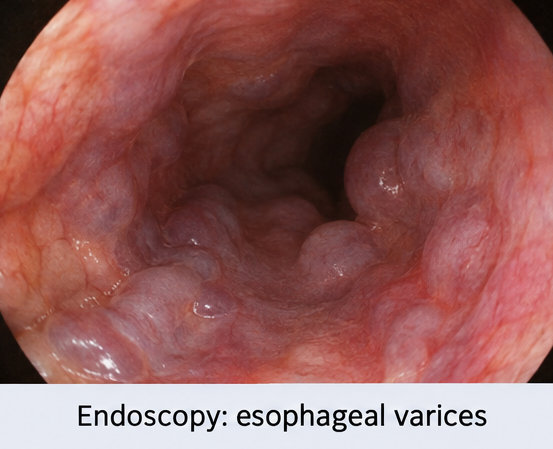
These findings supported established liver cirrhosis complicated by clinically significant portal hypertension.
Diagnosis
The final clinical diagnosis was:
Decompensated Alcohol-Associated Liver Cirrhosis Presenting With Portal Hypertension, Ascites, Esophageal Varices, Hyperbilirubinemia, and Hypoalbuminemia.
The diagnosis was supported by chronic alcohol exposure, impaired hepatic synthetic function, thrombocytopenia, portal hypertensive ascites, and characteristic radiological findings.
The patient was classified as Child–Pugh class C, with a calculated score of 12.
Treatment and Management
The patient was admitted for management of decompensated cirrhosis and symptomatic ascites.
Initial treatment focused on controlling fluid retention, preventing complications, and addressing the underlying alcohol-associated liver disease.
Dietary sodium restriction was recommended, with a target intake below 2 g of sodium daily.
Spironolactone 100 mg daily and furosemide 40 mg daily were initiated, with close monitoring of renal function, serum electrolytes, and blood pressure.
Therapeutic paracentesis was performed because of tense abdominal distension.
Approximately 5.5 L of ascitic fluid was removed, followed by intravenous albumin replacement.
The patient received nutritional counseling emphasizing adequate energy and protein intake.
Complete alcohol abstinence was strongly advised, and addiction-support services were arranged.
Endoscopic variceal ligation was performed for primary prophylaxis, given the presence of esophageal varices and concerns regarding tolerance of nonselective beta-blockers.
Regular monitoring of body weight, abdominal girth, urine output, and biochemical parameters was recommended.
The patient was referred for liver transplantation evaluation because of advanced hepatic decompensation.
Outcome and Follow-Up
During hospitalization, abdominal discomfort decreased following paracentesis and initiation of diuretic therapy.
Lower-limb edema gradually improved, and the patient reported better appetite and mobility.
At four weeks, abdominal distension had substantially decreased, with no clinical evidence of hepatic encephalopathy or gastrointestinal bleeding.
Serum sodium improved to 135 mmol/L, while serum creatinine remained stable.
At three months, the patient reported continued alcohol abstinence and improved functional capacity.
Serum bilirubin decreased to 2.8 mg/dL, and serum albumin increased to 2.9 g/dL.
Follow-up ultrasonography demonstrated mild residual ascites without suspicious hepatic lesions.
Repeat endoscopic evaluation was arranged to assess variceal eradication.
Despite symptomatic improvement, the patient remained at risk of further hepatic decompensation.
Continued hepatology follow-up, hepatocellular carcinoma surveillance, and transplantation assessment were recommended.
Discussion
Liver cirrhosis develops following prolonged hepatic injury, resulting in progressive fibrosis, regenerative nodules, and disruption of normal hepatic architecture.
These structural changes increase intrahepatic vascular resistance, contributing to portal hypertension and its associated complications.
The present case demonstrates a typical presentation of decompensated cirrhosis involving progressive ascites, peripheral edema, jaundice, splenomegaly, and impaired hepatic synthetic function.
Chronic alcohol exposure was the probable underlying etiology, supported by the clinical history and exclusion of common viral causes.
Ascites represents an important manifestation of hepatic decompensation and develops through portal hypertension, splanchnic vasodilatation, and renal sodium retention.
The elevated serum–ascites albumin gradient supported portal hypertensive ascites, while the low ascitic neutrophil count excluded spontaneous bacterial peritonitis at presentation.
Thrombocytopenia and splenomegaly were consistent with portal hypertension-associated hypersplenism.
Endoscopic identification of esophageal varices further demonstrated the presence of clinically significant portal hypertension.
Management requires a comprehensive approach involving treatment of the underlying cause, control of ascites, prevention of variceal hemorrhage, nutritional optimization, and surveillance for hepatocellular carcinoma.
Alcohol abstinence is particularly important in alcohol-associated cirrhosis because continued consumption increases the risk of further hepatic injury and decompensation.
Diuretics and sodium restriction are central components of ascites management, while large-volume paracentesis provides symptomatic relief in patients with tense ascites.
Albumin replacement following large-volume paracentesis reduces the risk of post-paracentesis circulatory dysfunction.
The patient's advanced Child–Pugh classification indicated substantial hepatic impairment and supported referral for transplantation evaluation.
Although clinical improvement occurred following treatment, cirrhosis remains associated with risks of recurrent ascites, gastrointestinal bleeding, hepatic encephalopathy, renal dysfunction, and hepatocellular carcinoma.
Long-term multidisciplinary follow-up is therefore essential.
Conclusion
Liver cirrhosis is a progressive chronic hepatic disorder that may present with significant complications following the development of portal hypertension and hepatic dysfunction.
Patients presenting with progressive abdominal distension, jaundice, peripheral edema, and unexplained thrombocytopenia require comprehensive evaluation for chronic liver disease.
Laboratory investigations, ascitic fluid analysis, ultrasonography, and upper gastrointestinal endoscopy are important for diagnosis and complication assessment.
Early management of ascites, prevention of variceal bleeding, alcohol abstinence, and nutritional support can improve clinical outcomes.
Regular surveillance and timely liver transplantation evaluation remain essential for patients with advanced decompensated cirrhosis.
References
1. Ginès, P., Krag, A., Abraldes, J. G., Solà, E., Fabrellas, N., & Kamath, P. S. (2021). Liver cirrhosis. The Lancet, 398(10308), 1359–1376. https://doi.org/10.1016/S0140-6736(21)01374-X
2. European Association for the Study of the Liver. (2018). EASL clinical practice guidelines for the management of patients with decompensated cirrhosis. Journal of Hepatology, 69(2), 406–460. https://doi.org/10.1016/j.jhep.2018.03.024
3. Biggins, S. W., Angeli, P., Garcia-Tsao, G., et al. (2021). Diagnosis, evaluation, and management of ascites, spontaneous bacterial peritonitis and hepatorenal syndrome: 2021 practice guidance by the American Association for the Study of Liver Diseases. Hepatology, 74(2), 1014–1048. https://doi.org/10.1002/hep.31884
4. de Franchis, R., Bosch, J., Garcia-Tsao, G., Reiberger, T., & Ripoll, C. (2022). Baveno VII—Renewing consensus in portal hypertension. Journal of Hepatology, 76(4), 959–974. https://doi.org/10.1016/j.jhep.2021.12.022
5. Tapper, E. B., & Parikh, N. D. (2018). Diagnosis and management of cirrhosis and its complications: A review. JAMA, 320(15), 1589–1599. https://doi.org/10.1001/jama.2018.13344
Read more such content on @ Hidoc Dr | Medical Learning App for Doctors
Recommended News For You
Recommended Articles For You
Featured News
Featured Articles
Featured Events
Featured KOL Videos
1.
New CAR T-Cell Therapy Approved for Leukemia
2.
Combination therapy improves outcomes for advanced triple-negative breast cancer
3.
These Medical Doctors Are Real Comedians: Should Doctors Be Funnier?
4.
Primary Sjögren's syndrome patients' B-Cell Stimulating Factors are associated with the growth of lymphomas.
5.
A US health panel advises starting mammograms at age 40 rather than 50.
1.
Essential Developments in Oncology for Healthcare Excellence
2.
Public Health Strategies for Improving Cancer Survivorship Support Systems
3.
Understanding Iron Saturation Levels in Your Blood
4.
Bone Marrow Niche Regeneration Strategies in Hematology
5.
Drug Exposure in Tumor Microenvironments: Mechanisms, Clinical Implications, and Emerging Strategies
1.
International Conference on Innovations in Critical Care for Oncology and Cardiology
2.
International Conference on Oncology, Cardiology and Critical Care Policy
3.
International Conference on Oncology, Cancer Prevention and Public Health
4.
International Conference on Cancer Nursing and Rehabilitation Strategies
5.
International Conference on Best Practices in Oncology, Cardiology and Critical Care
1.
Iron Deficiency Anemia: Ferric Maltol As a New Treatment Option- A New Perspective
2.
Incidence of Lung Cancer- An Overview to Understand ALK Rearranged NSCLC
3.
Influence of CDK4/6 Inhibitors in Extending Progression-Free Survival (PFS) and Overall Survival in HR+/HER2- mBC Patients
4.
Navigating the Complexities of Ph Negative ALL - Part III
5.
Current Scenario of Cancer- Q&A Session to Close the Gap Part II

Address :
Hidoc Dr. Inc. | Delaware C Corp | 1309 Coffeen Ave. Suite 1200, Sheridan WY, 82801
Phone :
+1-415-463-3094
Email :
anishagadia@hidoc.co
© Copyright 2026 Hidoc Dr. Inc.
Terms & Conditions - LLP | Inc. | Privacy Policy - LLP | Inc. | Account Deactivation

To get started please enter your email ID
Welcome to Hidoc Dr.
Join to enhance your clinical skills and gain specialized in-depth medical knowledge