Breast Engorgement: A Case Report of Postpartum Breast Pain, Clinical Evaluation, and Management
OthersPage Navigation
Abstract
Breast engorgement is a common lactation-related condition characterized by breast swelling, firmness, and pain, particularly during the early postpartum period. It develops as milk production increases and may be accompanied by vascular congestion and interstitial edema. Severe engorgement can interfere with infant attachment and effective milk removal, potentially contributing to breastfeeding difficulties and complications such as nipple trauma and mastitis.
We describe a representative case of a postpartum woman who developed bilateral breast pain, swelling, and firmness during the early period of breastfeeding. Clinical examination demonstrated diffuse bilateral breast enlargement and tenderness without localized erythema, a discrete breast mass, or features suggestive of systemic infection. The clinical presentation was consistent with breast engorgement.
Management focused on continued responsive breastfeeding, assessment and correction of infant positioning and attachment, expression of breast milk when required, symptomatic measures, and breastfeeding support. Progressive reduction in breast pain and firmness was observed, with improvement in breastfeeding and no evidence of infectious complications.
This case highlights the importance of early recognition of breast engorgement, assessment of breastfeeding technique, effective milk removal, and appropriate supportive management to relieve maternal discomfort and maintain successful breastfeeding.
Introduction
Breast engorgement commonly occurs during the early postpartum period when milk production increases rapidly. Engorgement involves breast swelling and distension associated with milk accumulation, increased vascularity, and interstitial fluid. Symptoms most commonly develop during the first several days after childbirth, although the timing can vary. [1]
Women typically experience breast fullness, firmness, swelling, tenderness, and pain. The nipple and areola may also become tense or edematous, potentially making attachment difficult for the infant. Inadequate milk removal can further aggravate breast fullness and maternal discomfort. [1]
Although breast engorgement is generally self-limiting with appropriate breastfeeding management, severe or persistent engorgement can interfere with breastfeeding and contribute to nipple trauma, reduced milk removal, and inflammatory or infectious complications. [1,2]
Clinical evaluation is important to differentiate uncomplicated breast engorgement from conditions such as mastitis, breast abscess, or other causes of postpartum breast pain.
Case Report
A postpartum woman presented during the early lactation period with progressively increasing pain, heaviness, swelling, and firmness involving both breasts.
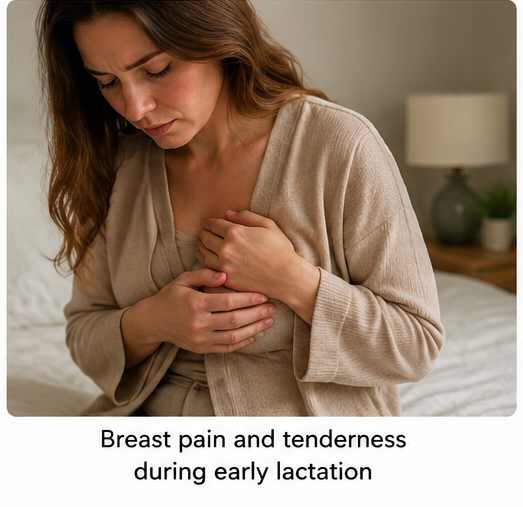
The symptoms developed following the onset of increased milk production. The patient reported difficulty breastfeeding because the breasts had become tense and painful, making infant attachment to the breast more challenging.
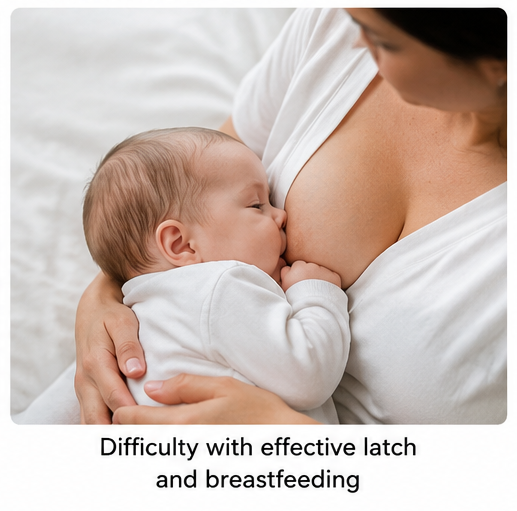
There was no history of significant breast trauma or previous breast surgery. The patient did not report purulent nipple discharge or a localized breast mass.
On examination, both breasts appeared diffusely enlarged and tense. Bilateral tenderness and generalized firmness were present.
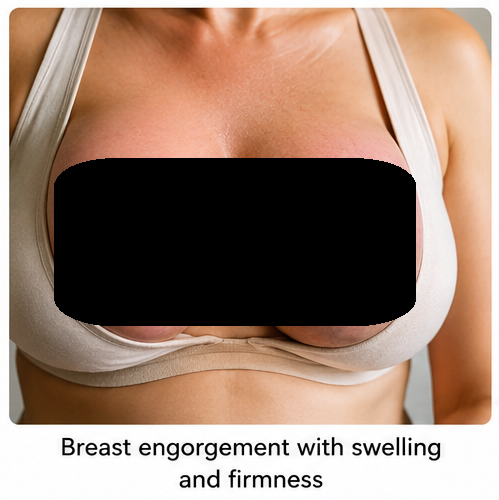
The nipple-areolar regions were mildly edematous, contributing to difficulty with effective infant attachment. There was no focal fluctuant swelling suggestive of an abscess.
The patient was clinically stable without features indicating systemic illness. Based on the history and examination, uncomplicated postpartum breast engorgement was considered the most likely diagnosis.
Investigations
Breast engorgement is generally a clinical diagnosis, and routine laboratory or imaging investigations are not required when the presentation is typical and there are no findings suggestive of infection or another breast disorder.
Clinical assessment included evaluation of:
- Distribution and severity of breast swelling
- Breast tenderness and firmness
- Nipple and areolar edema
- Infant positioning and attachment
- Effectiveness of breastfeeding and milk removal
- Presence of localized erythema or a breast mass
- Symptoms suggestive of mastitis or systemic infection
There was no discrete breast mass or focal fluctuant collection on examination.
Because the clinical findings were consistent with uncomplicated bilateral breast engorgement and there were no features suggesting an abscess or other structural breast pathology, breast imaging was not considered necessary.
Diagnosis
The diagnosis was based on:
- Recent childbirth and initiation of lactation
- Bilateral breast swelling and fullness
- Breast pain and tenderness
- Diffuse breast firmness
- Nipple-areolar edema
- Difficulty with effective infant attachment
- Absence of a focal breast mass or fluctuant collection
- Absence of clinical features suggesting systemic infection
The overall clinical findings were consistent with postpartum breast engorgement.
Management and Outcome
Management focused on relieving maternal discomfort while facilitating effective breastfeeding and milk removal.
The patient received breastfeeding counselling and support. Infant positioning and attachment were assessed, and appropriate techniques were demonstrated to improve effective milk transfer.
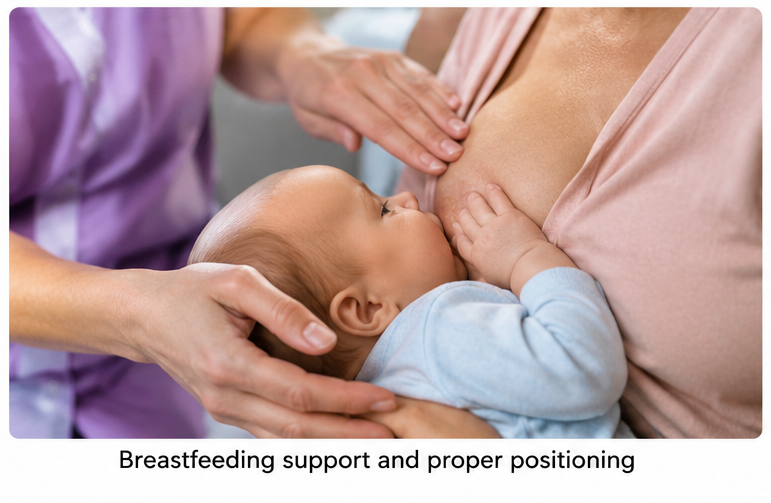
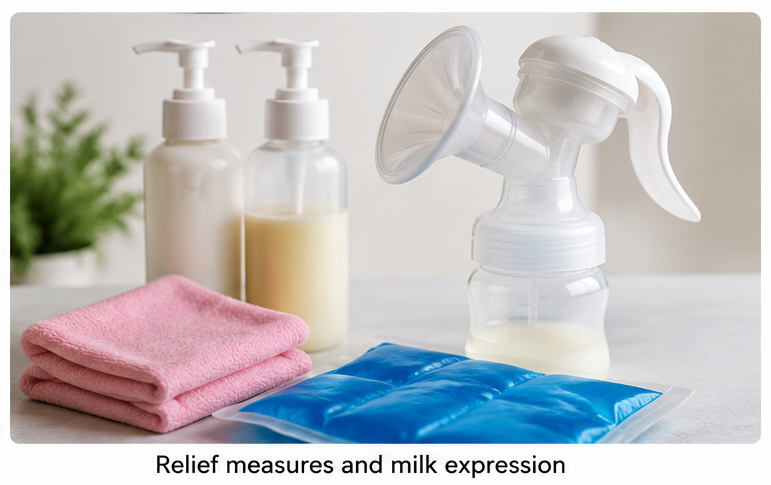
Responsive breastfeeding was encouraged rather than unnecessarily restricting feeding according to a fixed schedule. When direct breastfeeding was difficult because of breast or areolar firmness, gentle expression of breast milk was advised to facilitate attachment and relieve discomfort. [3]
Warm or cold compresses could be used according to maternal preference for symptomatic relief. The patient was advised to avoid excessive or forceful breast manipulation.
The importance of monitoring for worsening pain, persistent localized redness, fever, systemic symptoms, or development of a focal breast swelling was explained.
Following supportive management and improved milk removal, breast firmness and pain progressively decreased. Infant attachment improved, allowing breastfeeding to continue successfully.
No clinical evidence of mastitis or breast abscess developed during follow-up.
Follow-up
Early Follow-up
- Reduction in breast pain and tension
- Improvement in nipple-areolar swelling
- Improved infant attachment
- More effective breastfeeding
- No fever or systemic symptoms
Subsequent Follow-up
- Significant reduction in breast firmness
- Resolution of marked breast swelling
- Comfortable breastfeeding
- Effective milk removal
- No localized inflammatory changes
Later Follow-up
- Resolution of clinically significant engorgement
- Continued breastfeeding
- No recurrent severe breast pain
- No evidence of mastitis or breast abscess
Discussion
Breast engorgement represents excessive breast fullness and swelling during lactation and occurs particularly during the early postpartum period. Physiological changes associated with the onset of copious milk production are accompanied by increased vascularity and fluid within breast tissues. When breast drainage is insufficient, these changes may produce clinically significant swelling, firmness, and pain. [1]
Breast engorgement should be differentiated from normal breast fullness. While physiological fullness may cause mild bilateral heaviness, clinically significant engorgement can result in marked firmness, tenderness, edema, and difficulty breastfeeding.
Several factors may contribute to inadequate milk removal, including ineffective infant attachment, difficulty sucking, separation of the mother and infant, and restriction of breastfeeding. The resulting breast distension may make the nipple-areolar region firmer and further interfere with attachment, creating a cycle of inadequate milk removal and worsening engorgement. [2]
Clinical assessment is generally sufficient for diagnosis. Bilateral diffuse breast swelling and tenderness occurring during the early postpartum period strongly support engorgement. In contrast, localized inflammatory changes, systemic symptoms, or a persistent focal abnormality should prompt consideration of other conditions.
Effective breastfeeding support is central to management. The World Health Organization recommends responsive breastfeeding, appropriate positioning and attachment, breast milk expression, and warm or cold compresses according to maternal preference for postpartum breast engorgement. [3]
A Cochrane systematic review evaluating 21 studies involving 2,170 women examined several interventions, including cold packs, cabbage leaves, massage, acupuncture, herbal compresses, and other approaches. The evidence was insufficient to establish a single intervention as consistently superior, emphasizing the importance of appropriate breastfeeding support and individualized symptomatic management. [2]
Management should therefore address the underlying difficulty with milk removal rather than focusing exclusively on temporary symptomatic relief. Assessment of positioning and attachment can identify correctable breastfeeding problems. Milk expression may be useful when the infant cannot effectively attach or direct breastfeeding is temporarily difficult. [3]
Close observation is important because persistent breast inflammation may progress or represent another lactation-related condition. Increasing localized erythema, fever, systemic illness, or a persistent focal mass warrants further clinical assessment.
In the present representative case, the bilateral nature of the symptoms, temporal relationship with early lactation, absence of systemic illness, and improvement following breastfeeding support and effective milk removal were consistent with uncomplicated breast engorgement.
Prognosis
The prognosis of uncomplicated postpartum breast engorgement is generally favorable when breastfeeding difficulties are recognized and managed appropriately.
Improvement in infant attachment and effective milk removal can reduce breast pressure and discomfort while supporting continued breastfeeding.
Persistent or recurrent symptoms warrant reassessment of breastfeeding technique and evaluation for other causes of breast pain or inflammation.
Women should seek clinical evaluation if they develop fever, increasing localized redness or pain, systemic illness, or a persistent breast lump.
Conclusion
Breast engorgement is a common postpartum condition characterized by painful, swollen, firm breasts that can interfere with effective breastfeeding.
This case illustrates the importance of recognizing the characteristic clinical presentation and evaluating breastfeeding technique, milk removal, and signs that may indicate an alternative diagnosis or complication.
Responsive breastfeeding, appropriate positioning and attachment, breast milk expression when necessary, and individualized supportive measures can help relieve engorgement and maintain breastfeeding.
Early breastfeeding support and appropriate follow-up can reduce maternal discomfort and help prevent progression to more significant lactation-related complications.
References
- Berens P, Brodribb W; Academy of Breastfeeding Medicine. ABM Clinical Protocol #20: Engorgement, Revised 2016. Breastfeed Med. 2016;11(4):159–163. https://pmc.ncbi.nlm.nih.gov/articles/PMC4860650/
- Zakarija-Grkovic I, Stewart F. Treatments for breast engorgement during lactation. Cochrane Database Syst Rev. 2020;9:CD006946. https://pmc.ncbi.nlm.nih.gov/articles/PMC8094412/
- World Health Organization. WHO recommendations on maternal and newborn care for a positive postnatal experience: Non-pharmacological interventions to treat postpartum breast engorgement. https://www.ncbi.nlm.nih.gov/books/NBK579650/
- Song JA, Hur MH. A Systematic Review of Breast Care for Postpartum Mothers. Korean J Women Health Nurs. 2019;25(3):258–272. https://pubmed.ncbi.nlm.nih.gov/37679918/
- Pustotina O. Management of mastitis and breast engorgement in breastfeeding women. J Matern Fetal Neonatal Med. 2016;29(19):3121–3125. https://pubmed.ncbi.nlm.nih.gov/26513602/
Read more such content on @ Hidoc Dr | Medical Learning App for Doctors
Recommended News For You
Recommended Articles For You
Featured News
Featured Articles
Featured Events
Featured KOL Videos
1.
What Patients Hear From Us: 'Blah, Blah, Tumor, Blah, Blah, Cancer'
2.
A pilot study investigates a novel strategy for lowering anxiety and enhancing post-stem cell transplant quality of life.
3.
Immunotherapy Remains Little Used in Head and Neck Cancer
4.
Enhanced access for patients with prostate cancer is provided by the new SPECT/CT technique, which demonstrates remarkable biomarker identification.
5.
Adjuvant Tx May Boost Survival in Bilateral Breast Cancer
1.
New Anticoagulants: Balancing Efficacy and Safety in Patients with Atrial Fibrillation
2.
Iron Metabolism and Inflammatory Disorders: Mechanisms, Clinical Implications, and Therapeutic Approaches
3.
Precision Oncology: Tailoring Cancer Treatment for the Individual
4.
Survivorship Planning Beyond Active Cancer Care
5.
Biomarkers of Hematopoietic Reserve During Repeated Physiological Stress
1.
International Cancer Conference
2.
Asian Symposium on Advancement in Hematology and Oncology (ASAHO)
3.
International Cancer Conference
4.
Asian Symposium on Advancement in Hematology and Oncology (ASAHO)
5.
Asian Symposium on Advancement in Hematology and Oncology
1.
Pazopanib: A Game-Changer in Managing Advanced Renal Cell Carcinoma - Part V
2.
Current Scenario of Cancer- An Overview of The Incidence of Cancer in Men
3.
Recent Data Analysis for First-Line Treatment of ALK+ NSCLC: A Final Discussion
4.
From Relapse to Remission: Mapping the Treatment Journey in Adult R/R-Cell ALL - Part 2
5.
The Era of Targeted Therapies for ALK+ NSCLC: A Paradigm Shift

Address :
Hidoc Dr. Inc. | Delaware C Corp | 1309 Coffeen Ave. Suite 1200, Sheridan WY, 82801
Phone :
+1-415-463-3094
Email :
anishagadia@hidoc.co
© Copyright 2026 Hidoc Dr. Inc.
Terms & Conditions - LLP | Inc. | Privacy Policy - LLP | Inc. | Account Deactivation

To get started please enter your email ID
Welcome to Hidoc Dr.
Join to enhance your clinical skills and gain specialized in-depth medical knowledge