Metabolic Dysfunction-Associated Steatotic Liver Disease Presenting as Incidentally Detected Fatty Liver: A Case Report
OthersPage Navigation
Abstract
Metabolic dysfunction-associated steatotic liver disease (MASLD), formerly known as non-alcoholic fatty liver disease, is a common chronic liver condition associated with obesity and cardiometabolic risk factors. Although frequently asymptomatic, it may be detected incidentally during routine investigations or abdominal imaging. We report the case of a 48-year-old male who was found to have fatty liver during a routine health evaluation. The patient was overweight, had central obesity, and followed a predominantly sedentary lifestyle. Laboratory investigations revealed mildly elevated aminotransferase levels, while bilirubin, albumin, and coagulation parameters were normal. Viral hepatitis screening was negative. Abdominal ultrasonography demonstrated diffuse hepatic steatosis without focal lesions or biliary obstruction. The patient was diagnosed with MASLD and managed with lifestyle modification, including dietary changes, weight reduction, regular physical activity, and management of metabolic risk factors. At follow-up, liver enzyme levels improved, and the patient remained clinically stable. This case highlights the importance of recognizing incidentally detected fatty liver as a potential manifestation of metabolic dysfunction and emphasizes early risk assessment, fibrosis evaluation, and lifestyle-based management.
Introduction
Metabolic dysfunction-associated steatotic liver disease (MASLD) is characterized by hepatic steatosis in individuals with one or more cardiometabolic risk factors and without harmful alcohol intake. The disease spectrum ranges from simple steatosis to metabolic dysfunction-associated steatohepatitis (MASH), progressive fibrosis, cirrhosis, and hepatocellular carcinoma.
Many patients remain asymptomatic, and fatty liver is frequently identified incidentally on abdominal ultrasonography or during evaluation of abnormal liver enzymes. Importantly, aminotransferase levels may be normal or only mildly elevated despite clinically relevant fibrosis. Therefore, patients with hepatic steatosis and metabolic risk factors require appropriate assessment of their risk for advanced fibrosis. Current guidelines support a stepwise approach using non-invasive tests such as the fibrosis-4 index (FIB-4), followed when indicated by transient elastography or other fibrosis assessment methods.
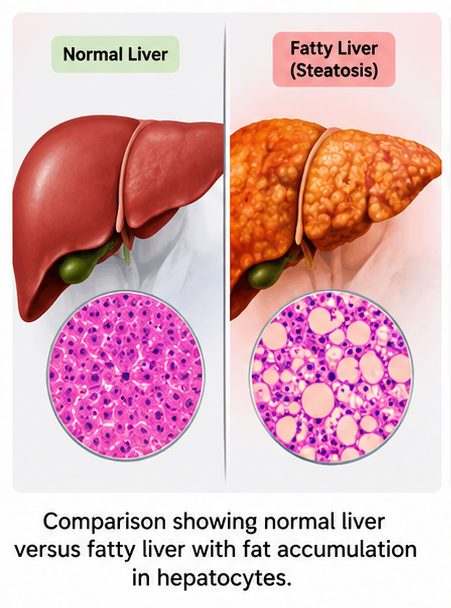
We report a case of incidentally detected fatty liver in a middle-aged man with metabolic risk factors, highlighting the importance of early recognition and appropriate clinical risk stratification.
Case Report
A 48-year-old male presented for a routine health evaluation. He had no history of abdominal pain, nausea, vomiting, jaundice, pruritus, abdominal distension, gastrointestinal bleeding, or unexplained weight loss. He reported a predominantly sedentary lifestyle and gradual weight gain over several years.
The patient had no significant history of alcohol consumption and was not taking medications known to cause hepatic steatosis. There was no previous history of chronic liver disease.
On examination, he was clinically stable with a body mass index in the overweight range and mild central obesity. There was no icterus, pedal edema, ascites, hepatosplenomegaly, or other clinical evidence of chronic liver disease.
Laboratory investigations revealed mildly elevated serum alanine aminotransferase and aspartate aminotransferase levels.

Serum bilirubin, albumin, coagulation parameters, and complete blood count were within normal limits. Metabolic evaluation identified cardiometabolic risk factors. Screening for hepatitis B and hepatitis C was negative.
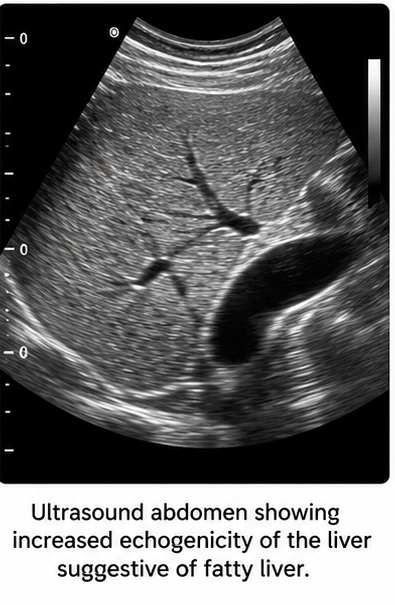
Abdominal ultrasonography demonstrated increased hepatic echogenicity consistent with diffuse fatty infiltration. There was no focal hepatic lesion, biliary obstruction, or ascites.
Based on the presence of hepatic steatosis and cardiometabolic risk factors, together with the absence of significant alcohol exposure and negative viral hepatitis screening, a diagnosis of MASLD was established. The patient underwent non-invasive fibrosis risk assessment and did not demonstrate features suggestive of advanced liver disease.
Management and Outcome
The patient was managed conservatively with lifestyle modification. Dietary counseling focused on improving overall diet quality, reducing calorie-dense and highly processed foods, and achieving gradual, sustained weight reduction.
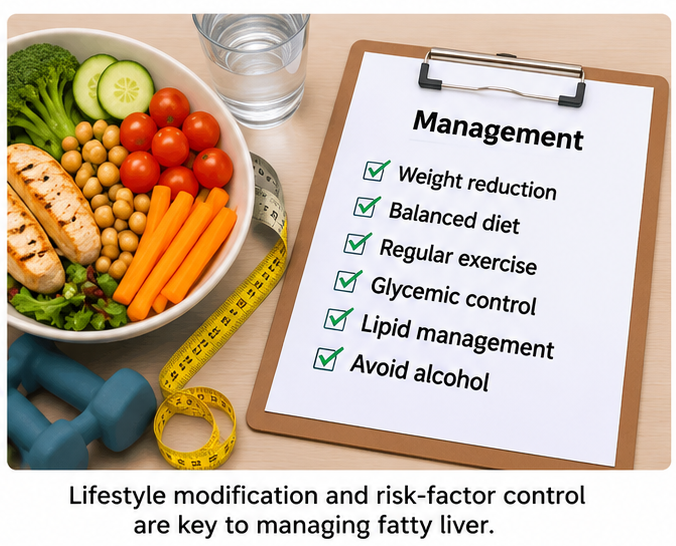
Regular physical activity was encouraged, incorporating aerobic exercise and resistance-based activity according to individual tolerance. The importance of managing associated metabolic abnormalities, including blood glucose, lipid levels, blood pressure, and body weight, was emphasized.
The patient was informed that fatty liver may remain asymptomatic despite progression in some individuals and was advised to maintain regular medical follow-up and avoid unnecessary medications or supplements that could adversely affect liver health.
At follow-up, the patient demonstrated adherence to dietary and physical activity recommendations and achieved gradual weight reduction. Liver enzyme levels improved, and he remained clinically asymptomatic.
Follow-up
Three Months
- The patient reported improved dietary adherence.
- Regular physical activity had been initiated.
- Gradual weight reduction was documented.
- Serum aminotransferase levels showed improvement.
Six Months
- Metabolic parameters demonstrated improvement.
- The patient remained asymptomatic.
- No clinical evidence of advanced liver disease was identified.
- Lifestyle modification was continued.
One Year
- Weight reduction was maintained.
- Liver enzyme levels remained improved compared with baseline.
- No clinical progression of liver disease was observed.
- Continued monitoring of metabolic risk factors and fibrosis risk was advised.
Discussion
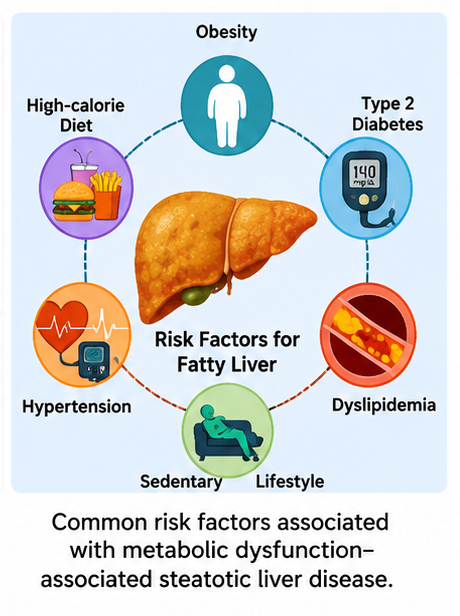
MASLD is closely associated with obesity, insulin resistance, type 2 diabetes mellitus, dyslipidemia, and other cardiometabolic abnormalities. Its clinical spectrum extends from hepatic steatosis to MASH, fibrosis, cirrhosis, and hepatocellular carcinoma.
The present case illustrates a common clinical scenario in which fatty liver is detected incidentally in an asymptomatic individual. Although the patient had only mild biochemical abnormalities and no clinical evidence of advanced disease, the finding of hepatic steatosis provided an opportunity to identify metabolic risk factors and initiate early intervention.
A structured evaluation is important in patients with suspected MASLD. The clinical assessment should consider metabolic risk factors, alcohol consumption, medication history, and alternative causes of hepatic steatosis. Patients with type 2 diabetes, obesity with additional cardiometabolic risk factors, persistent elevation of liver enzymes, or radiological evidence of steatosis may benefit from non-invasive fibrosis risk assessment. A stepwise approach using FIB-4 followed, when indicated, by transient elastography can help identify individuals at increased risk of advanced fibrosis.
Lifestyle modification remains a central component of MASLD management. Current guidance emphasizes weight reduction, dietary improvement, regular physical activity, and management of associated cardiometabolic conditions.
The importance of early identification is further reinforced by the fact that liver enzyme levels alone may not reliably reflect the degree of hepatic fibrosis. Therefore, an apparently mild or asymptomatic presentation should not automatically be considered clinically insignificant.
In the present case, the absence of advanced fibrosis and the identification of modifiable metabolic risk factors supported a conservative management strategy centered on lifestyle intervention. The subsequent improvement in liver enzymes and metabolic parameters highlights the potential benefits of sustained lifestyle modification.
Prognosis
The prognosis of MASLD varies according to the severity of hepatic fibrosis and the presence of metabolic comorbidities. While some patients remain stable with isolated steatosis, others may develop progressive fibrosis and cirrhosis.
Patients with obesity, type 2 diabetes mellitus, persistent metabolic dysfunction, or increased fibrosis risk require appropriate long-term monitoring. Non-invasive fibrosis assessment can help identify individuals who may require specialist evaluation.
Conclusion
Metabolic dysfunction-associated steatotic liver disease is a common and frequently asymptomatic condition that may be discovered incidentally during routine investigations or abdominal imaging. Although hepatic steatosis may initially appear benign, a subset of patients can develop progressive fibrosis and clinically significant liver disease.
A comprehensive evaluation should include assessment of metabolic risk factors, alcohol intake, potential secondary causes, liver biochemistry, and non-invasive fibrosis risk where appropriate. Early recognition provides an opportunity to initiate lifestyle modification and address associated metabolic abnormalities.
This case highlights the importance of recognizing fatty liver as a manifestation of metabolic dysfunction and emphasizes timely risk stratification, sustained lifestyle intervention, and regular follow-up to reduce the risk of progressive liver disease.
References
- European Association for the Study of the Liver; European Association for the Study of Diabetes; European Association for the Study of Obesity. EASL-EASD-EASO Clinical Practice Guidelines on the management of metabolic dysfunction-associated steatotic liver disease (MASLD). J Hepatol. 2024;81(3):492-542. https://pubmed.ncbi.nlm.nih.gov/38851997/
- European Association for the Study of the Liver; European Association for the Study of Diabetes; European Association for the Study of Obesity. EASL-EASD-EASO Clinical Practice Guidelines on the management of metabolic dysfunction-associated steatotic liver disease (MASLD): Executive Summary. Diabetologia. 2024;67(11):2375-2392. https://pubmed.ncbi.nlm.nih.gov/38869512/
- Rinella ME, Neuschwander-Tetri BA, Siddiqui MS, et al. AASLD Practice Guidance on the clinical assessment and management of nonalcoholic fatty liver disease. Hepatology. 2023;77(5):1797-1835. https://pubmed.ncbi.nlm.nih.gov/36727674/
- Allen AM, Charlton M, Cusi K, et al. Guideline-based management of metabolic dysfunction-associated steatotic liver disease in the primary care setting. Postgrad Med. 2024;136(3):229-245. https://pubmed.ncbi.nlm.nih.gov/38465573/
Read more such content on @ Hidoc Dr | Medical Learning App for Doctors
Recommended News For You
Recommended Articles For You
Featured News
Featured Articles
Featured Events
Featured KOL Videos
1.
Researchers use genomic technology to investigate aggressive skin cancer linked to burn scars
2.
The Growing Role of AI in Cancer Treatment
3.
Tafasitamab Regimen Improves PFS in Relapsed/Refractory Follicular Lymphoma
4.
Lower Prostate Cancer Mortality Linked to Unavailable Clinical Trials.
5.
Powerlifting through breast cancer: How a breast cancer survivor defied chemotherapy with strength training
1.
Drug Exposure in Tumor Microenvironments: Mechanisms, Clinical Implications, and Emerging Strategies
2.
Proteoform Networks in Blood Disorders: Mechanisms, Clinical Implications, and Emerging Therapeutic Strategies
3.
Antibody-Drug Conjugates and the Dawn of Targeted Cancer Therapy in 2025
4.
Revolutionizing Oncology Trials: Optimization, Matching, Diversity, and Decentralization
5.
Direct Oral Anticoagulants (DOACs) in Atrial Fibrillation: A Comprehensive Review
1.
International Conference on Innovations in Critical Care for Oncology and Cardiology
2.
International Conference on Oncology, Cardiology and Critical Care Policy
3.
International Conference on Oncology, Cancer Prevention and Public Health
4.
International Conference on Cancer Nursing and Rehabilitation Strategies
5.
International Conference on Best Practices in Oncology, Cardiology and Critical Care
1.
An Eagles View - Evidence-based Discussion on Iron Deficiency Anemia- Panel Discussion- Part II
2.
Expert Group meeting with the management of EGFR mutation positive NSCLC - Part IV
3.
Targeting Oncologic Drivers with Dacomitinib: A New Approach to Lung Cancer Treatment
4.
How Multidisciplinary Teams Support Modern Cancer Care
5.
Influence of CDK4/6 Inhibitors in Extending Progression-Free Survival (PFS) and Overall Survival in HR+/HER2- mBC Patients

Address :
Hidoc Dr. Inc. | Delaware C Corp | 1309 Coffeen Ave. Suite 1200, Sheridan WY, 82801
Phone :
+1-415-463-3094
Email :
anishagadia@hidoc.co
© Copyright 2026 Hidoc Dr. Inc.
Terms & Conditions - LLP | Inc. | Privacy Policy - LLP | Inc. | Account Deactivation

To get started please enter your email ID
Welcome to Hidoc Dr.
Join to enhance your clinical skills and gain specialized in-depth medical knowledge