Primary Biliary Cholangitis Presenting With Pruritus and Fatigue
OthersPage Navigation
Introduction
Primary biliary cholangitis (PBC) is a chronic autoimmune cholestatic liver disease characterised by progressive injury and loss of the small intrahepatic bile ducts. Continued bile duct injury may lead to cholestasis, fibrosis, cirrhosis, portal hypertension and liver failure. The disease predominantly affects middle-aged women and may be discovered incidentally through elevated alkaline phosphatase levels before symptoms or structural liver damage become apparent.
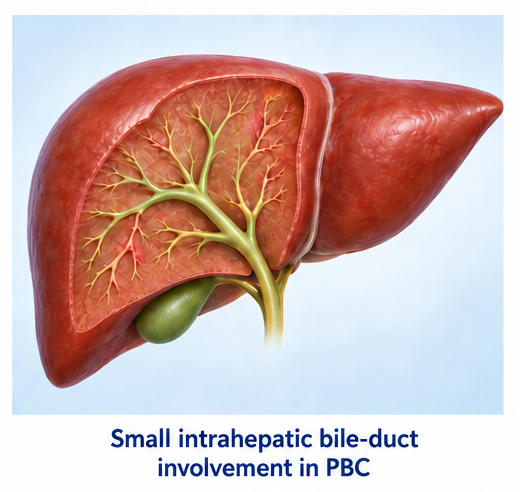
Fatigue and pruritus are the most frequently reported symptoms, although neither reliably reflects the stage or severity of the disease. Diagnosis is generally established when cholestatic liver biochemistry is accompanied by antimitochondrial antibodies after extrahepatic biliary obstruction has been excluded. Early recognition is important because timely treatment with ursodeoxycholic acid can improve biochemical markers and long-term transplant-free survival.
Case Report
A 48-year-old woman presented to the gastroenterology outpatient department with generalised itching for six months and increasing fatigue for four months. The itching was initially intermittent but gradually became more troublesome at night. It involved the palms, soles, trunk and limbs and was not associated with any primary skin eruption. During the preceding two months, disturbed sleep had begun to affect her concentration and routine household activities.
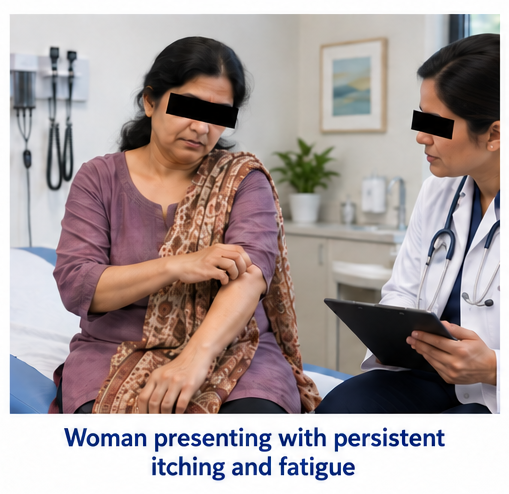
She denied fever, abdominal pain, vomiting, pale stools, dark urine, weight loss, gastrointestinal bleeding, confusion or abdominal distension. She did not consume alcohol and had no history of viral hepatitis, blood transfusion, gallstone disease, inflammatory bowel disease or recent travel. She had not used herbal preparations, anabolic agents or newly introduced prescription medicines. Her only regular treatment was levothyroxine for autoimmune hypothyroidism diagnosed five years earlier.
Examination showed excoriations over the forearms and lower legs without urticaria or another primary dermatosis. There was no jaundice, xanthelasma, hepatosplenomegaly, ascites, peripheral oedema or asterixis. Her vital signs were normal. The remainder of the cardiovascular, respiratory, abdominal and neurological examinations was unremarkable.
Investigations
Liver biochemistry demonstrated a cholestatic pattern. Alkaline phosphatase was 486 U/L, with a laboratory upper limit of normal of 120 U/L, and gamma-glutamyl transferase was 312 U/L. Alanine aminotransferase was 68 U/L and aspartate aminotransferase was 59 U/L. Total bilirubin was 0.9 mg/dL, serum albumin was 4.2 g/dL and the international normalised ratio was 1.0. The platelet count was 246 × 10⁹/L. Serum immunoglobulin M was elevated at 4.1 g/L, while immunoglobulin G was within the reference range.

Antimitochondrial antibody was strongly positive at a titre of 1:320, and an AMA-M2 assay was also positive. Antinuclear antibody was positive at a low titre, but anti-smooth muscle antibody was negative. Serological testing for hepatitis B surface antigen and hepatitis C antibody was negative. Iron studies, serum ceruloplasmin, alpha-1 antitrypsin and immunoglobulin G4 were not suggestive of an alternative liver disease.
Abdominal ultrasonography showed a normal-sized liver with uniform echotexture, a normal gallbladder and no intrahepatic or extrahepatic bile duct dilatation. Magnetic resonance cholangiopancreatography showed no calculus, dominant stricture or beading of the biliary tree. Transient elastography measured liver stiffness at 6.8 kPa, consistent with the absence of advanced fibrosis. Bone mineral density was mildly reduced at the lumbar spine.
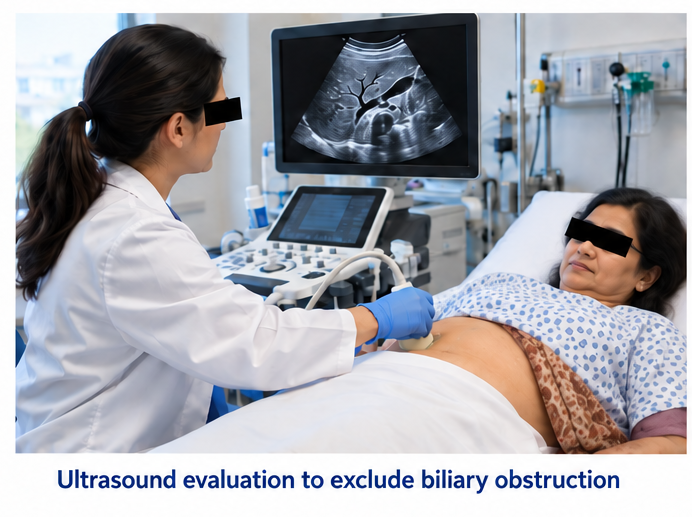
The patient met the diagnostic criteria for PBC based on cholestatic liver biochemistry, positive PBC-specific antibodies and the exclusion of extrahepatic biliary obstruction. Therefore, a liver biopsy was not considered necessary.
Differential Diagnosis
Extrahepatic Biliary Obstruction
Choledocholithiasis, benign biliary strictures and pancreatic or biliary tumours may produce pruritus and elevated cholestatic liver enzymes. However, normal ultrasonography and magnetic resonance cholangiopancreatography, together with the absence of abdominal pain, duct dilatation or a mass, argued against mechanical biliary obstruction.
Primary Sclerosing Cholangitis
Primary sclerosing cholangitis can present with biochemical cholestasis. However, it more commonly affects the medium and large bile ducts and is associated with characteristic multifocal stricturing and dilatation on cholangiography. The patient’s normal magnetic resonance cholangiopancreatogram, strongly positive AMA-M2 result and absence of inflammatory bowel disease favoured PBC.
Autoimmune Hepatitis
Autoimmune hepatitis was considered because the aminotransferase and antinuclear antibody levels were mildly elevated. However, the normal immunoglobulin G level, negative anti-smooth muscle antibody, aminotransferase levels substantially below five times the upper limit of normal and predominantly cholestatic biochemical pattern made autoimmune hepatitis or an overlap syndrome unlikely.
Drug-Induced Liver Injury
Medication and supplement histories did not identify a potentially responsible cholestatic agent. The prolonged biochemical pattern, increased immunoglobulin M level and strongly positive AMA-M2 result further supported an autoimmune cholangiopathy rather than drug-induced liver injury.
Management and Outcome
A diagnosis of early-stage primary biliary cholangitis was made. Ursodeoxycholic acid was initiated at 750 mg daily in divided doses, corresponding to approximately 14 mg/kg/day. The chronic nature of PBC, importance of long-term adherence, need for weight-based dose adjustment and role of regular liver function monitoring were explained to the patient. She was advised to avoid unregulated supplements and unnecessary hepatotoxic medicines.
For pruritus, cholestyramine 4 g once daily was started and subsequently adjusted according to her symptoms. She was instructed to take cholestyramine at least four hours apart from ursodeoxycholic acid and levothyroxine to minimise interference with drug absorption. Emollients, short lukewarm baths, loose cotton clothing and measures to minimise scratching were also recommended.
Calcium and vitamin D intake, regular weight-bearing activity, smoking avoidance and repeat bone-density assessment were discussed because chronic cholestatic liver disease increases the risk of osteoporosis.
At the three-month follow-up, the patient reported a substantial reduction in itching and improved sleep. Alkaline phosphatase decreased to 286 U/L, gamma-glutamyl transferase to 148 U/L and aminotransferase levels approached the reference range. Bilirubin, albumin, international normalised ratio and platelet count remained normal.
At 12 months, alkaline phosphatase was 142 U/L and bilirubin was 0.8 mg/dL. She had no clinical evidence of portal hypertension or hepatic decompensation. The improvement in liver biochemistry indicated a favourable response to ursodeoxycholic acid. Treatment was continued indefinitely, with clinical assessment and liver biochemistry monitoring every six months.
Discussion
This case illustrates a typical but easily overlooked presentation of PBC: persistent pruritus and fatigue in a middle-aged woman without jaundice or abnormal biliary imaging. PBC primarily targets the microscopic intrahepatic bile ducts; therefore, conventional imaging may remain normal. Imaging is nevertheless essential during the initial evaluation to exclude extrahepatic obstruction and alternative cholangiopathies.
The diagnosis of PBC is generally based on the presence of at least two of three features: biochemical evidence of cholestasis after exclusion of extrahepatic biliary obstruction, PBC-specific autoantibodies and compatible liver histology showing non-suppurative destructive cholangitis with interlobular bile duct injury. This patient satisfied the first two criteria.
Liver biopsy is generally reserved for patients with antibody-negative disease, suspected overlap with autoimmune hepatitis, marked or unexplained elevation of aminotransferases or an atypical response to treatment. It may also help identify other coexisting causes of liver injury.
Ursodeoxycholic acid at 13–15 mg/kg/day is recommended as first-line therapy and should generally be continued lifelong. The biochemical response is commonly assessed after 12 months because persistent elevation of alkaline phosphatase or bilirubin identifies patients at greater risk of disease progression. Patients with an inadequate response require specialist reassessment, confirmation of adherence and dose, evaluation for competing liver diseases and consideration of an appropriate second-line therapy based on current guidance and disease stage.
Management extends beyond monitoring liver enzymes. Pruritus can substantially impair sleep and quality of life. Bile acid sequestrants are commonly used as initial treatment, with careful separation from other medicines. Fatigue warrants evaluation for hypothyroidism, anaemia, depression, sleep disturbance and other treatable contributors.
Patients should also be evaluated for osteoporosis and fat-soluble vitamin deficiencies when clinically indicated. Surveillance for complications is guided by fibrosis stage. Patients with cirrhosis require screening for hepatocellular carcinoma and oesophageal varices. Liver transplantation may be considered in patients with decompensated disease, liver failure or selected cases of severe and treatment-resistant pruritus.

Conclusion
Primary biliary cholangitis should be considered when persistent pruritus or fatigue accompanies an unexplained cholestatic liver-enzyme pattern, even when bilirubin levels and abdominal imaging are normal. In this patient, elevated alkaline phosphatase, strongly positive AMA-M2 and exclusion of biliary obstruction established the diagnosis without requiring a liver biopsy.
Early administration of weight-appropriate ursodeoxycholic acid produced a marked biochemical response, while symptomatic treatment improved the patient’s quality of life. Successful long-term management depends on treatment adherence, objective assessment of biochemical response, surveillance for fibrosis-related complications and active management of pruritus, bone health and associated autoimmune diseases.
References
- Lindor KD, Bowlus CL, Boyer J, Levy C, Mayo M. Primary biliary cholangitis: 2018 practice guidance from the American Association for the Study of Liver Diseases. Hepatology. 2019;69(1):394–419. https://pubmed.ncbi.nlm.nih.gov/30070375/
- You H, Duan W, Li S, et al. Guidelines on the diagnosis and management of primary biliary cholangitis (2021). Journal of Clinical and Translational Hepatology. 2023;11(3):736–746. https://pmc.ncbi.nlm.nih.gov/articles/PMC10037524/
- Younossi ZM, Bernstein D, Shiffman ML, et al. Diagnosis and management of primary biliary cholangitis. American Journal of Gastroenterology. 2019;114(1):48–6 https://pubmed.ncbi.nlm.nih.gov/30429590/
- Lleo A, Wang GQ, Gershwin ME, Hirschfield GM. Primary biliary cholangitis. Lancet. 2020;396(10266):1915–1926. https://pubmed.ncbi.nlm.nih.gov/33308474/
- Lindor KD, Bowlus CL, Boyer J, Levy C, Mayo M. Diagnosis and treatment of primary biliary cholangitis: A patient-friendly summary of the 2018 AASLD practice guidance. Clinical Liver Disease. 2021;18(5):232–242. https://pmc.ncbi.nlm.nih.gov/articles/PMC8605692/
Read more such content on @ Hidoc Dr | Medical Learning App for Doctors
Recommended News For You
Recommended Articles For You
Featured News
Featured Articles
Featured Events
Featured KOL Videos
1.
For the treatment of vestibular schwannomas in neurofibromatosis type 2, stereotactic radiosurgery has been found to be effective.
2.
FDA Advisors Recommend Galleri Multicancer Blood Test
3.
Women who miss their first mammogram face higher risk of breast cancer death, study finds
4.
Thriving while surviving: Understanding the social needs of cancer survivors
5.
Can Accelerated Salvage RT Improve Prostate Cancer Control?
1.
Fatigue and Work Participation in Blood Disease: A Comprehensive Review
2.
First-Line Immuno-Hematology Examinations: Essential Diagnostic Tools for Patient Care
3.
The benefits and risks of taking fludrocortisone for adrenal insufficiency
4.
The Algorithmic Revolution: How AI is Reshaping Precision Oncology from Bench to Bedside
5.
Childhood Cancer Prevention Through Modifiable Exposure Reduction
1.
International Conference on Oncology, Cancer Prevention and Public Health
2.
International Conference on Cancer Nursing and Rehabilitation Strategies
3.
International Conference on Best Practices in Oncology, Cardiology and Critical Care
4.
International Conference on Innovations in Critical Care for Oncology and Cardiology
5.
International Symposium on Oncology, Cardiology and Critical Care Innovations
1.
A Comprehensive Guide to First Line Management of ALK Positive Lung Cancer - Part VI
2.
Management of 1st line ALK+ mNSCLC (CROWN TRIAL Update) - Part III
3.
Understanding Common Causes of Abnormal Blood Counts
4.
Hematologic Fatigue and Work Function: Clinical Implications, Pathophysiology, and Management
5.
Treatment Paradigm for Patients with R/R Adult B-cell ALL- Expert Discussions

Address :
Hidoc Dr. Inc. | Delaware C Corp | 1309 Coffeen Ave. Suite 1200, Sheridan WY, 82801
Phone :
+1-415-463-3094
Email :
anishagadia@hidoc.co
© Copyright 2026 Hidoc Dr. Inc.
Terms & Conditions - LLP | Inc. | Privacy Policy - LLP | Inc. | Account Deactivation

To get started please enter your email ID
Welcome to Hidoc Dr.
Join to enhance your clinical skills and gain specialized in-depth medical knowledge