Scarlet Fever in an Adolescent Following Streptococcal Pharyngitis: A Case Report
OthersPage Navigation
Abstract
Scarlet fever is an acute infectious disease caused by toxin-producing Streptococcus pyogenes, most commonly affecting children and adolescents. It typically presents with fever, pharyngitis, and a characteristic scarlatiniform rash. Early recognition is essential to prevent complications such as rheumatic fever and post-streptococcal glomerulonephritis. We report the case of a 15-year-old boy who presented with fever, sore throat, and a non-pruritic rash following acute pharyngitis. Clinical findings, including exudative tonsillitis, tender cervical lymphadenopathy, and strawberry tongue, were characteristic of scarlet fever. Prompt diagnosis and antibiotic therapy resulted in complete clinical recovery. This case highlights the importance of clinical vigilance in primary care settings for early identification and management of scarlet fever.
Introduction
Scarlet fever is a manifestation of group A beta-hemolytic streptococcal infection, mediated by erythrogenic exotoxins [1]. Although its incidence has declined with widespread antibiotic use, outbreaks and sporadic cases continue to be reported globally, particularly among school-aged children and adolescents [2]. The condition typically follows streptococcal pharyngitis and is characterized by fever, sore throat, a diffuse erythematous rash, and mucocutaneous findings such as strawberry tongue [3].
Despite being generally self-limiting with appropriate treatment, delayed diagnosis can result in serious non-suppurative complications [4]. Early clinical recognition remains critical, especially in primary care, where patients commonly first present. This report describes a classic presentation of scarlet fever in a 15-year-old boy and discusses key diagnostic and management considerations.
Case Report
Patient History
A 15-year-old boy presented to his primary care provider with a 3-day history of high-grade fever, chills, sore throat, and painful swallowing. The illness was accompanied by progressive fatigue and reduced oral intake.
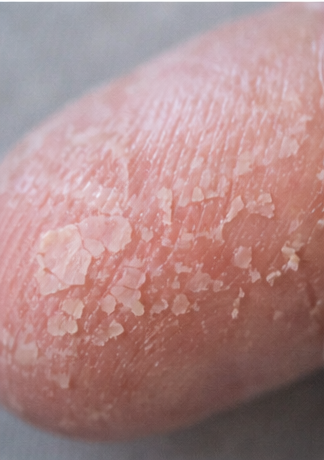
On the second day of illness, he developed a non-itchy rash that initially appeared on the abdomen and gradually spread to the chest, back, neck, and limbs.
The patient denied any recent medication use, drug allergies, new food exposures, or prior similar episodes. There was no history of recent travel or known sick contacts. His past medical history was unremarkable, and immunizations were up to date.
Clinical Findings
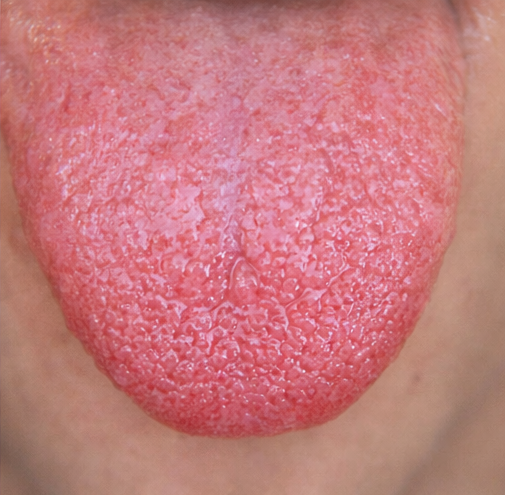
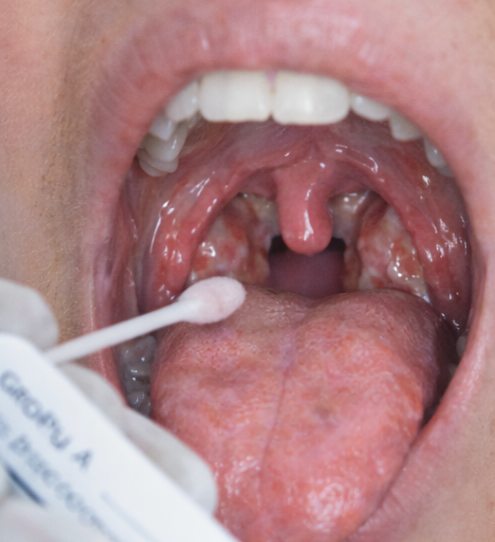
On physical examination, the patient appeared febrile and uncomfortable but was hemodynamically stable. Vital signs revealed fever and mild tachycardia. Oropharyngeal examination showed enlarged, erythematous tonsils with white exudates. The tongue appeared erythematous with prominent papillae, consistent with a strawberry tongue.
Tender anterior cervical lymphadenopathy was present bilaterally. Dermatological examination revealed a diffuse, fine, erythematous maculopapular rash with a sandpaper-like texture, more pronounced over the trunk and proximal extremities.

The rash was non-pruritic and blanched on pressure. No vesicles, petechiae, or mucosal ulcerations were observed. These findings were highly suggestive of scarlet fever [1,3].
Investigations
Laboratory evaluation revealed significant leukocytosis with a predominance of neutrophils, consistent with an acute bacterial infection. Inflammatory markers were elevated, further supporting the presence of a systemic inflammatory response. A rapid antigen detection test for group A Streptococcus was positive, allowing for early presumptive diagnosis and timely initiation of appropriate antimicrobial therapy. Subsequent throat swab culture confirmed the presence of Streptococcus pyogenes, definitively establishing the etiological agent responsible for the patient’s symptoms.
Additional investigations, including renal function tests and urinalysis, were within normal limits, with no evidence of hematuria or proteinuria at presentation, thereby excluding early renal involvement or post-streptococcal complications. In the context of the characteristic clinical features and microbiological confirmation, a diagnosis of scarlet fever secondary to streptococcal pharyngitis was confidently established, guiding targeted treatment and follow-up to monitor for potential complications [2,4].
Management and Outcome
The patient was started on oral penicillin therapy in accordance with standard treatment guidelines.

Supportive care included antipyretics, adequate hydration, and throat soothing measures. The family was counseled regarding medication adherence, infection control measures, and warning signs of potential complications.
Within 48–72 hours of initiating antibiotics, the patient demonstrated marked clinical improvement, with resolution of fever and sore throat. The rash gradually faded over the following days, followed by mild desquamation. At follow-up after one week, the patient was asymptomatic and had returned to normal daily activities. No early or late complications were observed.
Discussion
Scarlet fever is caused by infection with toxin-producing strains of Streptococcus pyogenes, in which streptococcal pyrogenic exotoxins act as superantigens, triggering widespread immune activation and leading to the characteristic scarlatiniform rash and systemic manifestations [1]. These exotoxins induce capillary dilation and inflammatory responses in the skin and mucous membranes, accounting for the diffuse erythematous rash, strawberry tongue, and desquamation seen during the course of illness. The disease classically presents with the triad of fever, exudative pharyngitis, and a fine, sandpaper-like rash, often accompanied by tender cervical lymphadenopathy and circumoral pallor, which together facilitate prompt clinical recognition in most patients [3].
The differential diagnosis of scarlet fever is broad and includes viral exanthems such as measles and rubella, drug-related hypersensitivity reactions, Kawasaki disease, and toxic shock syndrome [4,5]. Careful clinical assessment is essential, as several of these conditions may present with fever and rash. However, the coexistence of acute streptococcal pharyngitis, a non-pruritic scarlatiniform rash, and toxin-mediated mucocutaneous features strongly favors a diagnosis of scarlet fever. Laboratory confirmation with rapid antigen detection testing or throat culture is recommended to establish the diagnosis, guide appropriate antibiotic therapy, and reduce unnecessary antimicrobial use.
Prompt initiation of antibiotic treatment is critical, as it shortens the duration of symptoms, reduces contagiousness, and significantly lowers the risk of both suppurative complications and non-suppurative sequelae, particularly acute rheumatic fever and post-streptococcal glomerulonephritis [2]. Early treatment also contributes to faster resolution of fever and rash, improving patient comfort and reducing school or community transmission. Primary care providers play a central role in the early recognition and management of scarlet fever, especially in adolescents who may initially present with evolving or atypical features, ensuring timely intervention and appropriate follow-up to monitor for complications.
Conclusion
Scarlet fever remains a clinically significant diagnosis in children and adolescents who present with the combination of fever, sore throat, and a characteristic scarlatiniform rash. Despite advances in diagnostics and antimicrobial therapy, the condition continues to be encountered in routine primary care practice and requires a high level of clinical awareness to ensure timely recognition. This case demonstrates a classic presentation of scarlet fever in a 15-year-old boy, highlighting the importance of careful history-taking and detailed physical examination, including assessment of the oropharynx, skin, and lymph nodes, to identify hallmark features such as exudative tonsillitis, strawberry tongue, and cervical lymphadenopathy.
The case further underscores the value of early microbiological confirmation through rapid antigen testing and throat culture, which supports accurate diagnosis and guides targeted antibiotic therapy. Prompt initiation of appropriate antibiotics not only results in rapid symptomatic improvement and recovery but also plays a critical role in preventing both suppurative complications and serious non-suppurative sequelae, such as acute rheumatic fever. Increased awareness among primary care clinicians, coupled with timely diagnostic evaluation and treatment, is essential to ensure effective disease management, reduce transmission, and achieve optimal short- and long-term patient outcomes.
References
- Shulman ST, et al. Clinical practice guideline for the diagnosis and management of group A streptococcal pharyngitis. Clin Infect Dis. 2012;55(10):1279–1282.
- Walker MJ, et al. Disease manifestations and pathogenic mechanisms of Streptococcus pyogenes. Clin Microbiol Rev. 2014;27(2):264–301.
- Gerber MA. Group A streptococcus and pharyngitis in children. Pediatr Clin North Am. 2005;52(3):729–747.
- Stevens DL. Streptococcal toxic-shock syndrome and scarlet fever. N Engl J Med. 1996;335(23):1753–1755.
- Leung AKC, et al. Scarlet fever: A review of the epidemiology and clinical management. Infect Drug Resist. 2018;11:1–9.
Read more such content on @ Hidoc Dr | Medical Learning App for Doctors
Recommended News For You
Recommended Articles For You
Featured News
Featured Articles
Featured Events
Featured KOL Videos
1.
Chemotherapy Boosts Survival for Older Patients With TNBC
2.
high response rate when using a bispecific antibody to treat R/R multiple myeloma.
3.
Adult survivors of childhood cancer are at high risk for cognitive impairment, according to JAMA.
4.
Base-edited T-cell therapy offers additional hope for treating resistant leukemia.
5.
Biden's Bedtime Cancer Symptom; Top Cancer Hospitals; FDA Panel to Review MCED Test
1.
Consensus Recommendations for Healthy Hematologic Aging
2.
Exploring the Role of Fecal Leukocytes in Intestinal Health
3.
Unveiling Tumor Immunity: Pan-Cancer Proteogenomics Characterization
4.
Transfusing the Future: Exploring the Possibilities of Blood Transfusions
5.
Clinical Pharmacology of Ferroptosis-Modulating Anticancer Pharmacotherapy
1.
International Conference on Oncology, Cancer Prevention and Public Health
2.
International Conference on Cancer Nursing and Rehabilitation Strategies
3.
International Conference on Best Practices in Oncology, Cardiology and Critical Care
4.
International Conference on Innovations in Critical Care for Oncology and Cardiology
5.
International Symposium on Oncology, Cardiology and Critical Care Innovations
1.
Efficient Management of First line ALK-rearranged NSCLC - Part II
2.
Current Scenario of Cancer- Q&A Session to Close the Gap
3.
Navigating the Complexities of Ph Negative ALL - Part XII
4.
Chemotherapy: What to Expect
5.
Expert Group meeting with the management of EGFR mutation positive NSCLC - Part III

Address :
Hidoc Dr. Inc. | Delaware C Corp | 1309 Coffeen Ave. Suite 1200, Sheridan WY, 82801
Phone :
+1-415-463-3094
Email :
anishagadia@hidoc.co
© Copyright 2026 Hidoc Dr. Inc.
Terms & Conditions - LLP | Inc. | Privacy Policy - LLP | Inc. | Account Deactivation

To get started please enter your email ID
Welcome to Hidoc Dr.
Join to enhance your clinical skills and gain specialized in-depth medical knowledge