Case Report: Foodborne Botulism Presenting With Acute Cranial Nerve Palsies and Descending Flaccid Paralysis in a Middle-Aged Adult
OthersPage Navigation
Introduction
Botulism is a rare but potentially life-threatening neuroparalytic disorder caused by botulinum neurotoxin produced by Clostridium botulinum and certain related bacterial species. The toxin interferes with acetylcholine release at peripheral cholinergic nerve terminals, resulting in progressive muscle weakness and flaccid paralysis.

Foodborne botulism typically occurs following ingestion of preformed toxin in improperly processed or preserved foods. Other forms include wound botulism, infant botulism, and adult intestinal colonization botulism.
Clinical manifestations commonly include blurred vision, diplopia, ptosis, dysphagia, dysarthria, dry mouth, and symmetrical descending muscle weakness. Severe cases may progress to respiratory failure requiring mechanical ventilation.
Early recognition, prompt administration of botulinum antitoxin, and supportive intensive care are essential for preventing complications and improving clinical outcomes.
Case Presentation
A 42-year-old man presented to the emergency department with sudden-onset blurred vision, difficulty swallowing, slurred speech, and progressive weakness of both upper limbs over approximately 18 hours.
The patient reported consuming homemade preserved vegetables approximately 24 hours before symptom onset. Two family members had consumed smaller quantities of the same preparation but remained asymptomatic.
Initially, he experienced nausea, mild abdominal discomfort, and dry mouth. These symptoms were followed by double vision, drooping eyelids, and difficulty articulating words.
Over the following several hours, he developed progressive weakness involving the neck and upper extremities.
There was no history of fever, seizures, loss of consciousness, recent trauma, or exposure to pesticides.
His medical history was unremarkable, with no known neuromuscular disorder or chronic systemic illness.
On examination, the patient was conscious, alert, and oriented.
Initial vital parameters were:
- Blood pressure: 118/76 mmHg
- Heart rate: 96 beats/minute
- Respiratory rate: 22 breaths/minute
- Temperature: 36.8°C
- Oxygen saturation: 96% on room air
Neurological examination revealed
- bilateral ptosis
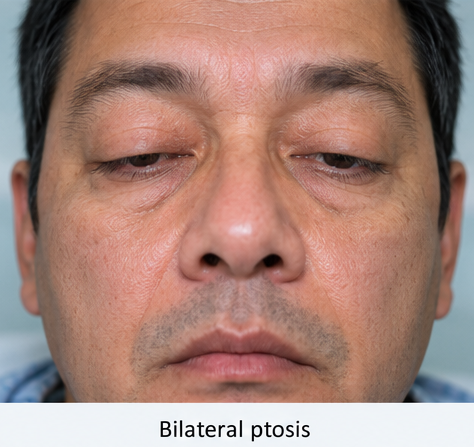
- impaired extraocular movements
- sluggish pupillary responses
- dysarthria, and
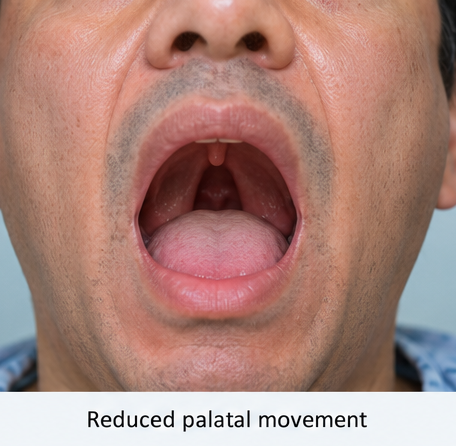
- reduced palatal movement
Motor examination demonstrated symmetrical weakness, predominantly affecting the upper limbs.
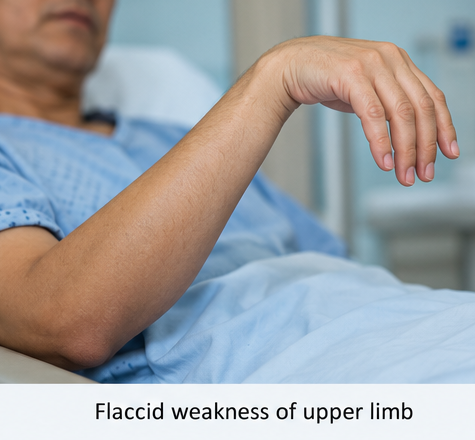
Muscle strength was graded 3/5 in both upper limbs and 4/5 in both lower limbs.
Deep tendon reflexes were reduced, while sensory examination remained normal.
The combination of acute cranial nerve dysfunction, preserved consciousness, and descending flaccid weakness raised strong suspicion of botulism.
Investigations
Initial investigations were performed to exclude metabolic, infectious, and other neurological causes of acute paralysis.
Complete blood count revealed:
- Hemoglobin: 13.6 g/dL
- Total leukocyte count: 8,400 cells/µL
- Platelet count: 265,000 cells/µL
Biochemical investigations demonstrated:
- Serum sodium: 139 mmol/L
- Serum potassium: 4.1 mmol/L
- Serum calcium: 9.1 mg/dL
- Serum creatinine: 0.9 mg/dL
- Blood glucose: 104 mg/dL
Liver and renal function tests were within normal limits.
Magnetic resonance imaging of the brain revealed no acute intracranial abnormality.
Cerebrospinal fluid examination demonstrated normal protein concentration and cell count.
Nerve conduction studies with repetitive nerve stimulation demonstrated reduced compound muscle action potential amplitudes and an incremental response following high-frequency stimulation, supporting a presynaptic neuromuscular transmission disorder.
Serum and stool samples were collected for botulinum toxin testing before antitoxin administration.
A reference laboratory subsequently detected botulinum neurotoxin type A in the serum sample.
The combination of characteristic neurological findings, relevant food exposure, and laboratory confirmation established the diagnosis of foodborne botulism.
Diagnosis
The final diagnosis was:
Foodborne Botulism Caused by Botulinum Neurotoxin Type A, Presenting With Acute Cranial Neuropathies, Descending Flaccid Paralysis, and Impending Respiratory Failure.
The diagnosis was initially established clinically and subsequently confirmed through laboratory detection of botulinum neurotoxin.
Treatment and Management
The patient was immediately admitted to the intensive care unit for neurological observation and respiratory monitoring.
Given the high clinical suspicion of botulism, equine-derived botulinum antitoxin was administered promptly according to the recommended protocol, without waiting for laboratory confirmation.
Respiratory function was monitored through serial assessments of vital capacity, inspiratory muscle strength, and oxygenation.
Within several hours, the patient developed worsening bulbar weakness, ineffective cough, and declining respiratory muscle strength.
Endotracheal intubation was performed to protect the airway, and mechanical ventilation was initiated.
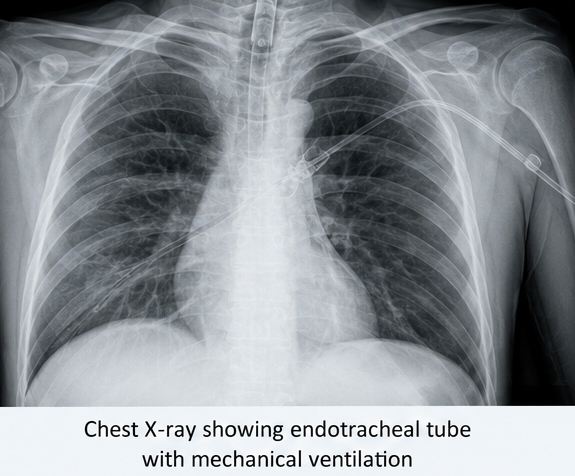
Supportive management included intravenous fluids, nutritional support, aspiration precautions, and prevention of complications associated with prolonged immobilization.
Enteral feeding was provided through a nasogastric tube.
Physiotherapy and passive limb mobilization were initiated during intensive care.
Antibiotics were not administered specifically for botulism because there was no evidence of wound infection or another bacterial infection requiring treatment.
The suspected food preparation was reported to public health authorities for investigation and prevention of additional cases.
Outcome and Follow-Up
During the first week of intensive care, progression of neurological weakness stabilized following antitoxin administration.
However, significant bulbar and respiratory muscle weakness persisted, requiring continued ventilatory support.
By the second week, gradual improvement in ocular movements and upper-limb strength was observed.
Respiratory muscle function progressively recovered, allowing successful ventilator weaning and extubation during the third week.
The patient subsequently underwent swallowing rehabilitation and supervised physiotherapy.
At discharge, he was able to walk independently but continued to experience mild fatigue and residual proximal muscle weakness.
At the six-week follow-up, swallowing and speech had improved substantially.
At three months, neurological examination demonstrated near-complete recovery of muscle strength, with no recurrent respiratory symptoms.
Continued rehabilitation and follow-up were advised.
Discussion
Botulism is an important neurological emergency characterized by toxin-mediated blockade of acetylcholine release at the neuromuscular junction.
The botulinum neurotoxin acts on presynaptic proteins involved in synaptic vesicle fusion, preventing normal neurotransmitter release and producing flaccid paralysis.
Foodborne botulism generally develops following ingestion of contaminated food containing preformed toxin. Improperly preserved vegetables, fermented foods, and inadequately processed canned products are recognized sources.
The incubation period is variable, but symptoms commonly develop within 12–36 hours following toxin ingestion.
Early manifestations frequently involve cranial nerves, producing diplopia, ptosis, dysphagia, dysarthria, and facial weakness.
Progressive descending paralysis is a characteristic feature, while consciousness and sensory function generally remain preserved.
The differential diagnosis includes myasthenia gravis, Guillain–Barré syndrome, brainstem stroke, and other causes of acute neuromuscular weakness.
Electrophysiological testing may support the diagnosis by demonstrating abnormalities consistent with impaired presynaptic neuromuscular transmission.
Detection of botulinum neurotoxin in serum, stool, or implicated food provides laboratory confirmation, although negative testing does not exclude the disease.
Antitoxin administration is the principal specific treatment for foodborne botulism. It neutralizes circulating toxin but cannot reverse toxin already bound to nerve terminals.
Therefore, early administration is critical to limiting further neurological deterioration.
Respiratory failure represents one of the most serious complications and may require prolonged mechanical ventilation.
Neurological recovery occurs gradually as functional neuromuscular transmission is restored through regeneration and repair of affected nerve terminals.
This case highlights the importance of recognizing the characteristic combination of cranial nerve palsies, descending paralysis, preserved sensation, and a history of potentially contaminated food consumption.
Conclusion
Foodborne botulism is a rare but potentially fatal neurological emergency requiring rapid clinical recognition and treatment.
The presence of acute cranial nerve dysfunction followed by symmetrical descending flaccid paralysis should prompt immediate consideration of botulism.
Early antitoxin administration, respiratory monitoring, intensive supportive care, and rehabilitation are essential for favorable clinical outcomes.
Timely diagnosis and public health notification also help prevent additional cases associated with contaminated food sources.
References
1. Rao AK, Sobel J, Chatham-Stephens K, Luquez C. Clinical guidelines for diagnosis and treatment of botulism, 2021. MMWR Recomm Rep. 2021;70(2):1–30. https://doi.org/10.15585/mmwr.rr7002a1
2. Sobel J. Botulism. Clin Infect Dis. 2005;41(8):1167–1173. https://doi.org/10.1086/444507
3. Rossetto O, Pirazzini M, Montecucco C. Botulinum neurotoxins: Genetic, structural and mechanistic insights. Nat Rev Microbiol. 2014;12(8):535–549. https://doi.org/10.1038/nrmicro3295
4. Arnon SS, Schechter R, Inglesby TV, et al. Botulinum toxin as a biological weapon: Medical and public health management. JAMA. 2001;285(8):1059–1070. https://doi.org/10.1001/jama.285.8.1059
5. Centers for Disease Control and Prevention. Clinical Overview of Botulism. https://www.cdc.gov/botulism/hcp/clinical-overview/index.html
Read more such content on @ Hidoc Dr | Medical Learning App for Doctors
Recommended News For You
Recommended Articles For You
Featured News
Featured Articles
Featured Events
Featured KOL Videos
1.
Metastatic Cancer 'Thrivers'; Celebrity Cancer Diagnoses; 'Would He Have Lived?'
2.
Timely ‘Nudges’ Help Spur Talks on Patient Care Goals
3.
Second Malignancy Risk With CAR T-Cell Therapy on Par With Other Treatments
4.
Researchers discuss HER2-low and HER2-zero in breast cancer
5.
An Examine More Into the Acceptance of CRISPR/Cas9 Gene Therapy for Sickle Cell Illness.
1.
How is Digital Innovation Revolutionizing Gynecologic Oncology Treatment and Patient Engagement?
2.
Cancer Across the Lifespan: Precision Strategies for Pediatric and Geriatric Oncology
3.
Is AI The New Radiologist For Breast MRI?
4.
Tremelimumab: A Potential Breakthrough in Cancer Treatment
5.
Population Surveillance of Delayed Cancer Diagnosis Patterns
1.
International Conference on Innovations in Critical Care for Oncology and Cardiology
2.
International Conference on Oncology, Cardiology and Critical Care Policy
3.
International Conference on Oncology, Cancer Prevention and Public Health
4.
International Conference on Cancer Nursing and Rehabilitation Strategies
5.
International Conference on Best Practices in Oncology, Cardiology and Critical Care
1.
Untangling The Best Treatment Approaches For ALK Positive Lung Cancer - Part I
2.
An Eagles View - Evidence-based discussion on Iron Deficiency Anemia- Further Talks
3.
Assessing Therapy-Related Myeloid Neoplasm Risk Through Clonal Hematopoiesis and Treatment Exposure Integration
4.
Navigating the Complexities of Ph Negative ALL - Part XV
5.
Targeting Oncologic Drivers with Dacomitinib: A New Approach to Lung Cancer Treatment

Address :
Hidoc Dr. Inc. | Delaware C Corp | 1309 Coffeen Ave. Suite 1200, Sheridan WY, 82801
Phone :
+1-415-463-3094
Email :
anishagadia@hidoc.co
© Copyright 2026 Hidoc Dr. Inc.
Terms & Conditions - LLP | Inc. | Privacy Policy - LLP | Inc. | Account Deactivation

To get started please enter your email ID
Welcome to Hidoc Dr.
Join to enhance your clinical skills and gain specialized in-depth medical knowledge