Pheochromocytoma Presenting With Episodic Hypertension, Headache, Palpitations, and Sweating: A Case Report
OthersPage Navigation
Introduction
Pheochromocytoma is a rare neuroendocrine tumor arising from chromaffin cells of the adrenal medulla. Closely related tumors arising from extra-adrenal chromaffin tissue are termed paragangliomas. These tumors may synthesize and release catecholamines, particularly norepinephrine and epinephrine, resulting in a wide spectrum of cardiovascular and systemic manifestations.
The clinical presentation is variable. The classical symptom triad consists of episodic headache, palpitations, and excessive sweating, frequently accompanied by sustained or paroxysmal hypertension. However, not all patients exhibit the complete triad, and some tumors are discovered incidentally during abdominal imaging. Other manifestations include tremor, anxiety, pallor, chest or abdominal discomfort, weight loss, hyperglycemia, and orthostatic hypotension.
Early recognition is important because excessive catecholamine release can produce severe hypertension, arrhythmias, myocardial injury, cardiomyopathy, stroke, and potentially life-threatening pheochromocytoma crisis. Diagnosis requires appropriate biochemical testing followed by anatomical imaging to localize the tumor.
This report describes a patient presenting with recurrent episodes of headache, palpitations, diaphoresis, and marked fluctuations in blood pressure who was subsequently diagnosed with an adrenal pheochromocytoma.
Case Report
A 42-year-old man presented to the outpatient department with a six-month history of recurrent episodes of severe headache associated with palpitations and excessive sweating.
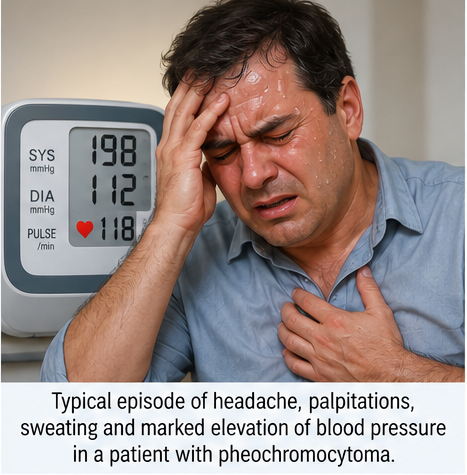
The episodes had initially occurred approximately once or twice per month but had progressively increased in frequency during the preceding two months. Each episode began abruptly and lasted approximately 15–30 minutes before gradually resolving.
During the attacks, the patient described a pounding headache associated with rapid heartbeat, tremulousness, anxiety, and profuse sweating. He occasionally noticed facial pallor and a sensation of tightness in the chest but denied persistent chest pain or syncope.
The patient had been diagnosed with hypertension approximately four months earlier after repeatedly elevated blood pressure readings. Despite antihypertensive treatment, his blood pressure remained markedly variable. At home, systolic blood pressure was occasionally recorded above 180 mmHg during symptomatic episodes but returned toward normal between attacks.
There was no history of previous cardiovascular disease, chronic kidney disease, thyroid disorder, or diabetes mellitus. He denied recreational drug use and did not report regular use of medications known to substantially increase sympathetic activity.
There was no known family history of adrenal tumors, pheochromocytoma, paraganglioma, or a previously diagnosed hereditary endocrine tumor syndrome.
On examination, the patient was conscious, oriented, and comfortable between episodes. His blood pressure at presentation was 164/98 mmHg, with a pulse rate of 96 beats/minute and regular rhythm.
During observation, he developed another episode of headache, palpitations, and sweating. His blood pressure increased to 198/112 mmHg and pulse rate to 118 beats/minute. The episode subsided spontaneously over approximately 20 minutes.
Cardiovascular, respiratory, and abdominal examinations did not reveal any major additional abnormality.
The recurrent combination of paroxysmal hypertension, headache, palpitations, and diaphoresis raised suspicion of catecholamine excess, particularly pheochromocytoma.
Investigations
Routine hematological investigations showed no major abnormality. Renal function and serum electrolytes were within acceptable limits. Mild elevation of fasting blood glucose was noted.
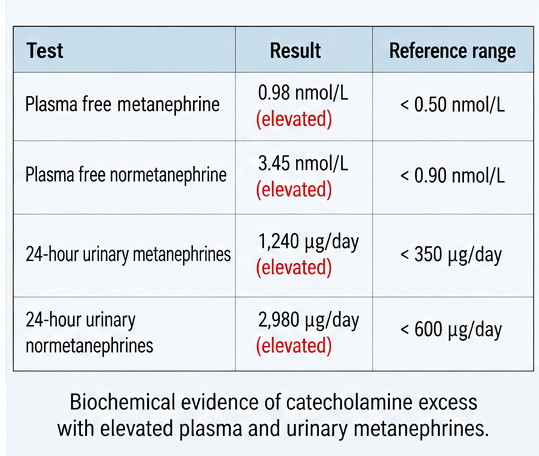
Biochemical evaluation for catecholamine excess was performed. Plasma free metanephrines were substantially elevated, with a particularly marked increase in normetanephrine. Twenty-four-hour urinary fractionated metanephrines were also elevated, providing biochemical evidence of excessive catecholamine production.
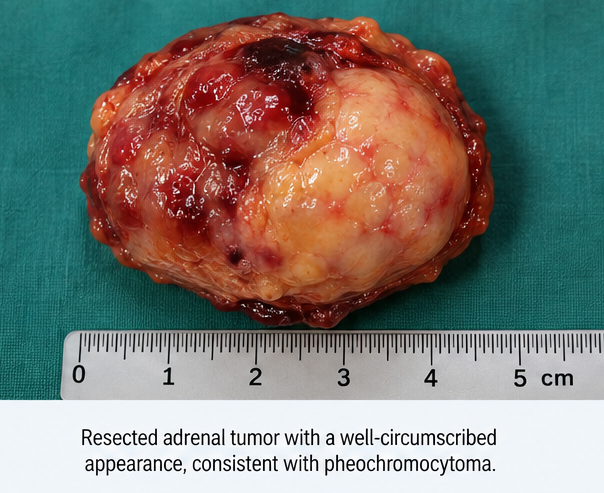
Following biochemical confirmation, contrast-enhanced computed tomography of the abdomen demonstrated a well-defined approximately 4.5-cm mass arising from the right adrenal gland. The contralateral adrenal gland appeared unremarkable, and there was no obvious radiological evidence of distant metastatic disease.

The combination of typical paroxysmal symptoms, markedly elevated catecholamine metabolites, and an adrenal mass was considered consistent with a functional adrenal pheochromocytoma.
Because pheochromocytomas and paragangliomas have important hereditary associations, genetic counseling and evaluation for an underlying germline susceptibility were discussed with the patient. Contemporary management emphasizes consideration of genetic evaluation because a substantial proportion of PPGLs are associated with germline variants.
Differential Diagnosis
Essential Hypertension
Essential hypertension is substantially more common than pheochromocytoma and may produce headache when blood pressure is severely elevated. However, the pronounced episodic blood pressure fluctuations associated with palpitations, diaphoresis, and elevated metanephrines strongly favored pheochromocytoma.
Hyperthyroidism
Hyperthyroidism can cause tachycardia, sweating, tremor, anxiety, and systolic hypertension. However, the patient did not have typical persistent thyrotoxic manifestations, and the biochemical evidence of catecholamine excess together with the adrenal mass supported pheochromocytoma.
Panic Disorder
Panic attacks may resemble catecholamine-related episodes and can include palpitations, sweating, tremor, chest discomfort, and anxiety. However, severe paroxysmal hypertension and significantly elevated metanephrine concentrations required evaluation for an organic catecholamine-secreting tumor.
Primary Hyperaldosteronism
Primary aldosteronism represents an important endocrine cause of secondary hypertension. It is more typically associated with sustained hypertension and may be accompanied by hypokalemia rather than the characteristic episodic adrenergic symptoms observed in this patient.
Paraganglioma
Functional paragangliomas can produce a clinical and biochemical presentation similar to pheochromocytoma. However, imaging localized the lesion to the adrenal gland, supporting the diagnosis of pheochromocytoma rather than an extra-adrenal paraganglioma.
Management and Outcome
Following biochemical and radiological diagnosis, the patient was referred to a multidisciplinary team involving endocrinology, endocrine surgery, and anesthesiology.
Preoperative management focused on controlling the cardiovascular effects of catecholamine excess and restoring adequate intravascular volume.
Alpha-adrenergic blockade was initiated and progressively titrated according to blood pressure and orthostatic measurements. The patient was advised regarding adequate fluid intake and volume repletion as clinically appropriate.
After adequate alpha blockade had been established, a beta-blocker was subsequently introduced because persistent tachycardia remained present.
Importantly, beta-blockade in functional pheochromocytoma should generally be introduced only after adequate alpha-adrenergic blockade, because beta-blockade alone can produce unopposed alpha-adrenergic vasoconstriction and precipitate severe hypertension.
Following satisfactory preoperative preparation, the patient underwent laparoscopic right adrenalectomy under careful anesthetic and hemodynamic monitoring.
Transient blood pressure fluctuations occurred during tumor manipulation but were controlled intraoperatively. Following removal of the tumor, the patient was closely monitored for hypotension and metabolic disturbances.
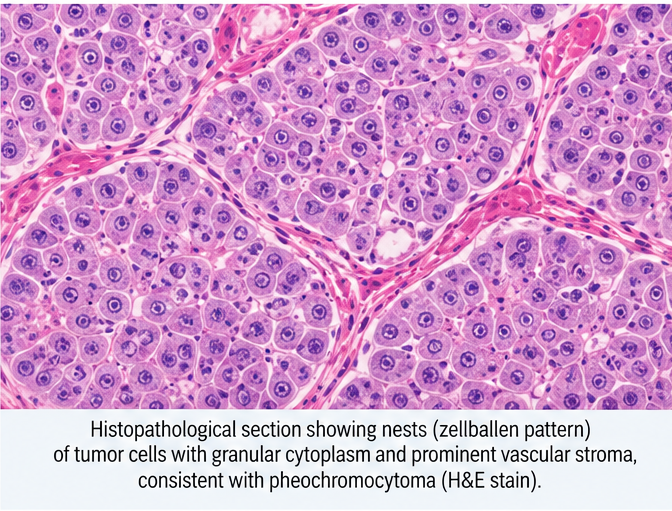
Histopathological examination confirmed an adrenal pheochromocytoma.
The postoperative course was uncomplicated. Blood pressure progressively stabilized, and the frequency of hypertensive episodes rapidly declined. The patient no longer experienced recurrent headache, palpitations, or excessive sweating.
At subsequent follow-up, blood pressure remained substantially improved. Repeat biochemical testing demonstrated a marked reduction in catecholamine metabolites. Continued long-term clinical and biochemical surveillance was advised.
Discussion
Pheochromocytomas are catecholamine-producing neuroendocrine tumors originating from adrenal medullary chromaffin cells, whereas paragangliomas arise from extra-adrenal paraganglionic tissue. Approximately 80–85% of chromaffin tumors are pheochromocytomas, while the remainder are extra-adrenal paragangliomas.
Clinical manifestations arise primarily from excessive catecholamine secretion and stimulation of alpha- and beta-adrenergic receptors. Symptoms can therefore fluctuate considerably according to the pattern, quantity, and type of catecholamine released.
Headache, palpitations, and diaphoresis constitute the traditional clinical triad. Hypertension may be sustained or episodic, and the complete classical triad is present in only a subset of affected patients. Consequently, absence of the complete triad does not exclude the disease.
Biochemical confirmation is fundamental when pheochromocytoma is suspected. Measurement of plasma free metanephrines or urinary fractionated metanephrines provides evidence of catecholamine production. After biochemical evidence has been established, anatomical imaging with CT or MRI is commonly used to identify and characterize the tumor. Additional functional imaging may be required in selected patients, particularly when multifocal, metastatic, recurrent, or extra-adrenal disease is suspected.
Surgical removal is the principal definitive treatment for a localized adrenal pheochromocytoma. However, surgery without appropriate preparation can provoke severe hemodynamic instability because tumor manipulation may result in sudden catecholamine release.
Preoperative alpha-adrenergic blockade is therefore commonly used to control hypertension and reduce the consequences of catecholamine-mediated vasoconstriction. Attention to intravascular volume is also important because chronic catecholamine-induced vasoconstriction may produce relative volume depletion.
Beta-blockers can subsequently be introduced when clinically required for persistent tachycardia, but only after adequate alpha blockade. This sequence is particularly important because isolated beta-blockade may leave alpha-adrenergic vasoconstriction unopposed and precipitate a hypertensive crisis.
Pheochromocytomas and paragangliomas also have important genetic implications. They may occur in association with hereditary syndromes and pathogenic variants involving genes such as RET, VHL, NF1, and SDHx. Genetic counseling and testing can therefore have implications not only for the patient but also for potentially affected family members.
In the present case, the combination of recurrent headache, palpitations, diaphoresis, and striking fluctuations in blood pressure provided an important clinical clue. Biochemical evidence of catecholamine excess followed by identification of an adrenal mass established the diagnosis. Appropriate preoperative preparation followed by adrenalectomy resulted in resolution of the characteristic attacks and substantial improvement in blood pressure.
Conclusion
Pheochromocytoma should be considered in patients with episodic or difficult-to-control hypertension, particularly when accompanied by recurrent headache, palpitations, and excessive sweating.
Because clinical manifestations may be intermittent and nonspecific, a high index of suspicion is important. Biochemical assessment using plasma free or urinary fractionated metanephrines followed by appropriate imaging can establish the diagnosis and localize the tumor.
Management requires careful preoperative cardiovascular preparation, with alpha-adrenergic blockade preceding beta-blockade when the latter is required. Surgical resection provides definitive treatment for most localized adrenal pheochromocytomas.
In this patient, recognition of the characteristic paroxysmal symptoms, biochemical confirmation of catecholamine excess, localization of an adrenal tumor, and appropriately prepared surgical treatment resulted in a favorable clinical outcome.
References
- Neumann HPH, Young WF Jr, Eng C. Pheochromocytoma and Paraganglioma. N Engl J Med. 2019;381:552–565. https://pubmed.ncbi.nlm.nih.gov/31390501/
- Nölting S, Ullrich M, Pietzsch J, et al. Current Management of Pheochromocytoma/Paraganglioma: A Guide for the Practicing Clinician in the Era of Precision Medicine. Cancers (Basel). 2019;11(10):1505. https://pmc.ncbi.nlm.nih.gov/articles/PMC6827093/
- Lenders JWM, Duh QY, Eisenhofer G, et al. Pheochromocytoma and Paraganglioma: An Endocrine Society Clinical Practice Guideline. J Clin Endocrinol Metab. 2014;99(6):1915–1942. https://pubmed.ncbi.nlm.nih.gov/24893135/
- Fishbein L, Del Rivero J, Else T, et al. The North American Neuroendocrine Tumor Society Consensus Guidelines for Surveillance and Management of Metastatic and/or Unresectable Pheochromocytoma and Paraganglioma. Pancreas. 2021;50(4):469–493. https://pmc.ncbi.nlm.nih.gov/articles/PMC8687516/
- Patel D, Phay JE, Yen TWF, et al. Update on Pheochromocytoma and Paraganglioma from the SSO Endocrine/Head and Neck Disease-Site Work Group. Part 1 of 2: Advances in Pathogenesis and Diagnosis. Ann Surg Oncol. 2020;27:1329–1337. https://pmc.ncbi.nlm.nih.gov/articles/PMC8655649/
- Patel D, Phay JE, Yen TWF, et al. Update on Pheochromocytoma and Paraganglioma from the SSO Endocrine and Head and Neck Disease Site Working Group, Part 2 of 2: Perioperative Management and Outcomes. Ann Surg Oncol. 2020;27:1338–1347. https://pmc.ncbi.nlm.nih.gov/articles/PMC8638680/
Read more such content on @ Hidoc Dr | Medical Learning App for Doctors
Recommended News For You
Recommended Articles For You
Featured News
Featured Articles
Featured Events
Featured KOL Videos
1.
Long Wait Times on the Other Side of the Pond: King Charles' Cancer Diagnosis.
2.
ALK-positive lung cancer trial results show unprecedented progression-free survival.
3.
For older patients with Hodgkin lymphoma, novel regimens produce high response rates.
4.
Every cancer is different because of how evolution causes drug resistance and why various cancers require various treatments.
5.
3D Mammography Improves Long-Term Cancer Risk Prediction
1.
Menstrual-Cycle Effects on Cancer Drug Response
2.
Preventing Treatment-Related Secondary Malignancies: Evidence-Based Strategies for Clinical Practice
3.
Strategic Standards in Hematology for Specialists
4.
Remote Hematology Follow-Up: Advancements, Clinical Implications, and Future Directions
5.
Cardiotoxicity Beyond Anthracyclines: Redefining Risk in the Cardio-Oncology Era
1.
International Conference on Innovations in Critical Care for Oncology and Cardiology
2.
International Conference on Oncology, Cardiology and Critical Care Policy
3.
International Conference on Oncology, Cancer Prevention and Public Health
4.
International Conference on Cancer Nursing and Rehabilitation Strategies
5.
International Conference on Best Practices in Oncology, Cardiology and Critical Care
1.
An In-Depth Look At The Signs And Symptoms Of Lymphoma- Further Discussion
2.
Breaking Ground: ALK-Positive Lung Cancer Front-Line Management - Part IV
3.
Pazopanib Takes Center Stage in Managing Renal Cell Carcinoma - Part III
4.
Targeting Oncologic Drivers with Dacomitinib: A New Approach to Lung Cancer Treatment
5.
Recognizing Symptoms That May Require Cancer Evaluation

Address :
Hidoc Dr. Inc. | Delaware C Corp | 1309 Coffeen Ave. Suite 1200, Sheridan WY, 82801
Phone :
+1-415-463-3094
Email :
anishagadia@hidoc.co
© Copyright 2026 Hidoc Dr. Inc.
Terms & Conditions - LLP | Inc. | Privacy Policy - LLP | Inc. | Account Deactivation

To get started please enter your email ID
Welcome to Hidoc Dr.
Join to enhance your clinical skills and gain specialized in-depth medical knowledge