Cellulitis of the Foot Presenting with Progressive Painful Swelling and Erythema: A Case Report
OthersPage Navigation
Abstract
Cellulitis is a common acute bacterial infection involving the dermis and subcutaneous tissues, most frequently caused by Streptococcus pyogenes and Staphylococcus aureus. The lower extremities, particularly the foot, are commonly affected due to skin barrier disruption following trauma, insect bites, ulcers, fungal infections, or edema. Patients typically present with localized erythema, warmth, swelling, tenderness, and occasionally systemic symptoms including fever and malaise. Early recognition and prompt initiation of appropriate antimicrobial therapy are essential to prevent complications such as abscess formation, necrotizing soft tissue infection, osteomyelitis, or sepsis. Diagnosis is primarily clinical and supported by laboratory investigations and imaging when deeper infection is suspected. We report the case of a 56-year-old man presenting with progressive painful swelling and redness involving the dorsum of the right foot following a minor traumatic injury. Clinical evaluation and laboratory findings confirmed cellulitis. The patient responded well to systemic antibiotics, supportive wound care, and limb elevation, with complete clinical recovery during follow-up.
Introduction
Cellulitis is an acute bacterial infection affecting the skin and underlying subcutaneous tissues, resulting from bacterial invasion through a breach in the skin barrier. The infection most commonly affects the lower limbs because of frequent exposure to trauma, fungal infections between the toes, chronic edema, diabetes mellitus, and peripheral vascular disease. Streptococcus pyogenes remains the leading causative organism, although Staphylococcus aureus, including methicillin-resistant strains, is increasingly recognized in selected patient populations.
Clinically, cellulitis presents with rapidly progressive erythema, edema, warmth, pain, and tenderness of the affected region. Fever and systemic inflammatory symptoms may accompany moderate to severe disease. Diagnosis is generally clinical but may require laboratory testing and imaging to exclude abscess formation or deeper soft tissue involvement. Timely antimicrobial therapy significantly reduces morbidity and prevents potentially life-threatening complications.
Case Report
A 56-year-old man presented to the emergency department with increasing pain, swelling, redness, and warmth over the dorsum of his right foot for five days. The symptoms began two days after sustaining a small abrasion while walking barefoot in his garden. Initially, he noticed mild redness around the wound, which gradually spread across the dorsum of the foot and was associated with increasing pain during walking. He also reported low-grade fever, fatigue, and difficulty bearing weight.
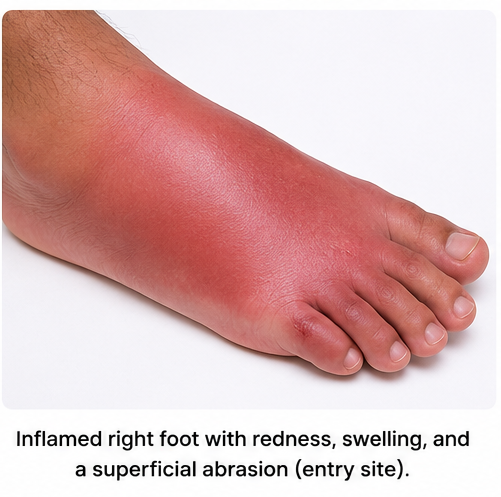
The patient had a history of well-controlled type 2 diabetes mellitus and hypertension. He denied previous episodes of cellulitis, recent hospitalization, or known allergies. There was no history of animal bites, intravenous drug use, or chronic venous insufficiency.
On examination, the patient was afebrile with stable vital signs except for a mildly elevated heart rate of 96 beats per minute. Dermatological examination revealed diffuse erythema extending from the dorsum of the foot to the ankle, accompanied by edema, warmth, tenderness, and poorly demarcated margins.

A superficial healing abrasion measuring approximately 1 cm was present near the base of the second toe and appeared to be the likely portal of bacterial entry. No fluctuance, purulent discharge, crepitus, bullae, or skin necrosis was observed. Distal pulses were palpable, and capillary refill remained normal. Regional inguinal lymph nodes were mildly enlarged and tender.
Laboratory investigations demonstrated leukocytosis with neutrophilia and elevated inflammatory markers, including C-reactive protein and erythrocyte sedimentation rate. Blood glucose levels were mildly elevated but remained within acceptable limits for his diabetic status. Blood cultures showed no bacterial growth. Plain radiographs of the foot demonstrated soft tissue swelling without evidence of fracture, foreign body, gas formation, or osteomyelitis. Ultrasound examination excluded an underlying abscess requiring drainage.
Based on the clinical presentation and investigation findings, a diagnosis of uncomplicated cellulitis of the right foot was established.
Management and Outcome
The patient was admitted for intravenous antibiotic therapy consisting of cefazolin, along with strict glycemic control, limb elevation, adequate hydration, and analgesics for pain relief. The superficial abrasion was cleaned with sterile saline and covered using appropriate non-adherent dressings. Daily clinical assessment was performed to monitor the progression of erythema and swelling.
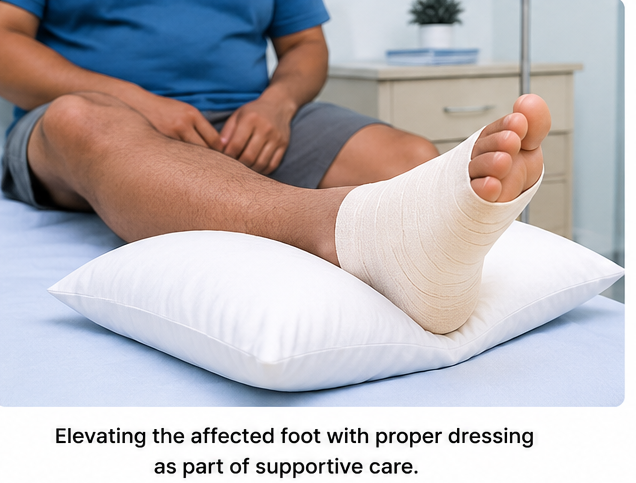
After 72 hours, the patient demonstrated significant improvement, with reduction in pain, swelling, erythema, and local temperature. Inflammatory markers also declined progressively. Intravenous antibiotics were transitioned to oral cephalexin to complete a ten-day treatment course.
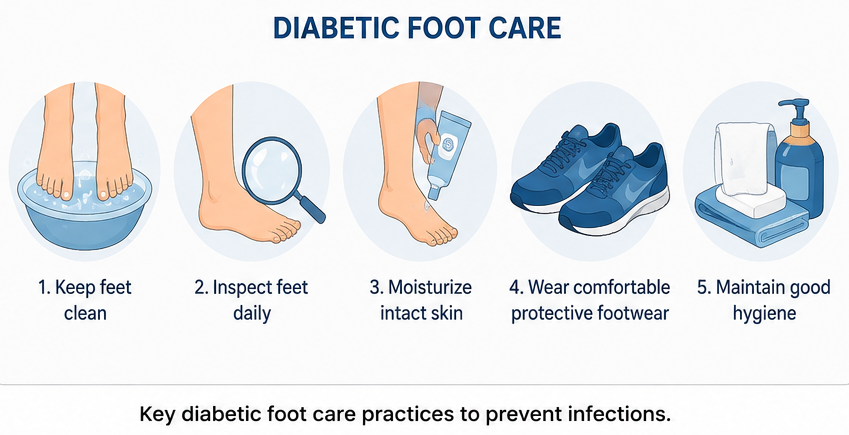
The patient received counseling regarding proper foot hygiene, diabetic foot care, regular skin inspection, appropriate footwear, and prompt management of minor skin injuries to reduce future risk.
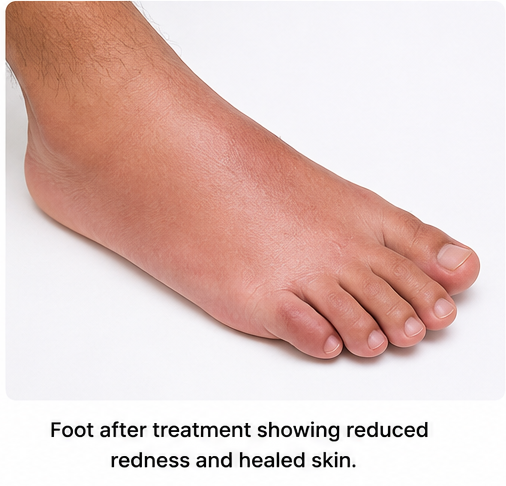
At the two-week outpatient follow-up, the erythema had resolved completely, edema had subsided, and the patient had returned to normal daily activities without residual functional impairment.
Follow-up
Two Weeks
• Complete resolution of erythema and swelling.
• Significant reduction in pain and tenderness.
• Healing of superficial skin abrasion without complications.
One Month
• Normal gait without discomfort.
• No recurrence of infection.
• Improved adherence to diabetic foot care recommendations.
Three Months
The patient remained symptom-free with no recurrent cellulitis or secondary complications. Regular diabetic foot examinations and preventive skin care were continued.
Discussion
Cellulitis is among the most frequently encountered bacterial skin infections in clinical practice and remains an important cause of hospitalization worldwide. Lower limb cellulitis commonly develops following disruption of the skin barrier caused by trauma, tinea pedis, insect bites, ulcers, or surgical wounds. Diabetes mellitus, obesity, chronic edema, peripheral vascular disease, and immunosuppression substantially increase susceptibility to infection.
The diagnosis is primarily clinical and is characterized by localized erythema, warmth, tenderness, edema, and poorly defined borders. Laboratory investigations help assess disease severity but are not diagnostic. Imaging modalities such as ultrasonography are useful for identifying occult abscesses, while radiographs help exclude osteomyelitis, retained foreign bodies, or soft tissue gas suggestive of necrotizing infection.
Differential diagnoses include deep vein thrombosis, venous stasis dermatitis, gout, contact dermatitis, erysipelas, septic arthritis, and necrotizing fasciitis. Careful clinical assessment is essential to distinguish these conditions because management strategies differ considerably.
Empirical antimicrobial therapy should target streptococci and methicillin-sensitive Staphylococcus aureus unless risk factors for methicillin-resistant S. aureus are present. Supportive measures including limb elevation, pain control, wound care, edema reduction, and optimization of underlying medical conditions contribute significantly to recovery. Patients with diabetes require meticulous glycemic control because hyperglycemia impairs wound healing and immune function. Preventive strategies such as treatment of tinea pedis, skin moisturization, protective footwear, and early management of skin injuries help reduce recurrence.
Prognosis
The prognosis of uncomplicated cellulitis is generally excellent when diagnosed early and treated appropriately. Most patients experience rapid clinical improvement within 48–72 hours after initiation of effective antibiotic therapy. Delayed diagnosis or inadequate treatment may result in abscess formation, recurrent cellulitis, chronic lymphedema, osteomyelitis, bacteremia, or sepsis. Long-term preventive measures and management of underlying risk factors substantially reduce recurrence and improve patient outcomes.
Conclusion
Cellulitis of the foot should be suspected in patients presenting with rapidly progressive erythema, swelling, warmth, and pain following minor skin trauma, particularly in individuals with diabetes or other predisposing conditions. Prompt clinical diagnosis, appropriate antimicrobial therapy, supportive wound care, and patient education are essential for successful treatment and prevention of complications. Early intervention leads to excellent clinical outcomes and minimizes the risk of recurrence.
References
- Stevens DL, Bisno AL, Chambers HF, et al. Practice Guidelines for the Diagnosis and Management of Skin and Soft Tissue Infections. Clinical Infectious Diseases. 2014;59(2):e10–e52. https://pubmed.ncbi.nlm.nih.gov/24947530/
- Raff AB, Kroshinsky D. Cellulitis: A Review. JAMA. 2016;316(3):325–337. https://pubmed.ncbi.nlm.nih.gov/27434444/
- StatPearls. Cellulitis. National Center for Biotechnology Information. https://www.ncbi.nlm.nih.gov/books/NBK549770/
- Swartz MN. Clinical Practice. Cellulitis. New England Journal of Medicine. 2004;350:904–912. https://pubmed.ncbi.nlm.nih.gov/14985488/
- Hirschmann JV. Cellulitis and Superficial Skin Infections. The Lancet. 1997;350(9092):1235–1239. https://pubmed.ncbi.nlm.nih.gov/9652580/
Read more such content on @ Hidoc Dr | Medical Learning App for Doctors
Recommended News For You
Recommended Articles For You
Featured News
Featured Articles
Featured Events
Featured KOL Videos
1.
Prostate cancer detection with PET CT and PET MRI is comparable.
2.
Refractory Multiple Myeloma Responsive to Immunotherapy Plus Low-Dose Radiotherapy
3.
AI Breath Test IDs Cancers; More Grief for Prior Auth; Imatinib Discoverer Resigns
4.
In NSCLC, subcutaneous Lazertinib + Amivantamab Dosing Is Not Worse Than IV Dosing.
5.
Loncastuximab-Rituximab Boosts Response Rates in R/R Follicular Lymphoma
1.
Innovative Intraoperative Therapies in Neurosurgical Oncology: Advancing Precision and Outcomes
2.
Unlocking the Potential of Bicalutamide 50 mg: A Revolutionary New Treatment for Prostate Cancer
3.
Holistic Oncology: Advancing Survivorship, Nursing, and Innovative Cancer Care Models
4.
Emerging Chemo-Immunotherapy: New Agents and Mechanisms in Modern Oncology
5.
The Dangers of Supratherapeutic INR: The Need for Increased Awareness and Monitoring
1.
Asian Symposium on Advancement in Hematology and Oncology
2.
Asian Symposium on Advancement in Hematology and Oncology
3.
Asian Symposium on Advancement in Hematology and Oncology
4.
International Cancer Conference
5.
Asian Symposium on Advancement in Hematology and Oncology
1.
Thromboprophylaxis In Medical Settings
2.
EGFR Mutation Positive Non-Small Cell Lung Cancer- Case Discussion & Conclusion
3.
Recent Data Analysis for First-Line Treatment of ALK+ NSCLC
4.
Efficient Management of First line ALK-rearranged NSCLC
5.
Post Progression Approaches After First-line Third-Generaion ALK Inhibitors

Address :
Hidoc Dr. Inc. | Delaware C Corp | 1309 Coffeen Ave. Suite 1200, Sheridan WY, 82801
Phone :
+1-415-463-3094
Email :
anishagadia@hidoc.co
© Copyright 2026 Hidoc Dr. Inc.
Terms & Conditions - LLP | Inc. | Privacy Policy - LLP | Inc. | Account Deactivation

To get started please enter your email ID
Welcome to Hidoc Dr.
Join to enhance your clinical skills and gain specialized in-depth medical knowledge