Multidrug-Resistant Tuberculosis: A Hypothetical Case Report of Diagnostic Challenges, Drug Resistance, and Individualized Treatment
OthersPage Navigation
Abstract
Multidrug-resistant tuberculosis (MDR-TB) remains a major public health challenge and represents a form of tuberculosis caused by Mycobacterium tuberculosis resistant to at least rifampicin and isoniazid, the two most important first-line anti-tuberculosis drugs. MDR-TB may present with prolonged respiratory symptoms, constitutional manifestations, and radiological abnormalities similar to drug-susceptible tuberculosis, making microbiological confirmation and rapid drug-resistance testing essential. Delayed recognition of resistance can result in treatment failure, ongoing transmission, and disease progression.
We report a hypothetical case of a 35-year-old man who presented with persistent cough, intermittent fever, night sweats, weight loss, and fatigue for several weeks. Chest imaging demonstrated bilateral pulmonary abnormalities with cavitary changes. Sputum examination was positive for Mycobacterium tuberculosis, while molecular drug-resistance testing identified resistance to rifampicin and isoniazid, supporting a diagnosis of MDR-TB. Additional drug-susceptibility testing was performed to guide treatment selection. The patient was initiated on an individualized multidrug-resistant tuberculosis treatment regimen and monitored clinically, microbiologically, and radiologically.
This case highlights the importance of early recognition of drug-resistant tuberculosis, rapid molecular testing, comprehensive drug-susceptibility assessment, appropriate selection of an effective treatment regimen, and regular monitoring for treatment response and adverse effects.
Introduction
Tuberculosis is an infectious disease caused by Mycobacterium tuberculosis and most commonly affects the lungs. Although drug-susceptible tuberculosis can generally be treated successfully with an appropriate combination of anti-tuberculosis drugs, drug resistance presents a significant challenge to disease control.
Multidrug-resistant tuberculosis is characterized by resistance to at least rifampicin and isoniazid. MDR-TB may arise through inadequate treatment, interrupted therapy, previous exposure to anti-tuberculosis drugs, transmission of resistant strains, or other factors associated with drug resistance.
Patients with pulmonary MDR-TB may present with persistent cough, sputum production, fever, night sweats, weight loss, fatigue, and reduced appetite. These clinical manifestations may overlap substantially with those of drug-susceptible tuberculosis. Therefore, clinical symptoms alone cannot reliably establish the presence of drug resistance.
Rapid molecular diagnostic techniques play an important role in identifying M. tuberculosis and detecting resistance-associated genetic changes. Confirmation of resistance can subsequently be supported by phenotypic or molecular drug-susceptibility testing, depending on the drugs and diagnostic platform available.
Treatment of MDR-TB requires an effective combination of anti-tuberculosis medicines selected according to the patient's resistance profile and applicable treatment recommendations. Because treatment regimens may involve multiple drugs and prolonged monitoring, assessment of adherence, adverse effects, microbiological response, and drug susceptibility is essential.
We report a hypothetical case of pulmonary MDR-TB presenting with persistent constitutional and respiratory symptoms, emphasizing the importance of early resistance detection and individualized management.
Case Report
A 35-year-old man presented with a 7-week history of persistent cough associated with intermittent low-grade fever, night sweats, reduced appetite, progressive fatigue, and unintentional weight loss. The cough had initially been nonproductive but subsequently became associated with scanty sputum.
The patient reported increasing weakness over the preceding two weeks. There was no history of hemoptysis, significant chest pain, or acute respiratory distress. He had no known history of chronic pulmonary disease.
There was no documented history of previous tuberculosis treatment. However, he reported close household contact with an individual who had previously received treatment for pulmonary tuberculosis.
On general examination, the patient appeared thin and mildly ill. His temperature was elevated, while blood pressure and other vital parameters remained stable. Respiratory examination revealed reduced air entry with coarse crepitations over the upper zones of both lungs.
There was no peripheral lymphadenopathy or peripheral edema. The remainder of the systemic examination was unremarkable.
Investigations
Laboratory investigations demonstrated mild anemia with an elevated inflammatory profile. Renal and hepatic biochemical parameters were within acceptable limits at baseline.
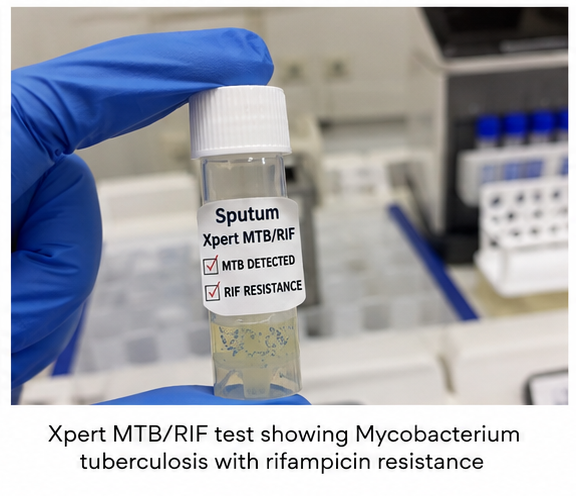
Sputum testing was performed because of the prolonged respiratory symptoms and clinical suspicion of pulmonary tuberculosis. Molecular testing detected Mycobacterium tuberculosis and demonstrated rifampicin resistance.
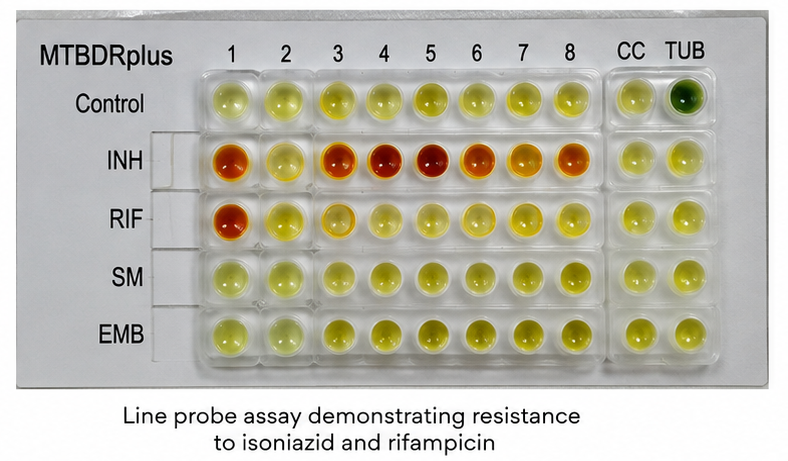
Given the molecular evidence of drug resistance, further testing was undertaken to determine the broader resistance profile. Testing demonstrated resistance to isoniazid in addition to rifampicin, establishing the microbiological diagnosis of MDR-TB.
Additional drug-susceptibility testing was performed to assess susceptibility to other relevant anti-tuberculosis medicines and assist in treatment selection.
Chest radiography demonstrated bilateral upper-zone predominant pulmonary opacities with cavitary changes.
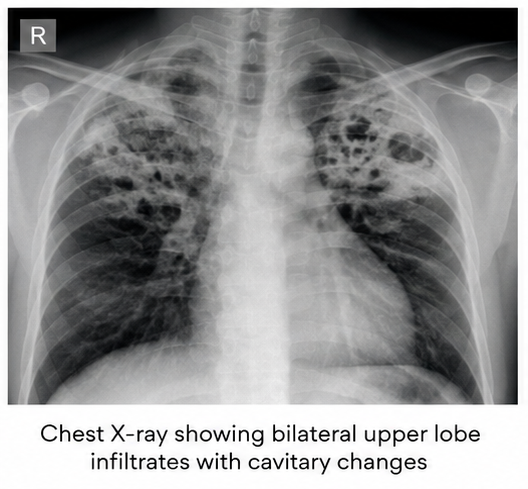
Computed tomography of the chest demonstrated bilateral areas of consolidation and cavitary lesions, predominantly involving the upper lobes, with associated fibrotic changes.

The overall clinical, microbiological, and radiological findings were consistent with pulmonary MDR-TB.
Diagnosis
The diagnosis was established based on:
- Persistent cough with constitutional symptoms
- Prolonged fever and night sweats
- Significant weight loss and reduced appetite
- Chest imaging demonstrating bilateral pulmonary abnormalities with cavitary changes
- Molecular detection of Mycobacterium tuberculosis
- Detection of rifampicin resistance
- Confirmed isoniazid resistance
- Additional drug-susceptibility testing to characterize the resistance profile
The overall findings were consistent with pulmonary multidrug-resistant tuberculosis.
Management and Outcome
Following confirmation of MDR-TB and assessment of the available drug-susceptibility results, an appropriate multidrug-resistant tuberculosis treatment regimen was initiated according to contemporary treatment recommendations and the patient's resistance profile.
Treatment selection was based on the need to construct an effective regimen using active drugs while minimizing unnecessary exposure to medicines for which resistance or poor tolerability was identified.
The patient received counseling regarding strict adherence, the importance of completing treatment, potential adverse effects, infection-control measures, and the need for regular clinical and microbiological follow-up.
Supportive management included nutritional counseling, monitoring of hydration and general nutritional status, and management of treatment-related symptoms.
During the initial phase of treatment, the patient was monitored closely for medication-related adverse effects and clinical deterioration. Serial sputum microbiological assessments were planned to evaluate treatment response.
Over subsequent weeks, the patient demonstrated gradual improvement, with reduction in fever, night sweats, cough, and fatigue. Appetite improved and body weight began to stabilize.
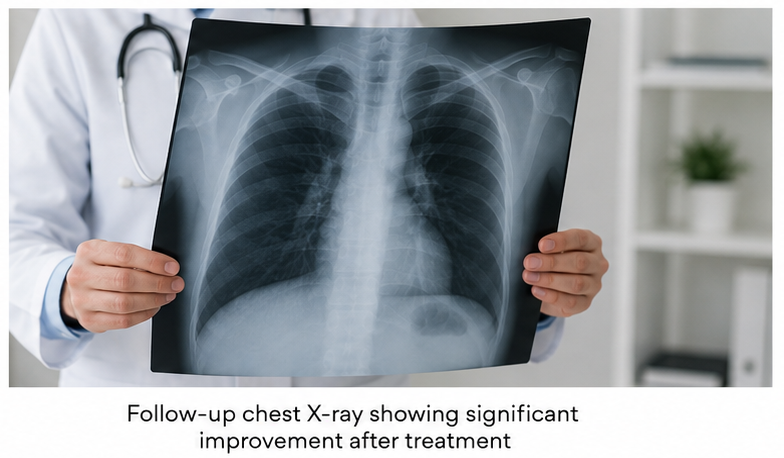
Serial sputum testing demonstrated progressive microbiological response, while follow-up chest imaging showed gradual improvement in pulmonary infiltrates and reduction in the extent of active cavitary disease.
No major treatment-limiting adverse event was identified during the reported follow-up period.
Follow-up
One Month
- Reduction in fever and night sweats
- Decreased frequency and severity of cough
- Improved appetite
- Reduction in fatigue
- Stable renal and hepatic function
Three Months
- Further improvement in respiratory symptoms
- Progressive weight stabilization
- Continued clinical tolerance of treatment
- Microbiological monitoring demonstrating treatment response
- No new systemic complications
Six Months
- Marked improvement in constitutional symptoms
- Significant reduction in cough
- Continued nutritional recovery
- Further radiological improvement
- Ongoing adherence to the prescribed treatment regimen
End of Treatment
- Sustained clinical improvement
- No recurrence of significant respiratory symptoms
- Completion of the prescribed MDR-TB treatment regimen
- Continued microbiological surveillance as clinically indicated
- No evidence of treatment-emergent complications
Discussion
Multidrug-resistant tuberculosis remains a major challenge in tuberculosis control because resistance to key first-line drugs reduces the effectiveness of conventional treatment regimens. MDR-TB requires rapid recognition, accurate resistance characterization, and selection of an effective combination of medicines.
The clinical manifestations of MDR-TB are not necessarily distinguishable from those of drug-susceptible pulmonary tuberculosis. Persistent cough, fever, night sweats, weight loss, and fatigue should therefore prompt appropriate tuberculosis evaluation, particularly in individuals with epidemiological risk factors or previous exposure to tuberculosis.
Microbiological confirmation is central to diagnosis. Rapid molecular diagnostic testing can simultaneously identify M. tuberculosis and detect resistance to important anti-tuberculosis drugs. Identification of rifampicin resistance should prompt further assessment for additional drug resistance, including isoniazid resistance, because the combination is central to the definition of MDR-TB.
Drug-susceptibility testing is important for determining the resistance profile and informing treatment selection. The increasing availability of molecular resistance assays has improved the ability to identify drug resistance more rapidly than conventional phenotypic susceptibility testing alone.
Radiological findings in MDR-TB can include consolidation, cavitation, nodules, fibrosis, and other manifestations of pulmonary tuberculosis. However, imaging findings alone cannot establish drug resistance. Microbiological testing is therefore essential for confirming MDR-TB and determining the appropriate treatment approach.
Treatment requires careful selection of multiple effective anti-tuberculosis medicines. Contemporary management increasingly emphasizes all-oral regimens and individualized treatment based on resistance patterns, treatment history, drug susceptibility, potential toxicity, and other patient-specific factors.
Adherence is particularly important in MDR-TB because incomplete or interrupted treatment can contribute to persistent disease, treatment failure, additional resistance, and continued transmission. Patients should therefore receive appropriate counseling and regular follow-up throughout therapy.
Monitoring should include clinical assessment, microbiological evaluation, laboratory testing appropriate to the medicines used, and surveillance for adverse effects. Nutritional support and psychosocial assistance may also contribute to successful treatment completion.
This hypothetical case illustrates how persistent respiratory symptoms combined with appropriate microbiological testing can lead to early identification of MDR-TB. Rapid detection of resistance followed by appropriate treatment selection and structured monitoring can improve the likelihood of favorable outcomes.
Prognosis
The prognosis of MDR-TB depends on several factors, including the extent and site of disease, resistance pattern, effectiveness of the treatment regimen, adherence, comorbid conditions, and development of additional drug resistance.
Patients with extensive pulmonary disease, delayed diagnosis, ineffective treatment regimens, poor adherence, or resistance to multiple additional drugs may have an increased risk of treatment failure and complications.
Potential complications include progressive pulmonary destruction, respiratory impairment, persistent infectiousness, treatment toxicity, additional drug resistance, and recurrent tuberculosis.
Early diagnosis, appropriate drug-susceptibility testing, effective treatment, adherence support, and regular monitoring are therefore essential components of successful MDR-TB management.
Conclusion
MDR-TB should be considered in patients with persistent respiratory and constitutional symptoms, particularly when there is a history of tuberculosis exposure, previous treatment, or other risk factors for drug resistance.
This hypothetical case highlights the importance of microbiological confirmation, rapid molecular resistance testing, comprehensive drug-susceptibility assessment, and appropriate selection of an effective treatment regimen.
Early recognition of MDR-TB and timely initiation of appropriate therapy, together with adherence support and systematic monitoring for treatment response and adverse effects, remain essential for improving outcomes and reducing transmission of drug-resistant tuberculosis.
References
- World Health Organization. WHO consolidated guidelines on tuberculosis: Module 4: treatment – drug-resistant tuberculosis treatment, 2025 update. https://www.who.int/publications/i/item/9789240109682
- World Health Organization. Global tuberculosis report 2025. https://www.who.int/teams/global-tuberculosis-programme/tb-reports
- World Health Organization. WHO operational handbook on tuberculosis: Module 4: treatment – drug-resistant tuberculosis treatment, 2025 update. https://www.who.int/publications/i/item/9789240109644
- World Health Organization. WHO consolidated guidelines on tuberculosis: Module 3: diagnosis – rapid diagnostics for tuberculosis detection. https://www.who.int/publications/i/item/9789240089502
- Nahid P, Mase SR, Migliori GB, et al. Treatment of drug-resistant tuberculosis. Clin Infect Dis. 2019;69(7):e1-e33. https://pubmed.ncbi.nlm.nih.gov/31159316/
- Caminero JA, Scardigli A. Classification of drugs for the treatment of multidrug-resistant tuberculosis. Lancet Infect Dis. 2015;15(12):1352-1353. https://pubmed.ncbi.nlm.nih.gov/26597192/
- Dheda K, Gumbo T, Maartens G, et al. The epidemiology, pathogenesis, transmission, diagnosis, and management of multidrug-resistant, extensively drug-resistant, and incurable tuberculosis. Lancet Respir Med. 2017;5(4):291-360. https://pubmed.ncbi.nlm.nih.gov/28334633/
- World Health Organization. WHO consolidated guidelines on tuberculosis: Module 4: treatment – drug-susceptible tuberculosis treatment. https://www.who.int/publications/i/item/9789240046481
Read more such content on @ Hidoc Dr | Medical Learning App for Doctors
Recommended News For You
Recommended Articles For You
Featured News
Featured Articles
Featured Events
Featured KOL Videos
1.
Research discovery halts childhood brain tumor before it forms
2.
Increased Data Support Active Monitoring for Low-Risk Prostate Cancer.
3.
'CDC Must Be Investigated'; David Lynch, Bob Uecker Die; Nasal Epinephrine Warning
4.
Increasing Access to Prostate Cancer Drugs; Reducing Toxic Emissions; FTC Files a 'Charity' Suit.
5.
Infections the Main Cause of Nonrelapse Mortality After CAR-T for Blood Cancers
1.
Beyond the Blinders: A Review of Targeted Therapeutic Strategies for Triple-Negative Breast Cancer in 2025
2.
AI-Based Cancer Follow-Up Monitoring: Transforming Survivorship Care through Intelligent Surveillance
3.
Preventing Sarcopenia During Cancer Treatment
4.
Guidance for Managing Complex Anticoagulation
5.
Unlocking the Potential of Sarclisa: A New Hope for Cancer Treatment
1.
International Cancer Conference
2.
Asian Symposium on Advancement in Hematology and Oncology (ASAHO)
3.
International Cancer Conference
4.
Asian Symposium on Advancement in Hematology and Oncology (ASAHO)
5.
Asian Symposium on Advancement in Hematology and Oncology
1.
Updates on Standard V/S High Risk Myeloma Treatment
2.
Navigating the Complexities of Ph Negative ALL - Part XIV
3.
Current Scenario of Blood Cancer- A Conclusion on Genomic Testing & Advancement in Diagnosis and Treatment
4.
Advances in Classification/ Risk Stratification of Plasma Cell Dyscrasias
5.
Pazopanib Takes Center Stage in Managing Renal Cell Carcinoma - Part I

Address :
Hidoc Dr. Inc. | Delaware C Corp | 1309 Coffeen Ave. Suite 1200, Sheridan WY, 82801
Phone :
+1-415-463-3094
Email :
anishagadia@hidoc.co
© Copyright 2026 Hidoc Dr. Inc.
Terms & Conditions - LLP | Inc. | Privacy Policy - LLP | Inc. | Account Deactivation

To get started please enter your email ID
Welcome to Hidoc Dr.
Join to enhance your clinical skills and gain specialized in-depth medical knowledge