Acute Colitis Presenting With Abdominal Pain and Bloody Diarrhea: A Case Report
OthersPage Navigation
Introduction
Colitis refers to inflammation of the colon and encompasses a broad spectrum of disorders with infectious, inflammatory, ischemic, drug-induced, and other etiologies. Patients commonly present with abdominal pain, diarrhea, urgency, fever, rectal bleeding, or constitutional symptoms. The clinical severity may vary considerably, ranging from a mild and self-limiting illness to severe colonic inflammation associated with dehydration, systemic toxicity, hemorrhage, or other complications.
Infectious colitis is an important cause of acute diarrhea and may result from bacterial, viral, or parasitic pathogens. Inflammatory bowel disease, particularly ulcerative colitis and Crohn’s disease involving the colon, should be considered in patients with persistent or recurrent symptoms. Ischemic colitis is another important differential diagnosis, particularly among older patients or individuals with vascular risk factors.
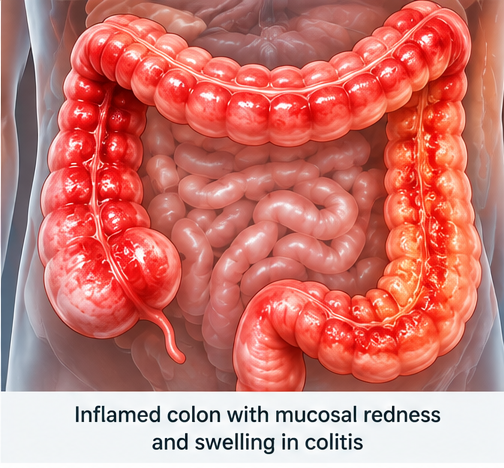
Evaluation requires careful consideration of the duration and characteristics of diarrhea, presence of blood or mucus, abdominal pain, fever, recent travel, dietary exposure, medication use, antibiotic exposure, comorbidities, and previous gastrointestinal disease. Laboratory investigations, stool studies, abdominal imaging, and endoscopic evaluation may be required depending on clinical severity and the suspected underlying cause.
Early identification of the etiology and severity of colitis is important because management varies according to the underlying condition. Supportive treatment may be sufficient for some patients, whereas others require antimicrobial therapy, anti-inflammatory treatment, hospitalization, or surgical intervention.
Case Report
A 38-year-old man presented to the outpatient department with a four-day history of frequent loose stools associated with lower abdominal pain.
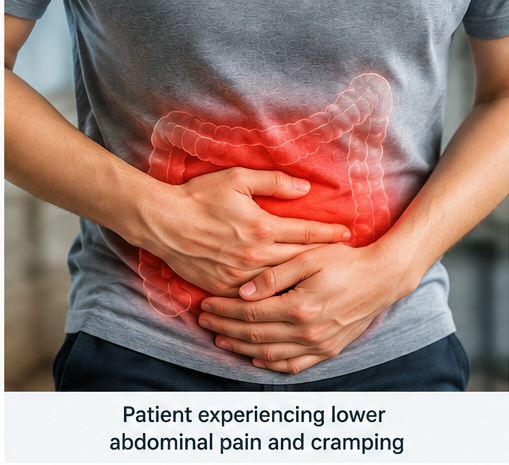
The illness began with mild cramp-like abdominal discomfort followed by multiple episodes of loose stools. During the subsequent two days, the frequency of bowel movements increased to approximately seven to eight episodes per day. The patient subsequently noticed mucus and small amounts of fresh blood mixed with the stools.
The abdominal pain was predominantly located in the lower abdomen and was described as intermittent and cramping in nature. It became more prominent immediately before defecation and partially improved after passing stools. He also reported urgency, reduced appetite, generalized weakness, and mild nausea.
There was no persistent vomiting, abdominal distension, hematemesis, or melena. He denied previous episodes of prolonged diarrhea, recurrent rectal bleeding, or chronic abdominal pain.
There was no known history of inflammatory bowel disease, gastrointestinal surgery, diabetes mellitus, immunosuppression, or malignancy. He was not receiving any regular medication and reported no recent prolonged use of nonsteroidal anti-inflammatory drugs.
On examination, the patient appeared mildly dehydrated but was conscious, oriented, and clinically stable. His abdomen was soft with mild tenderness over the lower abdominal region, particularly the left lower quadrant. There was no guarding, rigidity, rebound tenderness, or palpable abdominal mass.
Bowel sounds were increased. There was no clinical evidence of peritonitis. The overall clinical presentation suggested an acute inflammatory process involving the colon.
Investigations
Initial laboratory investigations were performed to assess the severity of inflammation, dehydration, and possible infection.
Complete blood count demonstrated mild leukocytosis with neutrophilic predominance. Hemoglobin and platelet counts were within acceptable limits. Serum electrolytes showed mild abnormalities compatible with gastrointestinal fluid loss, while renal and liver function parameters were not significantly deranged.
C-reactive protein was mildly elevated, supporting the presence of an inflammatory process.
Stool examination was performed because of the presence of bloody diarrhea and mucus. The sample was evaluated for evidence of an infectious etiology. Stool testing is particularly important in acute inflammatory diarrhea because identification of an enteric pathogen may substantially influence management.
Abdominal imaging demonstrated inflammatory changes involving the colon, including bowel-wall thickening, consistent with colitis.
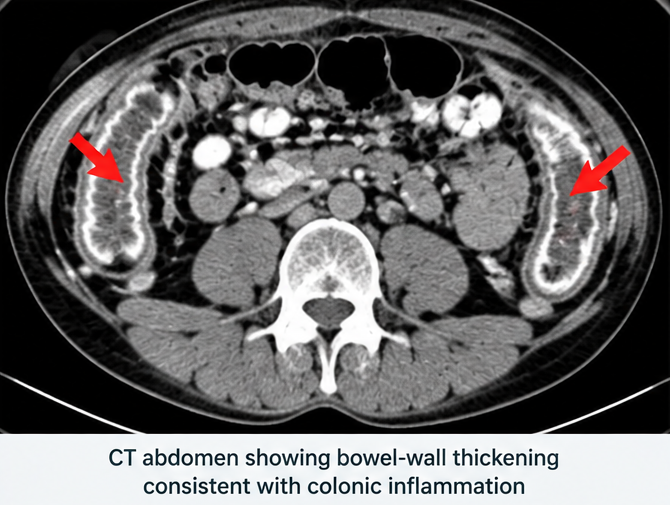
There was no evidence of bowel obstruction, perforation, intra-abdominal abscess, or toxic megacolon.
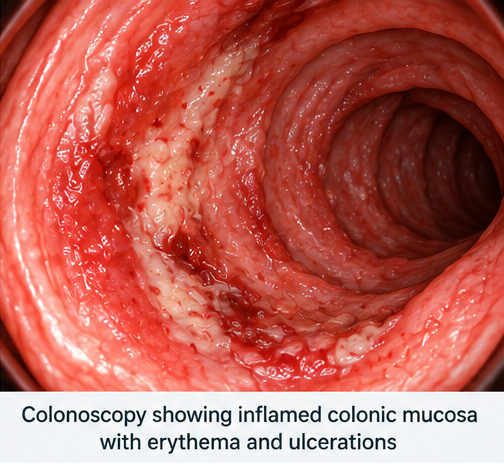
Because this was an acute presentation without a previous history suggestive of chronic inflammatory bowel disease, the initial clinical approach focused on identifying infectious and other acute causes before establishing a diagnosis of chronic inflammatory colitis.
Differential Diagnosis
Infectious Colitis
Infectious colitis was an important consideration because of the acute onset of diarrhea, abdominal cramps, mucus, and rectal bleeding.
Several bacterial pathogens may produce inflammatory diarrhea and colitis. A careful history regarding contaminated food or water, travel, exposure to affected individuals, recent hospitalization, and antibiotic use is therefore important.
Ulcerative Colitis
Ulcerative colitis commonly presents with bloody diarrhea, rectal urgency, abdominal discomfort, and mucus in the stools.
Although some features in this patient were compatible with ulcerative colitis, the sudden onset and short duration of symptoms favored an acute process. Persistent, recurrent, or unexplained symptoms would warrant colonoscopic evaluation with biopsy to investigate inflammatory bowel disease.
Crohn’s Disease
Crohn’s disease may involve any part of the gastrointestinal tract and can produce diarrhea, abdominal pain, rectal bleeding, weight loss, and systemic symptoms.
The absence of previous episodes, chronic symptoms, significant weight loss, perianal disease, or other characteristic manifestations made Crohn’s disease less immediately likely, although it could not be excluded solely on clinical presentation.
Ischemic Colitis
Ischemic colitis frequently presents with sudden abdominal pain followed by bloody diarrhea. It occurs more commonly in older adults and in individuals with cardiovascular disease or other factors that compromise colonic perfusion.
The patient's relatively young age, absence of major vascular risk factors, and overall clinical presentation made ischemic colitis less likely.
Drug-Induced Colitis
Several medications can produce colonic inflammation or diarrhea. A detailed medication history is therefore essential.
In this case, there was no relevant history of medications strongly suggesting a drug-induced etiology.
Management and Outcome
The initial management focused on correcting dehydration and maintaining adequate fluid and electrolyte balance.
The patient was advised to maintain sufficient oral fluid intake using appropriate oral rehydration solutions. Dietary intake was modified temporarily according to gastrointestinal tolerance, with gradual reintroduction of the normal diet as symptoms improved.
Because bloody diarrhea may indicate invasive enteric infection, unnecessary use of antimotility agents was avoided during the acute inflammatory phase.
Clinical monitoring included stool frequency, amount of rectal bleeding, abdominal pain, hydration status, temperature, and signs of systemic deterioration.
The patient was advised to seek immediate medical attention if he developed severe or progressively worsening abdominal pain, persistent high fever, increasing rectal bleeding, abdominal distension, inability to maintain oral hydration, marked reduction in urine output, dizziness, or altered consciousness.
Over the following several days, the frequency of diarrhea gradually decreased. Abdominal cramps and urgency improved, and no further significant rectal bleeding was reported.
Oral intake improved progressively, and the patient remained hemodynamically stable. There were no clinical features suggesting perforation, toxic megacolon, severe gastrointestinal hemorrhage, or other major complications.
At follow-up, bowel frequency had returned close to normal, abdominal pain had resolved, and the patient was tolerating a regular diet.

Discussion
Colitis represents a clinical and pathological spectrum rather than a single disease entity. Inflammation of the colon may result from infection, inflammatory bowel disease, ischemia, medication exposure, radiation, immune-mediated disease, or other causes.
The presenting symptoms often overlap considerably among different forms of colitis. Diarrhea is one of the most frequent manifestations and may be accompanied by abdominal pain, urgency, mucus, fever, and rectal bleeding.
The presence of blood in the stool is clinically important because it suggests inflammatory or invasive intestinal disease and warrants assessment for conditions such as bacterial enterocolitis, inflammatory bowel disease, and ischemic colitis.
The duration of symptoms provides an important diagnostic clue. Acute onset over several days is more consistent with infectious or toxin-associated disease, although inflammatory bowel disease may occasionally present abruptly. Chronic or recurrent diarrhea, weight loss, anemia, persistent rectal bleeding, and extraintestinal manifestations should increase suspicion for inflammatory bowel disease.
Laboratory investigations help evaluate both etiology and disease severity. Complete blood count may demonstrate leukocytosis in infection or inflammation and anemia in patients with significant or prolonged gastrointestinal blood loss. Electrolyte and renal function testing can identify abnormalities resulting from diarrhea and dehydration. Inflammatory markers such as C-reactive protein may provide additional evidence of active inflammation but are not disease-specific.
Stool testing is particularly valuable when patients present with bloody diarrhea, fever, severe abdominal symptoms, suspected outbreaks, immunocompromised states, or other features suggesting an infectious etiology. Appropriate testing can identify clinically important enteric pathogens and help prevent unnecessary or inappropriate treatment.
Cross-sectional imaging may demonstrate colonic wall thickening, mucosal enhancement, surrounding inflammatory changes, or complications. Imaging findings, however, should be interpreted alongside clinical and laboratory findings because bowel-wall thickening is not specific to a single cause of colitis.
Endoscopic evaluation with biopsy plays an important role when inflammatory bowel disease is suspected or when symptoms remain persistent, recurrent, or unexplained. The distribution and appearance of mucosal inflammation, together with histopathological findings, can help differentiate ulcerative colitis, Crohn’s disease, ischemic injury, and other forms of colonic inflammation.
Management depends primarily on the cause and severity of disease. Fluid and electrolyte replacement are fundamental in patients with significant diarrhea. Antimicrobial therapy should be selected according to the suspected or identified pathogen and clinical circumstances rather than administered indiscriminately.
Recognition of warning signs is essential. Severe abdominal tenderness, guarding, abdominal distension, systemic toxicity, persistent tachycardia, significant gastrointestinal hemorrhage, marked dehydration, or clinical deterioration should prompt urgent reassessment for severe colitis or complications.
In the present patient, the acute onset of frequent diarrhea associated with abdominal cramps, mucus, and blood suggested an inflammatory colitis. The absence of peritoneal signs, severe systemic toxicity, bowel obstruction, perforation, or major hemorrhage supported conservative initial management with close clinical observation.
The subsequent improvement in diarrhea, abdominal pain, hydration, and oral intake without development of complications indicated a favorable clinical course.
Conclusion
Colitis is an inflammatory condition of the colon with numerous potential etiologies, including infectious, inflammatory, ischemic, and drug-related disorders.
Common manifestations include diarrhea, abdominal pain, urgency, mucus in the stools, and rectal bleeding. Because these manifestations overlap between different etiologies, careful history-taking and clinical assessment are fundamental to establishing an appropriate differential diagnosis.
Laboratory investigations, stool testing, imaging, and endoscopic assessment should be selected according to the severity, duration, and characteristics of the presentation.
Supportive management with adequate fluid and electrolyte replacement remains important in patients presenting with acute diarrhea. Specific antimicrobial, anti-inflammatory, or other targeted therapy should be guided by the underlying diagnosis.
Clinicians should remain alert for severe abdominal pain, progressive distension, significant gastrointestinal bleeding, systemic toxicity, and other findings that may indicate severe disease or complications.
In this case, early recognition, appropriate evaluation, supportive management, and clinical monitoring were associated with progressive symptomatic improvement and an uncomplicated recovery.
References
- Shane AL, Mody RK, Crump JA, et al. 2017 Infectious Diseases Society of America clinical practice guidelines for the diagnosis and management of infectious diarrhea. Clin Infect Dis. 2017;65(12)–e80. https://pmc.ncbi.nlm.nih.gov/articles/PMC5850553/
- Lamb CA, Kennedy NA, Raine T, et al. British Society of Gastroenterology consensus guidelines on the management of inflammatory bowel disease in adults. Gut. 2019;68(Suppl 3)–s106. https://pmc.ncbi.nlm.nih.gov/articles/PMC6872448/
- Maaser C, Sturm A, Vavricka SR, et al. ECCO-ESGAR guideline for diagnostic assessment in inflammatory bowel disease. J Crohns Colitis. 2019;13(2):144–164. https://pubmed.ncbi.nlm.nih.gov/30137275/
- Brandt LJ, Feuerstadt P, Longstreth GF, Boley SJ. ACG clinical guideline: epidemiology, risk factors, patterns of presentation, diagnosis, and management of colon ischemia. Am J Gastroenterol. 2015;110(1):18–44. https://pubmed.ncbi.nlm.nih.gov/25559486/
- DuPont HL. Acute infectious diarrhea in immunocompetent adults. N Engl J Med. 2014;370:1532–1540. https://pubmed.ncbi.nlm.nih.gov/24738670/
Read more such content on @ Hidoc Dr | Medical Learning App for Doctors
Recommended News For You
Recommended Articles For You
Featured News
Featured Articles
Featured Events
Featured KOL Videos
1.
Is Laughter Good for Blood Glucose Control?
2.
NIH research cuts leave cancer patient facing hard choice
3.
Scientists Employ Technology to Identify Plagiarism and Forgeries in Published Studies.
4.
Ruxolitinib Reduces Acute GVHD in Transplant Patients
5.
Retired Olympic athletes at greater risk of skin cancer and osteoarthritis, research reveals
1.
The Revolutionary Treatment of Hodgkin's Lymphoma: A New Hope for the Future
2.
Unlocking the Key to Treating Lymphoma: New Innovations in Cancer Research
3.
Aging of Bone-Marrow Immune Niches: Mechanisms, Clinical Impact, and Therapeutic Horizons
4.
Biomarkers of Marrow Regenerative Capacity Following Repeated Hematopoietic Stress
5.
Consensus Recommendations for Healthy Hematologic Aging
1.
International Conference on Innovations in Critical Care for Oncology and Cardiology
2.
International Conference on Oncology, Cardiology and Critical Care Policy
3.
International Conference on Oncology, Cancer Prevention and Public Health
4.
International Conference on Cancer Nursing and Rehabilitation Strategies
5.
International Conference on Best Practices in Oncology, Cardiology and Critical Care
1.
Virtual Case Study on Pedal Edema and Triple Vessel Disease - An Initiative by Hidoc Dr.
2.
Current Scenario of Blood Cancer- Genomic Testing & Advancement in Diagnosis and Treatment
3.
Unmet Needs in ALK Positive NSCLC- The Challenges in the Current Care
4.
Pazopanib Takes Center Stage in Managing Renal Cell Carcinoma - Part V
5.
Updates on the First Line Management of ALK+ NSCLC

Address :
Hidoc Dr. Inc. | Delaware C Corp | 1309 Coffeen Ave. Suite 1200, Sheridan WY, 82801
Phone :
+1-415-463-3094
Email :
anishagadia@hidoc.co
© Copyright 2026 Hidoc Dr. Inc.
Terms & Conditions - LLP | Inc. | Privacy Policy - LLP | Inc. | Account Deactivation

To get started please enter your email ID
Welcome to Hidoc Dr.
Join to enhance your clinical skills and gain specialized in-depth medical knowledge