Cholera With Severe Dehydration: A Case Report
OthersPage Navigation
Abstract
Cholera is an acute diarrheal disease caused by toxigenic strains of Vibrio cholerae, typically transmitted through ingestion of contaminated food or water. The disease can progress rapidly from profuse watery diarrhea to severe dehydration, hypovolemic shock, electrolyte abnormalities, and death if treatment is delayed. We report the case of a 32-year-old man who presented with sudden-onset profuse watery diarrhea, repeated vomiting, generalized weakness, and reduced urine output following consumption of food and water from a potentially contaminated source. On examination, the patient was severely dehydrated, tachycardic, hypotensive, and lethargic. Laboratory investigations demonstrated hemoconcentration, electrolyte abnormalities, and acute kidney injury. Stool testing confirmed Vibrio cholerae infection. The patient was promptly managed with aggressive intravenous fluid resuscitation, oral rehydration therapy, electrolyte correction, and appropriate antibiotic therapy. His clinical condition improved, urine output normalized, and renal function recovered. This case highlights the rapid progression of cholera, the importance of early recognition of dehydration, prompt fluid replacement, appropriate antimicrobial therapy, and public health measures to prevent transmission.
Introduction
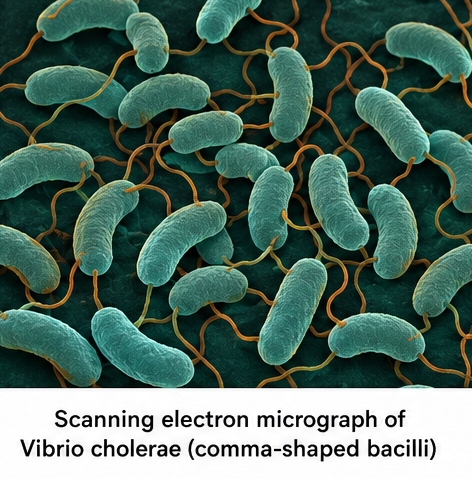
Cholera is an acute intestinal infection caused by toxigenic strains of Vibrio cholerae, particularly serogroups O1 and O139. It is primarily transmitted through ingestion of contaminated water or food and is associated with inadequate sanitation and poor access to safe drinking water.
The clinical presentation ranges from asymptomatic infection or mild diarrhea to severe disease characterized by profuse watery diarrhea, classically described as "rice-water" stools.

Rapid fluid and electrolyte loss can result in severe dehydration, hypovolemic shock, metabolic abnormalities, acute kidney injury, and death within a short period if appropriate treatment is not initiated.
The cornerstone of cholera management is prompt and adequate rehydration. Oral rehydration solution (ORS) is effective in patients who can drink, while intravenous fluids are required in those with severe dehydration or shock. Antibiotics may be used in selected patients with severe cholera to reduce the duration and volume of diarrhea. Zinc supplementation is recommended for children with cholera-related diarrhea.
We report a case of severe cholera complicated by dehydration and acute kidney injury that was successfully managed with timely fluid resuscitation and supportive treatment.
Case Report
A 32-year-old man presented to the emergency department with a 24-hour history of profuse watery diarrhea and repeated vomiting. He reported passing multiple large-volume watery stools over the preceding day, associated with intense thirst, generalized weakness, muscle cramps, and dizziness on standing. He also reported markedly reduced urine output for approximately 12 hours.
The patient had consumed food and untreated drinking water from a local source approximately 1–2 days before the onset of symptoms. There was no history of chronic kidney disease, diabetes mellitus, or other significant medical illness. He reported no recent antibiotic use.
On examination, the patient appeared acutely ill, lethargic, and severely dehydrated. His pulse was rapid and weak, and his blood pressure was low. His respiratory rate was mildly increased. The oral mucosa was markedly dry, and the eyes appeared sunken. Skin turgor was reduced, and peripheral extremities were cool.
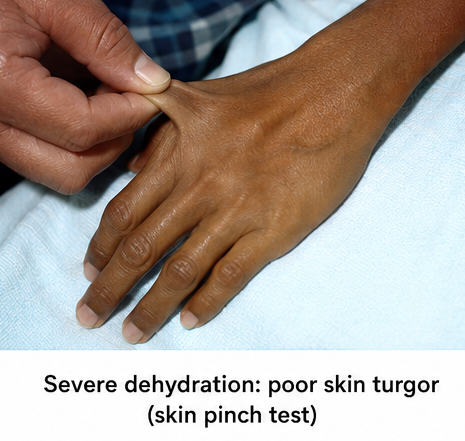
Abdominal examination revealed mild diffuse abdominal discomfort without guarding or rebound tenderness. Bowel sounds were increased.
Initial laboratory investigations demonstrated hemoconcentration, elevated serum urea and creatinine levels, and electrolyte abnormalities consistent with significant gastrointestinal fluid loss and dehydration. Serum bicarbonate was reduced, suggesting metabolic acidosis. The white blood cell count was mildly elevated.
A stool sample was obtained for microbiological evaluation. Testing confirmed infection with toxigenic Vibrio cholerae.
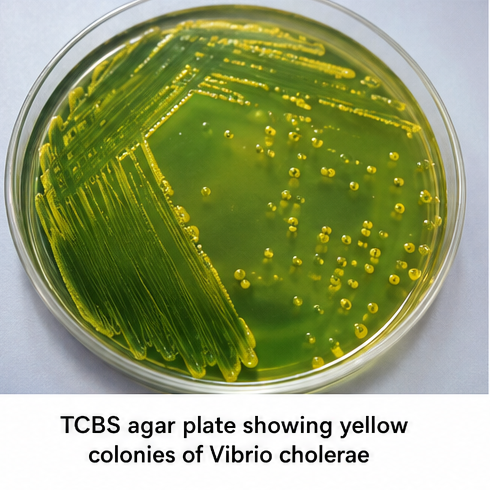
Based on the clinical presentation, examination findings, and laboratory results, a diagnosis of acute cholera with severe dehydration and prerenal acute kidney injury was established.
Management and Outcome
The patient was immediately resuscitated with intravenous isotonic fluids because of severe dehydration and hemodynamic instability. Fluid replacement was closely monitored using clinical parameters, blood pressure, pulse rate, urine output, and serial laboratory investigations.
Once hemodynamic stability was achieved and the patient was able to tolerate oral intake, oral rehydration solution was initiated to replace ongoing gastrointestinal fluid losses. Electrolyte abnormalities and metabolic disturbances were corrected based on serial laboratory measurements.
Appropriate antibiotic therapy was administered according to local antimicrobial susceptibility patterns and clinical recommendations, given the severity of illness. Antidiarrheal medications that could potentially delay intestinal clearance of the pathogen were avoided.
The patient's frequency of diarrhea gradually decreased over the following days. Vomiting resolved, oral intake improved, and urine output progressively increased. Renal function subsequently improved with adequate fluid replacement, supporting the diagnosis of predominantly volume-depletion-related acute kidney injury.
The patient was monitored for recurrent dehydration and electrolyte disturbances. After stabilization, he was discharged in clinically improved condition with advice regarding safe drinking water, food hygiene, hand hygiene, and measures to prevent transmission.
Follow-up
One Week
- The patient reported complete resolution of diarrhea and vomiting.
- Oral intake had returned to normal.
- Urine output was adequate.
- Serum creatinine and electrolyte levels had returned toward baseline.
- No clinical signs of dehydration were present.
One Month
- The patient remained asymptomatic.
- Normal bowel function had resumed.
- No recurrent diarrheal illness was reported.
- The patient continued to follow safe food and water practices.
Three Months
- The patient remained clinically well with no recurrence of gastrointestinal symptoms.
- Renal function remained stable.
- The patient was counseled regarding the importance of safe drinking water, sanitation, hand hygiene, and prompt medical evaluation for severe diarrhea.
Discussion
Cholera is an acute secretory diarrheal illness caused by toxigenic Vibrio cholerae. The organism produces cholera toxin, which stimulates intestinal secretion of chloride and water, resulting in large-volume watery diarrhea. The rapid loss of fluid and electrolytes can lead to severe dehydration and circulatory collapse.
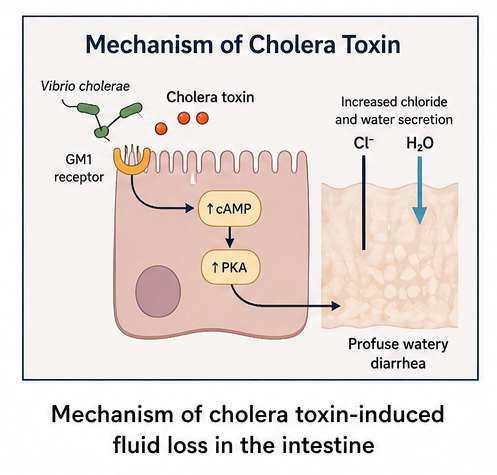
The clinical severity of cholera varies widely. Patients with severe disease may develop intense thirst, dry mucous membranes, sunken eyes, reduced skin turgor, tachycardia, hypotension, oliguria, and altered mental status. Without rapid treatment, severe dehydration can progress to hypovolemic shock, acute kidney injury, electrolyte abnormalities, metabolic acidosis, and death.
The diagnosis is often suspected clinically based on the characteristic presentation of acute profuse watery diarrhea, particularly in an outbreak or endemic setting. Microbiological testing of stool can confirm infection and assist with surveillance and public health interventions.
The primary objective of treatment is rapid replacement of fluid and electrolytes. ORS is the mainstay of therapy for patients who are able to drink and absorb fluids. Intravenous fluids are required for patients with severe dehydration, shock, or inability to tolerate oral fluids. Ongoing stool and vomiting losses must also be replaced to maintain adequate hydration.
Antibiotics are generally reserved for patients with severe cholera and selected high-risk cases. Appropriate antimicrobial therapy can reduce the duration and severity of diarrhea and decrease pathogen shedding. Antimicrobial selection should consider local resistance patterns.
In the present case, the patient developed severe dehydration with acute kidney injury due to substantial gastrointestinal fluid loss. Prompt intravenous fluid resuscitation, followed by oral rehydration and appropriate antibiotic therapy, resulted in rapid clinical improvement and recovery of renal function. The absence of persistent organ dysfunction contributed to a favorable outcome.
Cholera also has important public health implications. Prevention depends on access to safe drinking water, adequate sanitation, food safety, hand hygiene, early case detection, and appropriate outbreak control measures. Oral cholera vaccines may also have a role in controlling outbreaks and protecting populations at increased risk.
Prognosis
The prognosis of cholera is generally excellent when adequate rehydration is initiated promptly. Most patients recover completely with appropriate fluid and electrolyte replacement.
However, untreated severe cholera can rapidly become life-threatening. Severe dehydration, hypovolemic shock, acute kidney injury, electrolyte abnormalities, and metabolic acidosis are important complications associated with poor outcomes when treatment is delayed.
In this case, early recognition of severe dehydration and immediate fluid resuscitation resulted in successful recovery without long-term complications. Patients and communities should be educated about the importance of safe water, sanitation, hygiene, and early medical care for acute watery diarrhea.
Conclusion
Cholera is a potentially life-threatening infectious disease characterized by acute watery diarrhea and rapid fluid and electrolyte loss. Severe dehydration can develop within hours and may lead to hypovolemic shock, acute kidney injury, and death if treatment is delayed.
Early recognition of clinical dehydration, immediate fluid and electrolyte replacement, and appropriate use of antibiotics in severe disease are essential for successful management. In the present case, prompt resuscitation and comprehensive supportive treatment resulted in complete clinical recovery.
Prevention remains a critical component of cholera control and requires access to safe drinking water, adequate sanitation, food hygiene, hand hygiene, surveillance, and timely public health intervention. Rapid diagnosis and treatment, combined with effective preventive measures, are essential to reduce cholera-related morbidity and mortality.
References
- World Health Organization. Cholera. WHO Fact Sheet. https://www.who.int/news-room/fact-sheets/detail/cholera
- World Health Organization. The Treatment of Diarrhoea: A Manual for Physicians and Other Senior Health Workers. Geneva: World Health Organization. https://iris.who.int/handle/10665/43209
- Harris JB, LaRocque RC, Qadri F, Ryan ET, Calderwood SB. Cholera. The Lancet. 2012;379(9835):2466-2476. https://pubmed.ncbi.nlm.nih.gov/22748592/
- Ali M, Nelson AR, Lopez AL, Sack DA. Updated Global Burden of Cholera in Endemic Countries. PLoS Neglected Tropical Diseases. 2015;9(6):e0003832. https://pubmed.ncbi.nlm.nih.gov/26043000/
- Centers for Disease Control and Prevention. Cholera: Clinical Overview and Treatment. https://www.cdc.gov/cholera/hcp/clinical-overview/
- World Health Organization. Cholera Outbreak Response Field Manual. https://www.who.int/publications/i/item/9789290223811
Read more such content on @ Hidoc Dr | Medical Learning App for Doctors
Recommended News For You
Recommended Articles For You
Featured News
Featured Articles
Featured Events
Featured KOL Videos
1.
According to the Lancet, having cancer and VTE at the same time increases mortality risk.
2.
Pooled Cord Blood Transplants Achieve Near-Perfect Results in Early Trial
3.
Experts say oncology, primary care coordination necessary for best cancer patient outcomes
4.
Urinary tract cancer prediction models with high sensitivity and specificity
5.
New guidelines for radiation therapy for HPV-associated head and neck cancer
1.
The Importance of Early Detection in Skin Cancer: Why Regular Skin Exams Matter
2.
Clinical Frameworks in Hematology for Better Care
3.
Bridging Disciplines: Medical Oncology vs Surgical Oncology in the Era of Multidisciplinary Cancer Care
4.
Unveiling the Hidden Mechanisms of Hemolytic Reactions
5.
Practical Applications in Hematology Across Clinical Settings
1.
Asian Symposium on Advancement in Hematology and Oncology (ASAHO)
2.
International Cancer Conference
3.
Asian Symposium on Advancement in Hematology and Oncology (ASAHO)
4.
Asian Symposium on Advancement in Hematology and Oncology
5.
Asian Symposium on Advancement in Hematology and Oncology
1.
Understanding Early Relapse in B-cell ALL: Rates, Risks, and Common Sites
2.
Thromboprophylaxis In Medical Settings- An Update
3.
Recognizing Symptoms That May Require Cancer Evaluation
4.
Updates on Standard V/S High Risk Myeloma Treatment- The Next Part
5.
Recognizing the Signs of Anemia in Adults

Address :
Hidoc Dr. Inc. | Delaware C Corp | 1309 Coffeen Ave. Suite 1200, Sheridan WY, 82801
Phone :
+1-415-463-3094
Email :
anishagadia@hidoc.co
© Copyright 2026 Hidoc Dr. Inc.
Terms & Conditions - LLP | Inc. | Privacy Policy - LLP | Inc. | Account Deactivation

To get started please enter your email ID
Welcome to Hidoc Dr.
Join to enhance your clinical skills and gain specialized in-depth medical knowledge