Acute Cholangitis Presenting With Fever, Right Upper Quadrant Pain, and Obstructive Jaundice: A Case Report
OthersPage Navigation
Abstract
Acute cholangitis is a potentially life-threatening infection of the biliary tree that most commonly develops in the setting of biliary obstruction. Gallstone disease is a frequent underlying cause, although benign biliary strictures, malignant obstruction, and complications related to biliary instrumentation may also predispose to infection. The clinical presentation ranges from mild constitutional symptoms to severe systemic infection with sepsis and multiorgan dysfunction. We report the case of a 56-year-old male who presented with fever, right upper quadrant abdominal pain, nausea, and progressive yellowish discoloration of the eyes. Clinical examination revealed icterus and right upper quadrant tenderness. Laboratory investigations demonstrated leukocytosis, elevated inflammatory markers, and a cholestatic pattern of liver injury, with increased serum bilirubin and alkaline phosphatase levels. Abdominal imaging revealed biliary obstruction associated with a common bile duct stone and upstream biliary dilatation. Based on the clinical, laboratory, and radiological findings, a diagnosis of acute ascending cholangitis secondary to choledocholithiasis was established. The patient was managed with intravenous fluids, appropriate antimicrobial therapy, analgesics, and urgent biliary decompression by endoscopic retrograde cholangiopancreatography, followed by removal of the obstructing stone. The patient's clinical condition improved, with resolution of fever and abdominal pain and gradual normalization of liver function parameters. This case highlights the importance of early recognition of acute cholangitis, prompt initiation of supportive and antimicrobial therapy, and timely biliary drainage to prevent progression to sepsis and organ dysfunction.
Introduction
Acute cholangitis is an infection of the biliary tract that usually occurs when bacterial contamination develops in the presence of impaired bile flow and biliary obstruction. It represents an important gastrointestinal emergency because the infection can rapidly progress to systemic inflammatory response, sepsis, septic shock, and multiorgan dysfunction if appropriate treatment is delayed.
The most common cause of acute cholangitis is obstruction of the common bile duct by gallstones. Other causes include benign biliary strictures, malignant obstruction involving the biliary tract or pancreatic head, primary sclerosing cholangitis, postoperative biliary complications, and obstruction associated with biliary stents or other instrumentation.
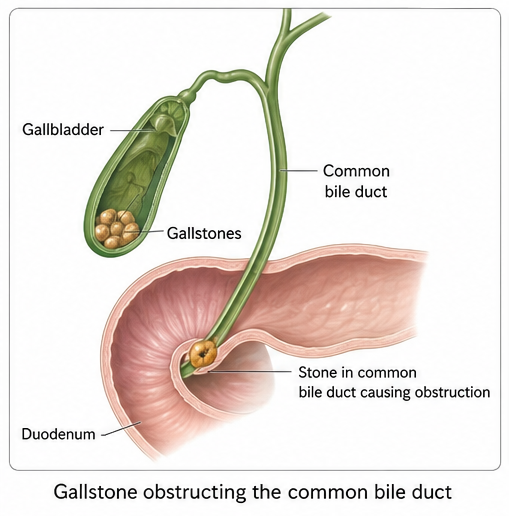
The pathophysiology of acute cholangitis involves a combination of biliary obstruction, increased intrabiliary pressure, and bacterial proliferation. Under normal circumstances, the continuous flow of bile and the functional integrity of the sphincter of Oddi help protect the biliary system from ascending infection. When biliary drainage is impaired, bacterial colonization may occur, leading to inflammation and infection of the biliary tree.
The classical clinical presentation is traditionally described by Charcot's triad, consisting of fever, right upper quadrant abdominal pain, and jaundice. However, not all patients present with all three features. Some patients may have nonspecific symptoms, while severe cases may develop hypotension and altered mental status, reflecting systemic infection and organ dysfunction.
Common clinical manifestations include fever or chills, abdominal pain, nausea, vomiting, jaundice, and malaise. Laboratory investigations often demonstrate leukocytosis or leukopenia, elevated inflammatory markers, and biochemical evidence of cholestasis, including increased bilirubin and alkaline phosphatase levels. Liver transaminases may also be elevated, particularly during acute biliary obstruction.
Diagnosis is based on a combination of clinical findings, laboratory abnormalities, and imaging evidence of biliary obstruction or inflammation. Ultrasonography is frequently used as an initial imaging modality, while computed tomography, magnetic resonance cholangiopancreatography, or endoscopic ultrasound may provide additional information regarding the location and cause of biliary obstruction.
Management requires a multidisciplinary approach involving hemodynamic stabilization, antimicrobial therapy, and relief of biliary obstruction. In patients with significant obstruction or severe infection, biliary drainage is a critical component of treatment. Endoscopic retrograde cholangiopancreatography is commonly used for biliary decompression and allows therapeutic interventions such as stone extraction and stent placement.
We report a case of acute ascending cholangitis secondary to choledocholithiasis presenting with fever, right upper quadrant pain, and obstructive jaundice, emphasizing the importance of early diagnosis, antimicrobial treatment, and timely biliary decompression.
Case Report
A 56-year-old male presented to the emergency department with a 3-day history of fever, progressively worsening right upper quadrant abdominal pain, and yellowish discoloration of the eyes. The patient described the abdominal pain as intermittent and colicky in nature, with occasional radiation toward the right shoulder. He also reported nausea, reduced appetite, generalized weakness, and dark-colored urine.
The patient stated that the fever had progressively increased over the preceding 2 days and was associated with intermittent chills. He denied hematemesis, melena, or significant weight loss. There was no history of altered sensorium or recent episodes of confusion.
The patient had a previous history of intermittent upper abdominal discomfort after meals but had not undergone prior evaluation for gallbladder disease. He had no known history of chronic liver disease, inflammatory bowel disease, or malignancy. There was no recent history of abdominal surgery or biliary instrumentation.
On clinical examination, the patient was conscious and oriented but appeared acutely ill. His temperature was elevated, and he had mild tachycardia. Blood pressure was maintained within an acceptable range at presentation, and respiratory rate was mildly increased.
General examination revealed visible scleral icterus and mild jaundice. Abdominal examination demonstrated tenderness in the right upper quadrant and epigastric region. There was no evidence of generalized abdominal guarding or rigidity. The abdomen was soft, and no palpable hepatosplenomegaly was noted.
Cardiovascular and respiratory examinations were unremarkable. Neurological examination revealed no focal deficits, and the patient was alert and appropriately oriented. There was no clinical evidence of altered mental status.
Based on the clinical presentation of fever, right upper quadrant abdominal pain, and jaundice, acute cholangitis was suspected. The primary differential diagnoses included acute calculous cholecystitis, acute hepatitis, biliary pancreatitis, liver abscess, and malignant biliary obstruction.
Laboratory investigations demonstrated leukocytosis with neutrophilic predominance and elevated inflammatory markers. Liver function testing revealed a cholestatic pattern with increased total and direct bilirubin levels and significant elevation of alkaline phosphatase and gamma-glutamyl transferase. Serum aminotransferases were moderately elevated. Renal function parameters were initially within acceptable limits, and serum pancreatic enzyme levels did not indicate acute pancreatitis.
Abdominal ultrasonography demonstrated gallbladder stones with dilatation of the intrahepatic and extrahepatic biliary ducts. The common bile duct appeared dilated, raising suspicion of distal biliary obstruction.
Further evaluation with magnetic resonance cholangiopancreatography demonstrated a filling defect within the distal common bile duct, consistent with choledocholithiasis, with upstream biliary dilatation.
Based on the clinical presentation, laboratory abnormalities, and imaging findings, a diagnosis of acute ascending cholangitis secondary to common bile duct obstruction by a retained biliary calculus was established.
Management and Outcome
The patient was admitted for close monitoring and immediate management. Initial treatment included intravenous fluid resuscitation, correction of electrolyte abnormalities, analgesic therapy, and appropriate broad-spectrum antimicrobial therapy directed against common biliary pathogens.
The patient's vital signs and urine output were monitored closely for evidence of clinical deterioration or organ dysfunction. Blood cultures were obtained before antimicrobial therapy when feasible.
Given the presence of biliary obstruction with acute infection, early biliary drainage was planned. Endoscopic retrograde cholangiopancreatography was performed, demonstrating obstruction of the distal common bile duct due to a calculus.
Endoscopic biliary sphincterotomy was performed, followed by extraction of the obstructing stone. Biliary drainage was successfully restored, and no immediate procedure-related complications were observed.
Following biliary decompression and continued antimicrobial therapy, the patient's fever gradually resolved. Right upper quadrant abdominal pain and jaundice progressively improved. The leukocytosis and inflammatory markers decreased, while bilirubin and cholestatic liver enzyme levels demonstrated a gradual downward trend.
The patient's oral intake was progressively resumed as tolerated. He remained hemodynamically stable throughout the remainder of the hospital stay and did not develop hypotension, altered mental status, renal dysfunction, or other evidence of severe organ failure.
The patient was discharged after significant clinical improvement with appropriate follow-up and counseling regarding gallstone disease and the need for definitive management of the underlying biliary pathology.
Follow-up
One Week
- The patient's fever had completely resolved.
- Right upper quadrant abdominal pain had significantly improved.
- Jaundice and scleral icterus had markedly decreased.
- Appetite and oral intake had returned to near-normal levels.
- Liver function parameters showed a progressive improvement.
- No signs of recurrent biliary infection were observed.
One Month
- The patient remained clinically stable and afebrile.
- Complete resolution of abdominal pain was reported.
- No recurrent jaundice or chills were noted.
- Liver function tests had substantially improved.
- No further episodes of acute cholangitis were reported.
Three Months
- The patient remained asymptomatic.
- No recurrence of fever, abdominal pain, or jaundice was observed.
- The patient had returned to normal daily activities.
- Follow-up evaluation did not demonstrate recurrent biliary obstruction.
- The patient was advised to continue routine hepatobiliary follow-up and to seek immediate medical attention if symptoms suggestive of recurrent biliary obstruction or infection developed.
Discussion
Acute cholangitis is a serious infection of the biliary system that typically develops in the setting of impaired biliary drainage. Biliary obstruction creates conditions that facilitate bacterial proliferation and migration within the biliary tract. If the obstruction is not relieved, increased intrabiliary pressure may contribute to the systemic spread of infection and the development of sepsis.
Choledocholithiasis is one of the most common causes of acute cholangitis. Gallstones originating in the gallbladder may migrate into the common bile duct and cause partial or complete obstruction. Other etiologies include benign biliary strictures, malignant obstruction, postoperative complications, and biliary instrumentation.
The classical clinical presentation of acute cholangitis includes fever, abdominal pain, and jaundice. This combination, known as Charcot's triad, is highly suggestive of biliary infection in the appropriate clinical context. However, the complete triad is not present in every patient. Therefore, the absence of one or more classical features should not exclude the diagnosis when laboratory and imaging findings support biliary infection.
In the present case, the patient presented with all three components of the classical clinical presentation, including fever, right upper quadrant pain, and jaundice. The presence of leukocytosis, elevated inflammatory markers, and a cholestatic liver profile further supported the diagnosis.
The differential diagnosis of fever, abdominal pain, and jaundice is broad. Acute cholecystitis may cause right upper quadrant pain and fever but typically does not produce significant biliary obstruction or marked jaundice unless associated with additional pathology. Acute viral or toxic hepatitis may cause jaundice and elevated aminotransferases but generally does not produce the characteristic pattern of biliary obstruction. Pancreatitis may also cause abdominal pain and biliary obstruction, particularly when associated with gallstones, and should be considered when pancreatic enzyme levels are elevated.
Imaging plays an important role in identifying biliary obstruction and determining its underlying cause. Ultrasonography is commonly used as an initial investigation because it can identify gallstones and biliary ductal dilatation. In patients requiring further anatomical assessment, magnetic resonance cholangiopancreatography and other imaging techniques can help identify the site and cause of obstruction.
The management of acute cholangitis requires prompt recognition and early intervention. Initial treatment generally includes fluid resuscitation, correction of hemodynamic abnormalities, appropriate antimicrobial therapy, and close monitoring for organ dysfunction.
Antimicrobial therapy is an essential component of treatment because acute cholangitis involves infection of the biliary tract. The choice of antimicrobial therapy should consider the likely causative organisms, local antimicrobial resistance patterns, severity of infection, previous healthcare exposure, and individual patient factors.
However, antimicrobial therapy alone may be insufficient when significant biliary obstruction persists. Restoration of bile flow and source control are central to successful treatment. Endoscopic retrograde cholangiopancreatography is frequently preferred when therapeutic intervention is required because it allows simultaneous biliary decompression and treatment of the underlying obstruction.
In the present case, ERCP enabled successful removal of the obstructing common bile duct stone and restoration of biliary drainage. The patient's rapid clinical improvement following decompression emphasizes the importance of addressing the underlying source of infection rather than relying exclusively on antimicrobial therapy.
Severe acute cholangitis can progress rapidly to sepsis and multiorgan dysfunction. Complications may include hypotension, acute kidney injury, respiratory failure, hepatic dysfunction, and altered consciousness. Early recognition of these features is essential for determining the urgency of biliary drainage and the need for intensive supportive care.
The patient's favorable outcome was likely related to early recognition of the condition, prompt initiation of antimicrobial therapy, close monitoring, and timely biliary decompression. No evidence of septic shock or major organ dysfunction developed during hospitalization.
This case also highlights the importance of considering acute cholangitis in patients presenting with fever and jaundice, particularly when accompanied by abdominal pain and biochemical evidence of cholestasis. Rapid evaluation with laboratory investigations and appropriate imaging can facilitate early diagnosis and intervention.
Prognosis
The prognosis of acute cholangitis depends largely on the severity of infection, the underlying cause of biliary obstruction, the presence of organ dysfunction, and the timeliness of appropriate treatment.
Patients with uncomplicated disease generally have a favorable outcome when antimicrobial therapy and biliary drainage are initiated promptly. In contrast, delayed treatment or persistent biliary obstruction may result in severe sepsis, septic shock, and multiorgan dysfunction.
Older age, comorbid illness, persistent biliary obstruction, and organ dysfunction are associated with an increased risk of adverse outcomes. Early recognition and appropriate source control are therefore critical in reducing morbidity and mortality.
In the present case, the patient responded well to antimicrobial therapy and endoscopic biliary decompression. Fever, abdominal pain, and jaundice resolved progressively, and no significant complications were observed during follow-up.
Conclusion
Acute cholangitis is a potentially life-threatening biliary infection that requires rapid diagnosis and timely management. Patients may present with the classical combination of fever, right upper quadrant pain, and jaundice, although clinical manifestations can vary considerably.
Laboratory investigations and appropriate imaging are essential for establishing the diagnosis and identifying the underlying cause of biliary obstruction. Management should include prompt supportive care, appropriate antimicrobial therapy, and timely biliary drainage when obstruction is present.
Endoscopic retrograde cholangiopancreatography provides an important therapeutic approach by enabling biliary decompression and treatment of obstructive causes such as choledocholithiasis. Early source control can prevent progression to sepsis and organ dysfunction.
This case highlights the importance of maintaining a high index of suspicion for acute cholangitis in patients with fever, abdominal pain, and jaundice. Prompt recognition, appropriate antimicrobial treatment, close monitoring, and timely restoration of biliary drainage can lead to favorable clinical outcomes and complete recovery.
References
- Kiriyama S, Kozaka K, Takada T, et al. Tokyo Guidelines 2018: diagnostic criteria and severity grading of acute cholangitis (with videos). J Hepatobiliary Pancreat Sci. 2018;25(1):17-30. https://pubmed.ncbi.nlm.nih.gov/29032610/
- Miura F, Okamoto K, Takada T, et al. Tokyo Guidelines 2018: initial management of acute biliary infection and flowchart for acute cholangitis. J Hepatobiliary Pancreat Sci. 2018;25(1):31-40. https://pubmed.ncbi.nlm.nih.gov/28941329/
- Gomi H, Solomkin JS, Schlossberg D, et al. Tokyo Guidelines 2018: antimicrobial therapy for acute cholangitis and cholecystitis. J Hepatobiliary Pancreat Sci. 2018;25(1):3-16. https://pubmed.ncbi.nlm.nih.gov/29090866/
- Mayumi T, Okamoto K, Takada T, et al. Tokyo Guidelines 2018: management bundles for acute cholangitis and cholecystitis. J Hepatobiliary Pancreat Sci. 2018;25(1):96-100. https://pubmed.ncbi.nlm.nih.gov/29090868/
- Kiriyama S, Takada T, Strasberg SM, et al. TG13 guidelines for diagnosis and severity grading of acute cholangitis (with videos). J Hepatobiliary Pancreat Sci. 2013;20(1):24-34. https://pubmed.ncbi.nlm.nih.gov/23307001/
- van Lent AU, Bartelsman JFWM, Tytgat GNJ, Speelman P, Prins JM. Duration of antibiotic therapy for cholangitis after successful endoscopic drainage of the biliary tract. Gastrointest Endosc. 2002;55(4):518-522. https://pubmed.ncbi.nlm.nih.gov/11923764/
Read more such content on @ Hidoc Dr | Medical Learning App for Doctors
Recommended News For You
Recommended Articles For You
Featured News
Featured Articles
Featured Events
Featured KOL Videos
1.
Promising OS at 5 Years With Chemo-Free Combo in Urothelial Cancer
2.
Black Canadians Face Multiple Barriers to Blood Donation
3.
Stop Calling It Cancer; The Alcohol Paradox; Rural Patients Lose Ground in Screening
4.
Experts say oncology, primary care coordination necessary for best cancer patient outcomes
5.
Neural networks and label-free microscopy enable accurate detection of pancreatic tumors
1.
Machine Learning in Hematology: Boosting Diagnostic Precision and Speed in Medical Practice
2.
Advancing Cancer Care: Insights into Oncology Trials, Immunotherapy, and CAR-T Innovations
3.
Clinical Frameworks in Hematology for Better Care
4.
Empowering Lung Cancer Diagnosis Through the Synergy of Advanced Technologies and Artificial Intelligence
5.
The Benefits of Understanding Haptoglobin High: What You Need to Know
1.
Asian Symposium on Advancement in Hematology and Oncology (ASAHO)
2.
International Cancer Conference
3.
Asian Symposium on Advancement in Hematology and Oncology (ASAHO)
4.
Asian Symposium on Advancement in Hematology and Oncology
5.
Asian Symposium on Advancement in Hematology and Oncology
1.
An Eagles View - Evidence-based Discussion on Iron Deficiency Anemia- Panel Discussion
2.
Untangling The Best Treatment Approaches For ALK Positive Lung Cancer - Part II
3.
Newer Immunotherapies for Myeloma- A Comprehensive Overview- Part II
4.
Managing ALK Rearranged Non-Small Cell Lung Cancer with Lorlatinib - Part IV
5.
An Eagles View - Evidence-based discussion on Iron Deficiency Anemia- Important Points to Know

Address :
Hidoc Dr. Inc. | Delaware C Corp | 1309 Coffeen Ave. Suite 1200, Sheridan WY, 82801
Phone :
+1-415-463-3094
Email :
anishagadia@hidoc.co
© Copyright 2026 Hidoc Dr. Inc.
Terms & Conditions - LLP | Inc. | Privacy Policy - LLP | Inc. | Account Deactivation

To get started please enter your email ID
Welcome to Hidoc Dr.
Join to enhance your clinical skills and gain specialized in-depth medical knowledge