Childhood Absence Epilepsy Presenting With Recurrent Brief Staring Episodes and Impaired Awareness: A Case Report
OthersPage Navigation
Introduction
Absence epilepsy is a generalized epilepsy syndrome characterized by brief, sudden episodes of impaired awareness accompanied by characteristic generalized spike-and-wave discharges on electroencephalography (EEG). Childhood absence epilepsy (CAE) is among the common generalized epilepsy syndromes encountered in children and typically begins during early school age.
Absence seizures are usually brief and may occur numerous times during the day. During an episode, the child suddenly stops ongoing activity, develops a blank stare, and becomes temporarily unresponsive. The seizure generally terminates abruptly, with immediate return to the previous activity and without postictal confusion.
Because these episodes can be subtle, they may initially be mistaken for daydreaming, inattentiveness, or behavioral problems. Frequent untreated seizures may interfere with classroom participation, learning, attention, and academic performance.
EEG is central to diagnosis. Typical absence seizures are associated with bilaterally synchronous, generalized spike-and-wave discharges at approximately 3 Hz. Hyperventilation is an important activation procedure and can provoke both clinical absence seizures and characteristic EEG abnormalities.
This report describes a school-aged child presenting with frequent brief staring episodes and transient unresponsiveness who was subsequently diagnosed with childhood absence epilepsy.
Case Report
An 8-year-old girl was brought to the pediatric outpatient department by her parents because of recurrent episodes of sudden staring and brief unresponsiveness for approximately three months.
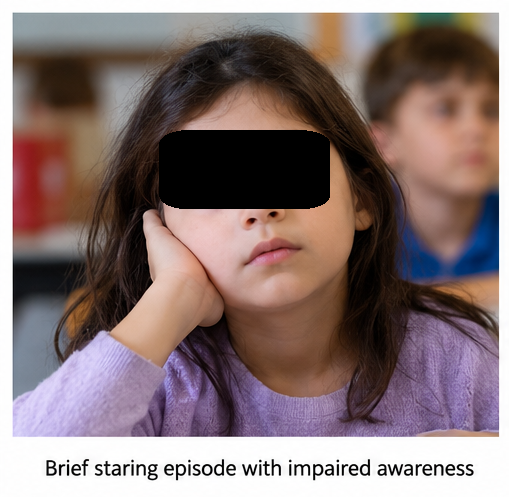
Her parents initially noticed that she would suddenly stop talking or interrupt an ongoing activity and stare blankly ahead. During these episodes, she did not respond when her name was called. Each episode lasted approximately 5–10 seconds and ended abruptly.
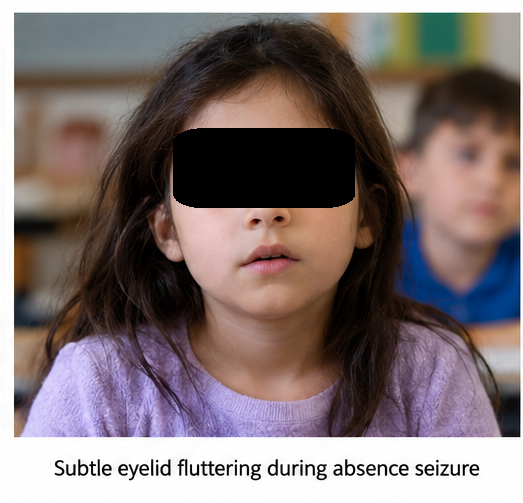
Over the following weeks, the frequency of these episodes gradually increased. Her parents estimated that she experienced approximately 10–20 episodes each day.
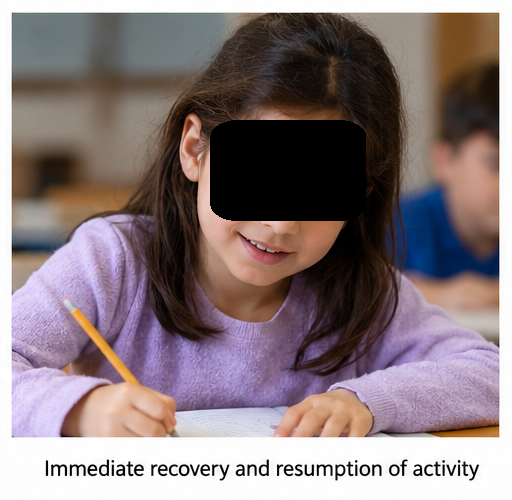
Her schoolteacher had also observed similar events during classroom activities. The child occasionally stopped writing in the middle of a sentence and stared ahead for several seconds before immediately resuming her work. There was no recollection of the interruption.
The episodes were not associated with loss of posture, falling, generalized tonic-clonic movements, tongue biting, urinary incontinence, or prolonged confusion. Occasional subtle eyelid fluttering was noticed during some episodes.
There was no history of preceding aura, headache, dizziness, visual symptoms, palpitations, or focal neurological symptoms.
Pregnancy, birth, and developmental history were unremarkable. The child had achieved developmental milestones appropriately and had no history of significant neurological illness, head trauma, central nervous system infection, or previous seizures.
On examination, the patient was alert, cooperative, and appropriately interactive. Her vital signs were within normal limits.
General physical examination was unremarkable. Neurological examination demonstrated normal higher mental functions, cranial nerves, muscle tone, power, reflexes, coordination, sensation, and gait.
During the consultation, hyperventilation was performed under clinical supervision. After approximately two minutes of deep, rapid breathing, the child suddenly stopped responding and developed a blank stare with subtle eyelid fluttering.
The episode lasted approximately eight seconds. She subsequently resumed interaction immediately and had no postictal confusion.
The characteristic history together with the hyperventilation-induced episode raised strong suspicion of childhood absence epilepsy.
Investigations
Routine laboratory investigations, including complete blood count, serum glucose, electrolytes, calcium, renal function, and hepatic parameters, showed no clinically significant abnormalities.
A routine EEG was subsequently performed with standard activation procedures, including hyperventilation.
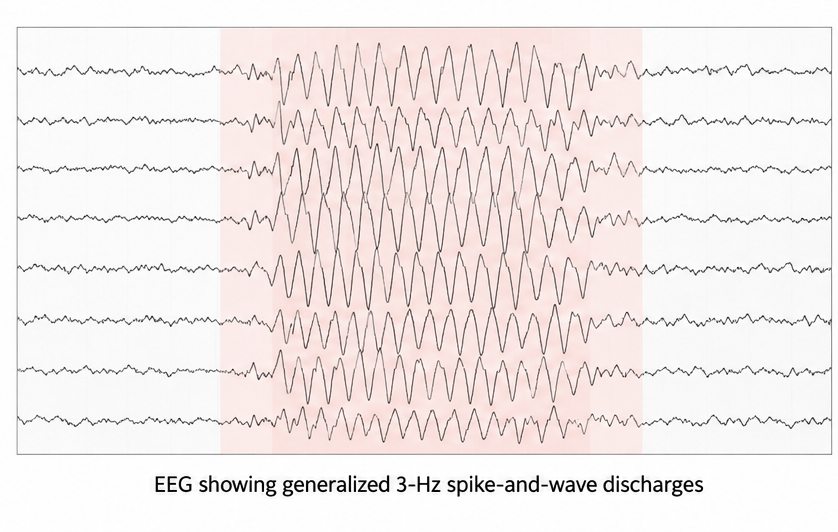
During hyperventilation, EEG demonstrated sudden onset of bilaterally synchronous, symmetric generalized spike-and-wave discharges occurring at approximately 3 Hz.

The electrographic discharge correlated with a clinical episode characterized by behavioral arrest, staring, and impaired responsiveness.
Background EEG activity was otherwise appropriate for age, without persistent focal slowing or a consistent focal epileptiform abnormality.
The characteristic seizure semiology and generalized spike-and-wave pattern supported the diagnosis of childhood absence epilepsy.
Neuroimaging was not considered necessary because the clinical presentation and EEG findings were typical for a generalized childhood absence epilepsy syndrome and neurological examination was normal.
Differential Diagnosis
Daydreaming and Inattention
Normal daydreaming or inattentiveness may resemble absence seizures, particularly in school-aged children. However, daydreaming usually occurs in specific situations, can often be interrupted by touch or calling the child's name, and does not demonstrate the abrupt onset and termination characteristic of absence seizures.
Attention-Deficit/Hyperactivity Disorder
Children with attention difficulties may appear distracted or fail to respond during classroom activities. However, impaired attention is generally more prolonged and variable rather than consisting of multiple stereotyped episodes lasting only a few seconds. Characteristic generalized spike-and-wave activity on EEG favors absence epilepsy.
Focal Impaired-Awareness Seizures
Focal impaired-awareness seizures may cause behavioral arrest and impaired responsiveness. However, these seizures generally last longer and may be associated with automatisms, focal neurological manifestations, aura, or postictal confusion. EEG may demonstrate focal rather than generalized epileptiform abnormalities.
Syncope
Syncope can result in transient loss of awareness but is usually associated with loss of postural tone and may be preceded by dizziness, visual dimming, nausea, sweating, or other autonomic symptoms. The extremely brief, frequent staring episodes in this patient were inconsistent with typical syncope.
Atypical Absence Seizures
Atypical absence seizures can also cause impaired awareness but generally have less abrupt onset and termination and are often associated with developmental impairment or other seizure types. EEG typically demonstrates slower generalized spike-and-wave activity than that seen in typical childhood absence epilepsy.
Management and Outcome
Following confirmation of childhood absence epilepsy, antiseizure treatment was initiated.
Because the patient had typical absence seizures without a history of generalized tonic-clonic seizures, ethosuximide was selected as initial monotherapy.
Treatment was initiated at an appropriate weight-based dose and gradually titrated according to clinical response and tolerability.
The parents were counseled regarding regular medication adherence, recognition of seizure episodes, potential adverse effects, and the importance of follow-up.
They were advised to maintain a seizure diary documenting the frequency and duration of staring episodes. The schoolteacher was also informed so that episodes occurring during classroom activities could be monitored.
During subsequent follow-up, the parents reported a marked reduction in seizure frequency. After appropriate dose adjustment, no further obvious staring episodes were observed at home or school.
The child tolerated treatment without significant adverse effects.
A follow-up EEG demonstrated substantial improvement, with no clinical absence seizure provoked during the recording.
Her classroom participation and concentration also improved after seizure control was achieved.
Continued neurological follow-up was advised to monitor seizure control, medication tolerability, academic performance, attention, and eventual suitability for medication withdrawal after an appropriate period of sustained seizure freedom.
Discussion
Childhood absence epilepsy is a generalized epilepsy syndrome characterized predominantly by frequent typical absence seizures in otherwise neurologically normal children.
The characteristic seizure consists of sudden interruption of ongoing activity accompanied by impaired awareness. The child may stop speaking, writing, eating, or playing and develop a vacant stare.
Subtle motor manifestations such as eyelid fluttering, mild facial movements, or small automatisms may accompany the episode. Seizures generally last only several seconds and terminate abruptly.
An important clinical characteristic is the absence of a postictal state. Children usually resume their previous activity immediately and may be unaware that a seizure occurred.
The high daily frequency of absence seizures is clinically important. Some children may experience numerous episodes each day, potentially resulting in repeated interruption of classroom activities and learning.
Consequently, CAE should not simply be considered harmless because cognitive, attentional, behavioral, and academic difficulties can occur even when seizures appear clinically subtle.
Hyperventilation is particularly useful during evaluation. Voluntary hyperventilation can provoke typical absence seizures in susceptible children and therefore represents an important component of clinical examination and routine EEG assessment.
EEG provides the principal diagnostic confirmation. Typical absence seizures are associated with generalized, bilaterally synchronous spike-and-wave discharges occurring at approximately 3 Hz against an otherwise relatively normal background.
The combination of characteristic clinical events and typical EEG findings generally establishes the diagnosis without the need for extensive neuroimaging in an otherwise neurologically normal child.
Treatment aims to achieve complete seizure control while minimizing medication-related adverse effects. Ethosuximide, valproic acid, and lamotrigine are established therapeutic options.
Evidence from randomized clinical trials indicates that ethosuximide and valproic acid are more effective than lamotrigine as initial monotherapy for childhood absence epilepsy. Ethosuximide is generally preferred when absence seizures are the only seizure type because of its favorable efficacy and attentional adverse-effect profile.
Valproate may be preferred when absence seizures coexist with generalized tonic-clonic seizures because it provides broader antiseizure activity.
Clinical follow-up should extend beyond simply counting seizures. Attention, behavior, school performance, medication adherence, and treatment-related adverse effects should also be assessed.
The present case illustrates a characteristic presentation of childhood absence epilepsy. Frequent brief staring episodes were initially subtle but became increasingly apparent to both parents and teachers. Hyperventilation reproduced a typical episode, while EEG demonstrated characteristic generalized approximately 3-Hz spike-and-wave activity.
Recognition of this characteristic clinical-electrographic pattern allowed appropriate antiseizure therapy to be initiated, resulting in effective seizure control.
Conclusion
Childhood absence epilepsy should be considered in school-aged children presenting with recurrent, brief episodes of staring, behavioral arrest, and transient unresponsiveness.
The abrupt onset and termination of episodes, high daily frequency, immediate recovery without postictal confusion, and provocation by hyperventilation are important clinical clues.
EEG demonstrating generalized approximately 3-Hz spike-and-wave discharges provides characteristic diagnostic evidence.
Early diagnosis is important because frequent absence seizures can interfere with attention, learning, and academic performance despite their brief and apparently subtle nature.
Ethosuximide is an appropriate first-line treatment for children with absence seizures alone, whereas broader-spectrum therapy may be required when other generalized seizure types coexist.
In this patient, recognition of the characteristic staring episodes, reproduction of a seizure during hyperventilation, and typical EEG findings enabled timely diagnosis and treatment, followed by successful seizure control.
References
- Glauser TA, Cnaan A, Shinnar S, et al. Ethosuximide, valproic acid, and lamotrigine in childhood absence epilepsy. N Engl J Med. 2010;362(9):790–799. https://pubmed.ncbi.nlm.nih.gov/20200383/
- Glauser TA, Cnaan A, Shinnar S, et al. Ethosuximide, valproic acid, and lamotrigine in childhood absence epilepsy: initial monotherapy outcomes at 12 months. Epilepsia. 2013;54(1):141–155. https://pubmed.ncbi.nlm.nih.gov/23167925/
- Kessler SK, McGinnis E. A practical guide to treatment of childhood absence epilepsy. Paediatr Drugs. 2019;21(1):15–24. https://pubmed.ncbi.nlm.nih.gov/30734897/
- Brigo F, Igwe SC, Lattanzi S. Ethosuximide, sodium valproate or lamotrigine for absence seizures in children and adolescents. Cochrane Database Syst Rev. 2021;1(1):CD003032. https://pubmed.ncbi.nlm.nih.gov/33475151/
- Kessler SK, McGinnis E. A practical guide to treatment of childhood absence epilepsy. https://pmc.ncbi.nlm.nih.gov/articles/PMC6394437/
- Glauser TA, Cnaan A, Shinnar S, et al. Ethosuximide, valproic acid and lamotrigine in childhood absence epilepsy: initial monotherapy outcomes at 12 months. https://pmc.ncbi.nlm.nih.gov/articles/PMC3538883/
Read more such content on @ Hidoc Dr | Medical Learning App for Doctors
Recommended News For You
Recommended Articles For You
Featured News
Featured Articles
Featured Events
Featured KOL Videos
1.
Regular physical activity before cancer diagnosis may lower progression and death risks
2.
Medication Self-Injection Embraced by Breast Cancer Patients
3.
Financial hardship for cancer survivors due to high-cost immunotherapies, especially for blood cancer patients
4.
FDA Advisors Split on Regimens for Breast, Prostate Cancers
5.
ctDNA-Guided Adjuvant Therapy Cuts Bladder Cancer Costs
1.
RDW-CV vs. MCV: Knowing the Difference Can Help You Better Understand Your Health
2.
Clinical Pathways in Hematology in Clinical Decision-Making
3.
Immune Surveillance Screening for Early Cancer Risk Detection
4.
Unlocking the Mysteries of Lymphoblastic Lymphoma: A Journey Into the Unknown
5.
AI-Driven Digital Pathology in Oncology: From Histology Images to Predictive Treatment Biomarkers
1.
International Conference on Innovations in Critical Care for Oncology and Cardiology
2.
International Conference on Oncology, Cardiology and Critical Care Policy
3.
International Conference on Oncology, Cancer Prevention and Public Health
4.
International Conference on Cancer Nursing and Rehabilitation Strategies
5.
International Conference on Best Practices in Oncology, Cardiology and Critical Care
1.
How Advances in Cancer Research Are Improving Treatment Options
2.
Navigating the Complexities of Ph Negative ALL - Part II
3.
Signs and Symptoms of Leukemia
4.
Updates on Standard V/S High Risk Myeloma Treatment- The Next Part
5.
Virtual Case Study on Elephantiasis of Lower Limb- An Initiative by Hidoc Dr.

Address :
Hidoc Dr. Inc. | Delaware C Corp | 1309 Coffeen Ave. Suite 1200, Sheridan WY, 82801
Phone :
+1-415-463-3094
Email :
anishagadia@hidoc.co
© Copyright 2026 Hidoc Dr. Inc.
Terms & Conditions - LLP | Inc. | Privacy Policy - LLP | Inc. | Account Deactivation

To get started please enter your email ID
Welcome to Hidoc Dr.
Join to enhance your clinical skills and gain specialized in-depth medical knowledge