Age-Related Cataract Presenting With Progressive Painless Visual Loss: A Case Report
OthersPage Navigation
Abstract
Age-related cataract is a common cause of progressive visual impairment and remains an important contributor to avoidable blindness worldwide. Cataract develops due to progressive opacification of the crystalline lens, resulting in reduced visual acuity, glare, and impaired contrast sensitivity. We report the case of a 62-year-old male who presented with gradually progressive, painless diminution of vision in both eyes, which had become more pronounced over the preceding year. The patient reported increasing difficulty with reading and night-time driving, along with glare from bright lights. Ocular examination revealed reduced visual acuity that was not adequately corrected with refraction, while slit-lamp examination demonstrated bilateral lens opacities consistent with age-related cataract. The remainder of the anterior and posterior segment examination was unremarkable. The patient was diagnosed with bilateral age-related cataract and underwent cataract surgery with intraocular lens implantation in the more symptomatic eye. Postoperatively, visual acuity improved significantly, and the patient reported improved ability to perform daily activities. This case highlights the importance of recognizing progressive visual symptoms as a possible manifestation of cataract and emphasizes comprehensive ophthalmic evaluation and timely surgical management when visual impairment affects quality of life.
Introduction
Cataract is characterized by progressive opacification of the crystalline lens, resulting in impaired transmission of light to the retina and consequent visual dysfunction. Age-related cataract is the most common form and is strongly associated with increasing age. Other contributing factors include diabetes mellitus, smoking, ultraviolet radiation exposure, ocular trauma, and prolonged use of corticosteroids.
Patients with cataract commonly present with gradual, painless deterioration of vision. Depending on the location and severity of lens opacity, symptoms may include blurred or hazy vision, glare, reduced contrast sensitivity, difficulty with night vision, and frequent changes in refractive correction. Cataract may affect one or both eyes and can progressively interfere with activities of daily living.
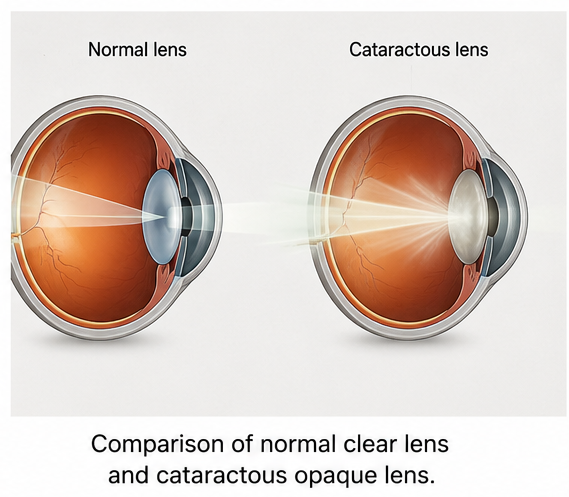
The diagnosis is primarily clinical and is established through comprehensive ophthalmic examination, including visual acuity assessment, refraction, slit-lamp examination, and evaluation of the posterior segment when possible. Cataract surgery remains the definitive treatment when lens opacity causes significant functional visual impairment.

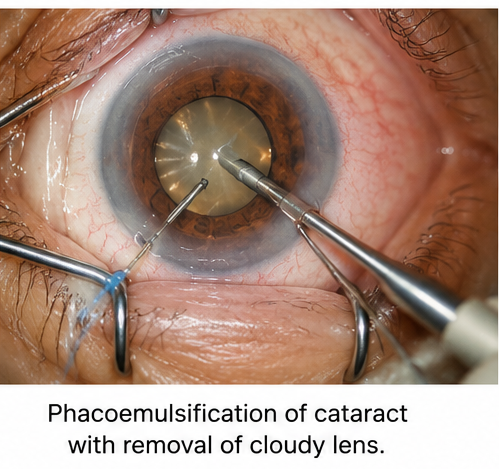
Modern cataract surgery, most commonly performed using phacoemulsification with implantation of an intraocular lens, is highly effective in restoring functional vision.
We report a case of bilateral age-related cataract presenting with progressive painless visual impairment, highlighting the clinical presentation, ophthalmic evaluation, and management of a common but potentially vision-limiting condition.
Case Report
A 62-year-old male presented to the ophthalmology outpatient department with a history of gradually progressive, painless diminution of vision in both eyes for approximately one year. The visual deterioration was more pronounced in the right eye and had progressively affected his daily activities.
The patient reported increasing difficulty while reading and performing tasks requiring clear distance vision. He also experienced glare from bright lights and difficulty driving at night. There was no history of acute ocular pain, redness, photophobia, sudden visual loss, floaters, or flashes of light.
The patient had no history of previous ocular trauma or intraocular surgery. There was no significant history of chronic corticosteroid use. His medical history was otherwise unremarkable, with no known systemic condition contributing to secondary cataract formation.
On ophthalmic examination, best-corrected visual acuity was reduced in both eyes and could not be adequately improved with refraction. Intraocular pressure was within the normal range bilaterally. Slit-lamp examination revealed bilateral lens opacities, more prominent in the right eye, consistent with age-related cataract. The cornea and anterior chamber were unremarkable, with no evidence of active intraocular inflammation.
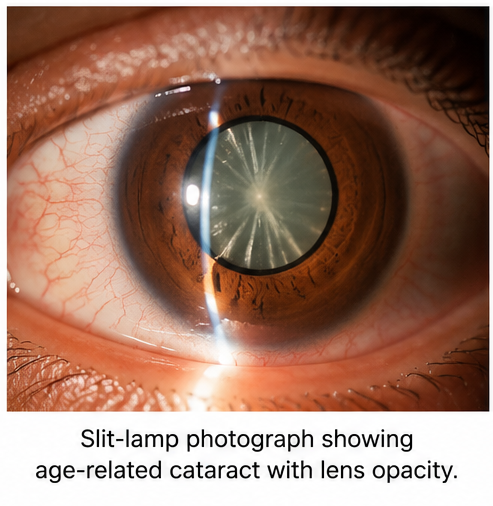
Dilated fundus examination was performed to the extent permitted by the degree of lens opacity and did not demonstrate any significant retinal or optic nerve abnormality. The clinical findings were consistent with bilateral age-related cataract, with greater functional impairment in the right eye.
Based on the progressive painless visual deterioration, reduced best-corrected visual acuity, and characteristic lens opacification on slit-lamp examination, a diagnosis of bilateral age-related cataract was established.
Management and Outcome
The patient was counseled regarding the nature and progressive course of cataract and the available treatment options. As the visual impairment was interfering with daily activities and could not be adequately corrected with spectacles, cataract surgery was recommended.
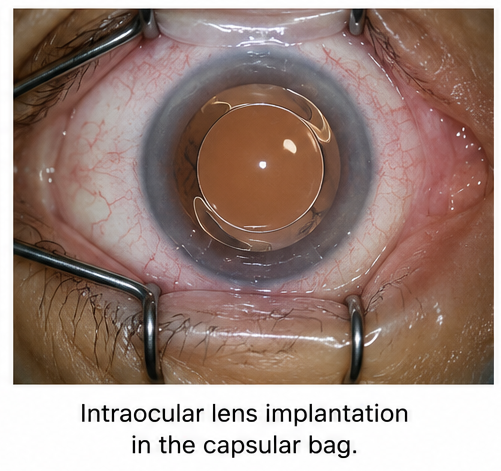
The patient underwent uncomplicated phacoemulsification cataract surgery with implantation of a posterior chamber intraocular lens in the more symptomatic right eye. Postoperative treatment included topical medications and routine ophthalmic follow-up.
Following surgery, the patient demonstrated significant improvement in visual acuity. He reported reduced glare and improved ability to perform reading and routine daily activities. The postoperative examination showed a well-positioned intraocular lens without evidence of significant complications.
The patient was subsequently advised to undergo continued ophthalmic monitoring and to consider cataract surgery in the fellow eye if visual impairment progressed and began to interfere with functional activities.
Follow-up
One Week
- The patient reported subjective improvement in vision in the operated eye.
- Postoperative examination showed satisfactory healing.
- The intraocular lens was well positioned.
- No significant postoperative complications were identified.
One Month
- Best-corrected visual acuity demonstrated significant improvement.
- The patient reported improved reading and distance vision.
- Glare-related symptoms had decreased.
- The patient resumed routine daily activities with greater ease.
Six Months
- Visual improvement remained stable in the operated eye.
- No significant postoperative complications were observed.
- The cataract in the fellow eye was monitored clinically.
- Further surgical intervention in the fellow eye was to be considered based on progression of visual symptoms and functional impairment.
Discussion
Cataract is a major cause of visual impairment worldwide and is primarily associated with aging. The development of cataract involves progressive biochemical and structural changes within the crystalline lens, resulting in loss of transparency and impaired optical function.
Age-related cataract may present with a variety of visual symptoms. Progressive blurring of vision is common, while glare, reduced contrast sensitivity, impaired night vision, and difficulty performing visually demanding tasks may significantly affect quality of life. The severity of symptoms may vary depending on the type and location of lens opacity.
The present case illustrates a typical presentation of age-related cataract in an older adult with gradually progressive, painless visual deterioration. The absence of acute symptoms and the slow progression of visual impairment are characteristic of age-related lens opacification. However, progressive visual loss should not automatically be attributed to cataract without a comprehensive ophthalmic evaluation, as other conditions, including glaucoma, macular degeneration, diabetic retinopathy, and corneal disease, may produce similar symptoms.
Slit-lamp examination remains central to the diagnosis and characterization of cataract. Assessment of visual acuity and refraction helps determine the degree of functional impairment, while dilated fundus examination is important for identifying coexisting posterior segment disease and estimating the potential for postoperative visual improvement.
Cataract surgery is indicated when lens opacity produces sufficient visual disability to interfere with the patient's daily activities, occupational requirements, or quality of life. The decision to proceed with surgery should therefore be based primarily on functional impairment rather than visual acuity alone.
Modern cataract surgery, particularly phacoemulsification followed by intraocular lens implantation, has substantially improved the management of cataract. Advances in surgical techniques and intraocular lens technology have contributed to favorable visual outcomes and rapid postoperative recovery in most patients.
The present case also emphasizes the importance of individualized decision-making. Although bilateral cataract was present, surgery was initially performed in the eye with greater functional impairment. The fellow eye could subsequently be managed according to the progression of symptoms and their impact on the patient's daily activities.
Prognosis
The prognosis following modern cataract surgery is generally favorable, particularly in patients without significant coexisting ocular disease. Most patients experience substantial improvement in visual acuity and functional vision following successful cataract extraction and intraocular lens implantation.
However, postoperative visual outcomes may be influenced by pre-existing retinal, optic nerve, corneal, or other ocular conditions. Long-term ophthalmic follow-up remains important to identify postoperative complications and monitor the status of the fellow eye.
Conclusion
Age-related cataract is a common cause of progressive painless visual impairment in older adults and may significantly affect reading, mobility, night driving, and other daily activities. A comprehensive ophthalmic evaluation is essential to confirm the diagnosis, characterize lens opacity, identify coexisting ocular disease, and assess the potential for visual recovery.
Cataract surgery with intraocular lens implantation remains the definitive treatment for visually significant cataract and generally provides substantial improvement in functional vision. This case highlights the importance of recognizing gradual visual deterioration and glare as potential manifestations of cataract and emphasizes timely ophthalmic assessment and individualized surgical management when visual impairment begins to affect quality of life.
References
- Liu YC, Wilkins M, Kim T, Malyugin B, Mehta JS. Cataracts. Lancet. 2017;390(10094):600-612. https://pubmed.ncbi.nlm.nih.gov/28242111/
- GBD 2019 Blindness and Vision Impairment Collaborators; Vision Loss Expert Group of the Global Burden of Disease Study. Causes of blindness and vision impairment in 2020 and trends over 30 years, and prevalence of avoidable blindness in relation to VISION 2020: the Right to Sight. Lancet Glob Health. 2021;9(2):e144-e160. https://pubmed.ncbi.nlm.nih.gov/33275949/
- Lee CM, Afshari NA. The global state of cataract blindness. Curr Opin Ophthalmol. 2017;28(1):98-103. https://pubmed.ncbi.nlm.nih.gov/27749794/
- Toh T, Morton J, Coxon J, et al. Cataract surgery and quality of life. Clin Exp Ophthalmol. 2004;32(6):613-617. https://pubmed.ncbi.nlm.nih.gov/15575823/
- Dewar S, Kermani O, et al. Cataract surgery and quality of life: a systematic review. Clin Exp Ophthalmol. https://pubmed.ncbi.nlm.nih.gov/
- Haripriya A, Chang DF. Refractive outcomes and complications of cataract surgery. Asia Pac J Ophthalmol (Phila). https://pubmed.ncbi.nlm.nih.gov/
- Grzybowski A, Kanclerz P. Early postoperative intraocular pressure elevation after cataract surgery. Curr Opin Ophthalmol. https://pubmed.ncbi.nlm.nih.gov/30346356/
Read more such content on @ Hidoc Dr | Medical Learning App for Doctors
Recommended News For You
Recommended Articles For You
Featured News
Featured Articles
Featured Events
Featured KOL Videos
1.
Rural colon cancer patients face higher risks, but minimally invasive surgery could narrow gap
2.
Chemotherapy before surgery helps patients with nose and sinus cancer avoid debilitating eye and bone removal
3.
Laryngeal Transplant Helped a Cancer Patient Speak Again in Pioneering Study
4.
The amount of liver tissue removed during gallbladder surgery has no discernible impact on overall survival.
5.
Long-Acting Interferon Therapy Approved for ET
1.
Molecular Network Mapping in Hematologic Disease
2.
Metabolic Reprogramming of the Tumor Microenvironment: Mechanisms, Clinical Relevance, and Emerging Therapeutic Strategies
3.
Hematopoietic Stem Cell Clonal Dynamics Across the Lifespan
4.
Connected Hematology Laboratory Networks for Automated Cross-Institution Data Exchange
5.
Digital Oncology Ecosystems Integrating Longitudinal Patient Trajectories: Transforming Cancer Care through Data-Driven Innovation
1.
International Conference on Innovations in Critical Care for Oncology and Cardiology
2.
International Conference on Oncology, Cardiology and Critical Care Policy
3.
International Conference on Oncology, Cancer Prevention and Public Health
4.
International Conference on Cancer Nursing and Rehabilitation Strategies
5.
International Conference on Best Practices in Oncology, Cardiology and Critical Care
1.
Breaking Ground: ALK-Positive Lung Cancer Front-Line Management - Part V
2.
Common side effects of cancer treatment and how they are managed
3.
Clinical Excellence in Hematology
4.
Best Practices in Hematology
5.
Current Scenario of Blood Cancer- Further Discussion on Genomic Testing & Advancement in Diagnosis and Treatment

Address :
Hidoc Dr. Inc. | Delaware C Corp | 1309 Coffeen Ave. Suite 1200, Sheridan WY, 82801
Phone :
+1-415-463-3094
Email :
anishagadia@hidoc.co
© Copyright 2026 Hidoc Dr. Inc.
Terms & Conditions - LLP | Inc. | Privacy Policy - LLP | Inc. | Account Deactivation

To get started please enter your email ID
Welcome to Hidoc Dr.
Join to enhance your clinical skills and gain specialized in-depth medical knowledge